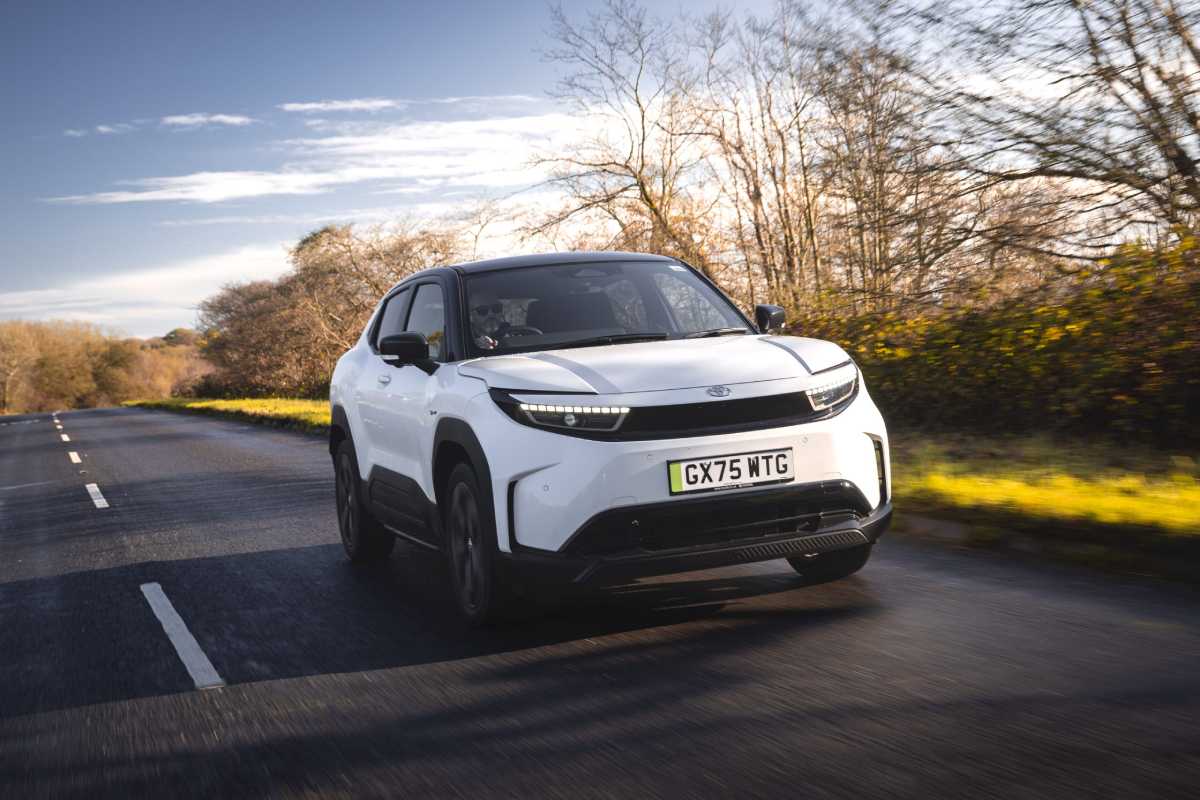
Why we love it:
- Loads better than the last model
- The comfort’s not bad at all
- It’s nice and quiet
Where it could be better:
- Less body roll, please
- Boot space could be better
- Charging speeds could be quicker
Introduction
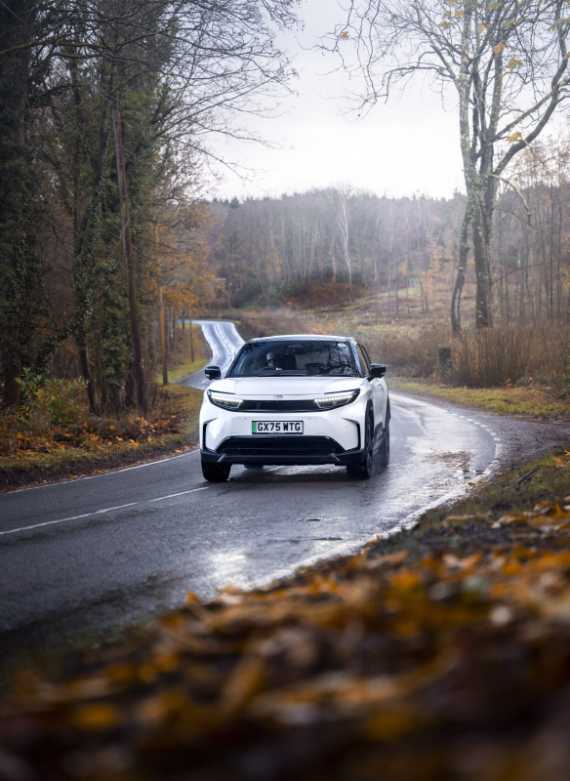
Toyota's revamped Urban Cruiser carries a legacy linked to various models around the globe over the years, writes motoring journalist Tim Barnes-Clay. However, it’s primarily remembered in the UK as an early iteration of a subcompact SUV crossover – or perhaps not, given that it was easily overlooked.
Now, Toyota has decided to bring it back, and the improvements are immediately apparent. First and foremost, its design is strikingly modern, and secondly, it boasts an all-electric powertrain.
It slots into Toyota's lineup between the smaller bZ4X and the larger CH-R+. However, it doesn't enjoy an exclusive market – this segment of the automotive industry is incredibly competitive, with virtually every manufacturer jumping on the SUV bandwagon.
So, does it truly represent a significant advancement? We've taken it for a spin to find out.
On The Road
Handling & Performance
We are evaluating the mid-range Design trim, which boasts a more potent engine paired with a larger battery pack.
The vehicle accelerates to 62mph in 8.7 seconds, a reasonable time for a compact family SUV crossover.
There is ample oomph available when pulling away from traffic lights; however, there is a noticeable lag between pressing the throttle and the poke being realised.
That said, it does the job quite well, and those who are less concerned about performance might find the more economical, lower-powered variant with the smaller battery appealing, as it only adds 0.9 seconds to the nought to 62 mph time.
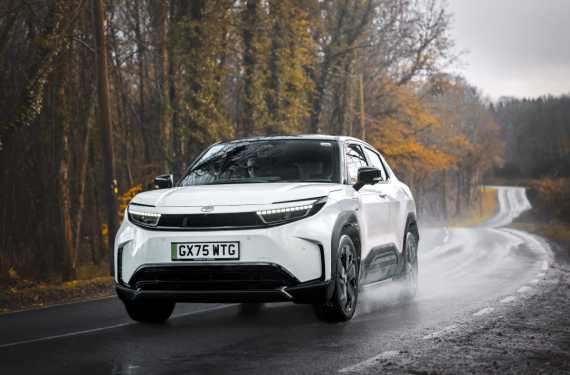
The name "Urban Cruiser" suggests a motor designed for comfy city driving, and it delivers on that. The squidgy suspension makes light work of tatty tarmac, resulting in a smooth ride around town. However, at speed, the Toyota can feel less stable, exhibiting a slight swaying sensation.
Naturally, a softer suspension compromises handling, leading to body roll in corners compared with more performance-oriented rivals. The steering does little to enhance the driving experience either. It is very light, making it easy to manoeuvre in urban settings; however, it lacks sufficient weight, which diminishes feedback when navigating sharper bends.
This is, of course, to be expected - the name suggests that this vehicle is crafted for efficiently handling ring roads, busy stop-start journeys, and the tight, slow-speed paths of city streets, and, as already remarked on, it does just that.
The regenerative braking isn’t quite strong enough for one-pedal driving, but it does offer three selectable levels that feel reliable and consistent.
Overall, it is a quiet vehicle to drive as well.
Styling
If you have any familiarity with the previous Toyota Urban Cruiser, you will undoubtedly notice a dramatic change in its look.
However, when comparing the old model and the new one side by side, there remains a faint hint of design inspiration drawn from its predecessor.
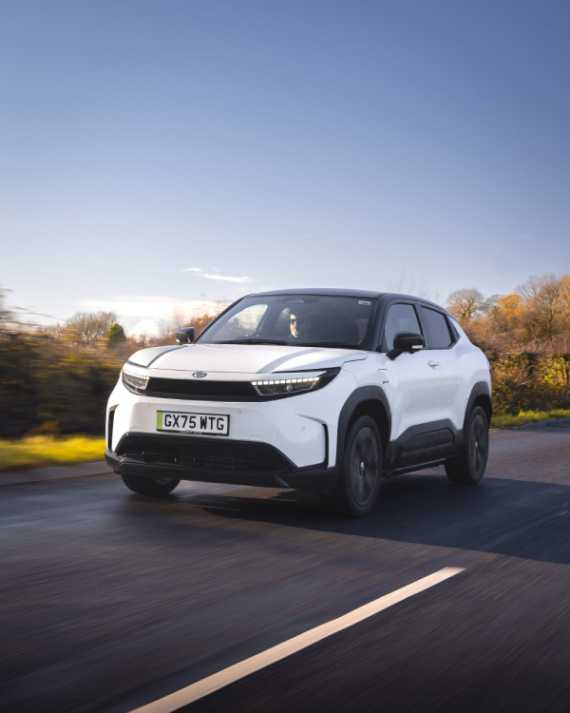
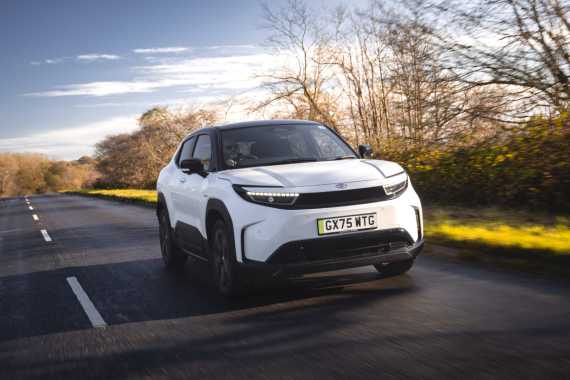
The headlights are relatively slender, nestled within a blacked-out housing that extends from one side to the other at the top of the front end. Below this feature, there is an expanse of blank space, while the outer edges present a chiselled appearance, designed to accommodate air intakes, with a trapezoidal grille situated lower down.
On the flanks, the lower edges of the doors are heavily sculpted, setting apart the bodywork from the substantial cladding intended to highlight its more robust SUV character.
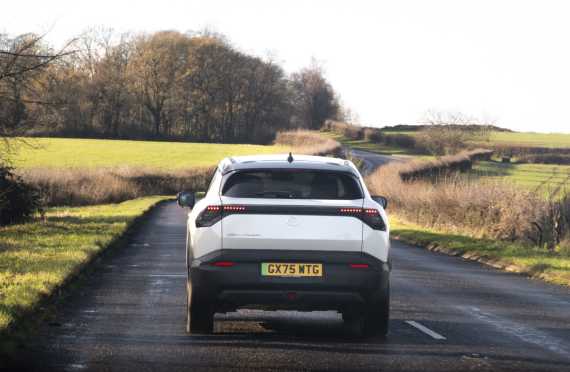
At the rear, the roofline descends, and the back-end projects outward in a couple of areas, including halfway down, thanks to a striking light bar. There is also considerable thick cladding enveloping the bumpers.
When it comes to trim levels, Toyota maintains a consistent naming structure across its lineup, and the Urban Cruiser offers three options to choose from.
The entry-level Icon variant features 18-inch alloy wheels, a 10.1-inch infotainment touchscreen compatible with Apple CarPlay and Android Auto, a digital radio, and a 10.3-inch digital display for the driver. Additional highlights include a rear-view camera, LED headlights, keyless entry and ignition, as well as an extensive range of safety features.
The mid-range Design trim introduces heated seats and steering wheel, along with a de-icer for the front wipers.
For those seeking more luxury, the top-tier Excel comes with 19-inch alloy wheels, a wireless phone charger, a panoramic sunroof, a JBL premium audio system with additional speakers, adaptive LED headlights, and electric adjustment for the front seats.
Regarding technology and power options, there are two available models: one features a smaller battery with 144PS, while the other boasts a larger pack with 174PS.
The base Icon model can only be had with the lower-powered engine, whereas the other two trims come exclusively with the higher-output mill.
All models are front-wheel drive. Although all-wheel drive variants are available in other markets, they’re not available in the UK. Toyota has yet to clarify whether these will be introduced here in the future, but the company hasn’t ruled it out entirely either.
If all-wheel drive is important to you, the Urban Cruiser shares its platform with the Suzuki eVitara, which offers this grippy option in some configurations.
Space & Practicality
Settling into a comfortable driving position in the new Toyota Urban Cruiser is quite easy.
While you’re not seated excessively high, it’s notably more elevated than in a typical family hatchback, and it does provide a higher vantage point compared with the previous Urban Cruiser model. Although we’ve encountered cars with narrower front window pillars, the thickness of these pillars doesn’t significantly obstruct visibility.
However, the rear pillars are considerably thicker, partly due to the roof spoiler, and the side windows are somewhat short and taper inwards. All this impacts your view – or lack of!
Mercifully, a rear-view camera comes standard, and you'll benefit from a 360-degree surround-view camera on the top trim. Additionally, front and rear parking sensors are included across the entire range.
In terms of interior space, the front seats offer ample headroom and legroom. While the cabin isn't particularly wide, there is enough space to avoid most elbow disputes between the driver and front passenger, unless both are on the larger side.
The sloping roofline does reduce rear headroom slightly, but there’s still sufficient space for most adults, although the rear legroom is quite impressive for a vehicle of this size.
Fitting three adults in the back is a bit of a tight squeeze, but it can be managed for short trips. At least the middle-seat passenger won’t have to deal with a transmission tunnel, as the floor is completely flat.
Unfortunately, boot space is rather limited. With a capacity of 310 litres, it offers only one litre more than a trusty Vauxhall Corsa and falls short compared with many rivals. This size is contingent on the sliding rear bench being pushed all the way forward, which limits rear legroom. Slide it back, however, and the boot space shrinks to as little as 238 litres.
On a brighter note, the rear seats fold in a 40:20:40 arrangement, and with all three seats down, the boot space expands to 562 litres.
There is a wealth of storage available within the Toyota’s cabin as well, featuring spacious door bins and two large compartments in the centre console and beneath the front armrest.
Ownership
Running Costs
As alluded to earlier, the Toyota Urban Cruiser is available with two battery sizes: 49kWh and 61kWh.
The 49kWh battery is exclusive to the entry-level model and offers a range of 213 miles. If you opt for either the mid-range or the top-tier trims, you'll be required to select the larger 61kWh battery, which has a range of 264 miles.
The Urban Cruiser's maximum charging speed is 67kW. Consequently, charging the batteries to 10-80% takes around 45 minutes, which is lengthy compared with some competitors. That said, if you're primarily using the Toyota for local trips, you likely won't fully deplete the battery and can conveniently charge it at home overnight.
Running costs should be low, particularly if you charge it at home rather than relying on the pricier public charging stations.
While road tax is no longer free for EVs, you'll only need to pay £10 for the first year, after which it will increase to the standard rate of £195 per year (subject to annual changes).
The Urban Cruiser also makes a solid choice for a company car due to its zero emissions, placing it in the lowest Benefit-in-Kind tax band.
Additionally, Toyota boasts an impressive reputation for reliability, frequently ranking at or near the top of dependability surveys.
Verdict
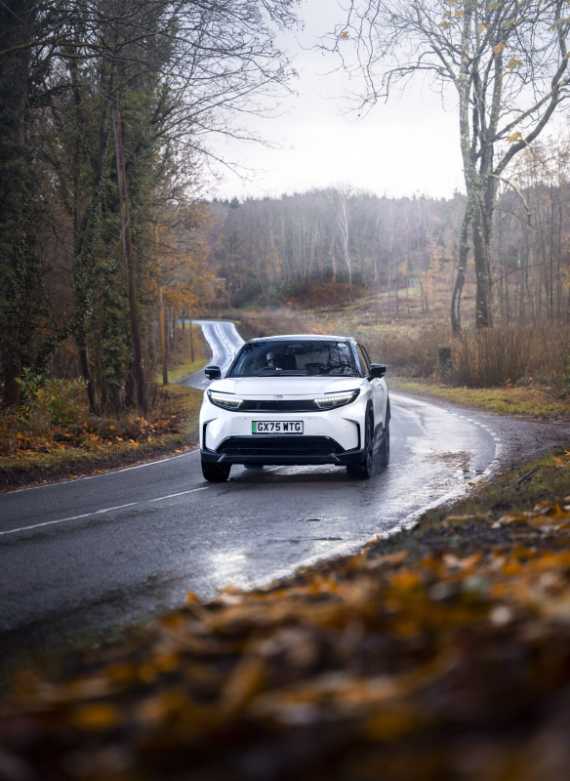
If the previous incarnation of the Toyota Urban Cruiser didn't appeal to you, this latest model shares little more than a name with its predecessor.
This new version is quite comfortable, effectively lives up to its title by adeptly navigating urban settings, and offers respectable performance, providing a range suitable for numerous short trips between charges.
However, it does have its drawbacks; the charging speed is rather sluggish, and the boot space is disappointingly small compared with rivals that offer a more refined experience. On the upside, all three sections of the rear bench can be slid and folded to accommodate varying needs for each journey.
Choosing the entry-level trim with the less powerful engine is to be recommended, as you probably won't notice a significant difference compared with the higher-powered version. However, if you're open to spending more on a premium model, the mid-range Design grade provides a well-rounded package.
Indeed, the previous Urban Cruiser pales in comparison to this new model, which excels in nearly every area. Still, Toyota has much ground to cover if it hopes to outpace its closest competitors.