Why we love it:
- Interesting looks
- Decent comfort
- Not bad value for money
Where it could be better:
- Less mollycoddling safety alerts
- More physical cabin controls, please
- The marque needs more public awareness
Introduction
The list of Chinese automotive brands entering the UK market seems to grow longer every day: BYD, Changan, Chery, Leapmotor, Jaecoo, Omoda, XPeng, and Zeekr.
Yet these names don't even capture the full spectrum of newcomers we've seen over the past few years. One marque worth noting is Aion.
Founded in 2017 as a subsidiary of the state-owned GAC Group in Guangzhou, Aion debuted in the automotive world with the Aion S, a compact saloon, just two years later.
With a parent company whose legacy dates back to the late 1940s, Aion benefits from substantial expertise in Chinese car manufacturing.
Despite being relatively new, Aion has quickly emerged as a player of note, now ranking as the third-biggest EV brand globally, following Tesla and BYD, which recently overtook Tesla for the top position.
Today, we're exploring Aion's latest offering in the UK, its second model launch. You might not be familiar with the brand's first offering, as it was ushered in only a few months before this one.
The new 'V' crossover SUV hit the market in late spring, paving the way for the introduction of a new compact electric hatchback – the UT.
Aion has established around a dozen dealerships in the UK, with plans to open four more soon and ten more by 2026.
So, the question remains: does the UT measure up? Our motoring journalist Tim Barnes-Clay investigates.
On The Road
Handling & Performance
We're currently evaluating the model equipped with the Premium Pack, but rest assured, even if you don't opt for this version, the performance remains consistent.
The all-electric car accelerates from zero to 62mph in a respectable 7.3 seconds, which is quite satisfactory, and the UT feels noticeably lively when you push the throttle down from a standstill.
In fact, it feels quicker than the numbers might suggest. However, we did notice that aggressive acceleration with the steering turned - or even flooring it in a straight line - can lead to some wheelspin.
Like many Chinese vehicles, we expected lacklustre cornering performance, yet we were pleasantly surprised by its composure.
While the UT may not deliver the most thrilling driving experience, the body roll is well managed, and the car stays steady and composed when you take bends at a decent pace, aided by its grippy tyres.
One downside is that the steering doesn't provide much feedback, which can leave you feeling a bit disconnected from the tarmac.
The suspension leans towards the softer side, providing a comfortable ride and effectively absorbing the impact of potholes and rough surfaces.
In urban settings, it's quite zippy, making swift progress through traffic, and the light steering simplifies 90-degree turns as you weave through narrow streets, aided by a tight turning circle.
Both road and wind noise are effectively muted, making this vehicle a solid choice for longer journeys.
One area for improvement often noted among Chinese cars is their ADAS (advanced driver assistance systems), which don't seem to be optimised for British road conditions.
In this instance, the UT's system can be overly intrusive, mistakenly suggesting that you're not paying attention and sporadically applying the brakes as if there were obstacles ahead when there aren't.
It can be annoying that while you can turn off these systems through the menus, they revert to their default settings the next time you start the Aion. So, it's best to make it a habit to address this when you get in the UT.
Nonetheless, over-the-air updates can refine these issues, so we can expect improvements in the near future.
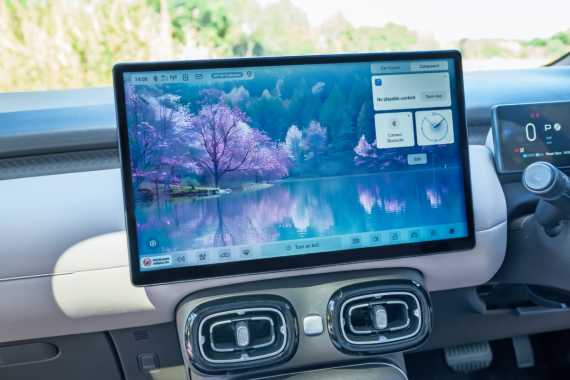
The regenerative braking features three modes, easily adjustable via the touchscreen. The braking feels smooth and reliable, though even in the most aggressive mode, it doesn't quite support one-pedal driving.
Styling
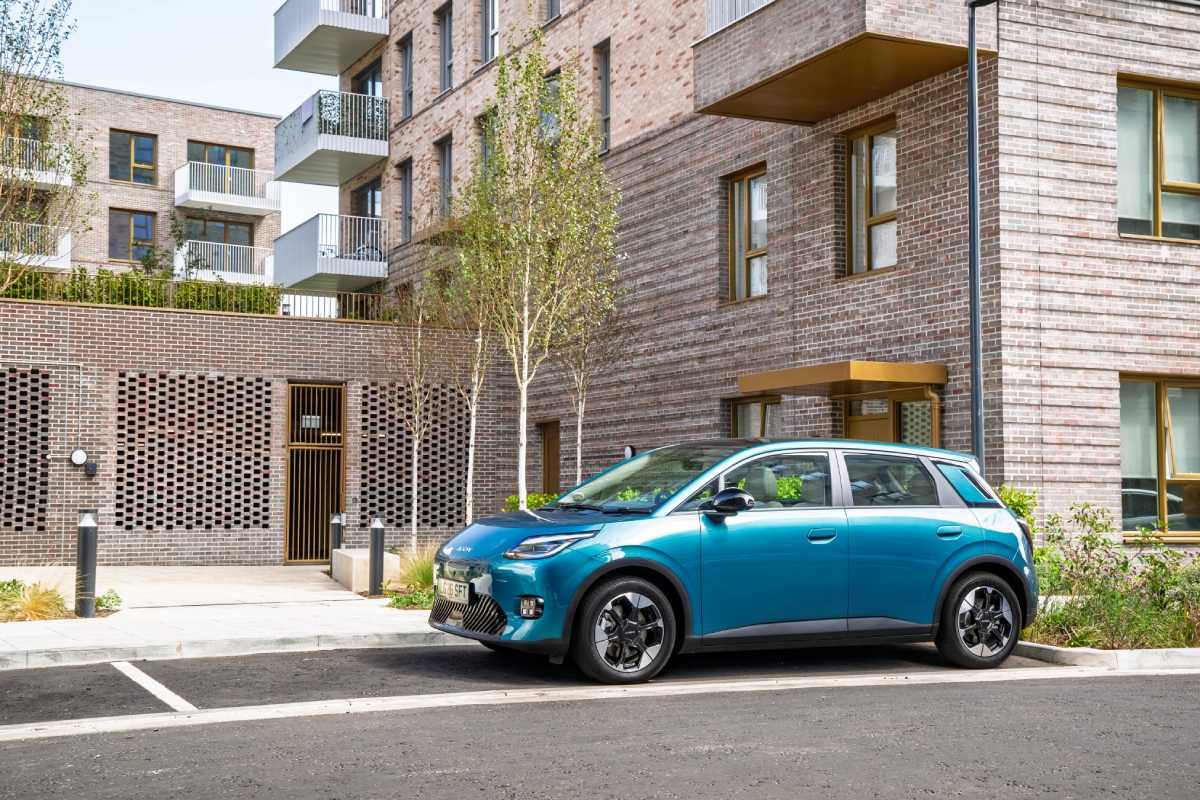
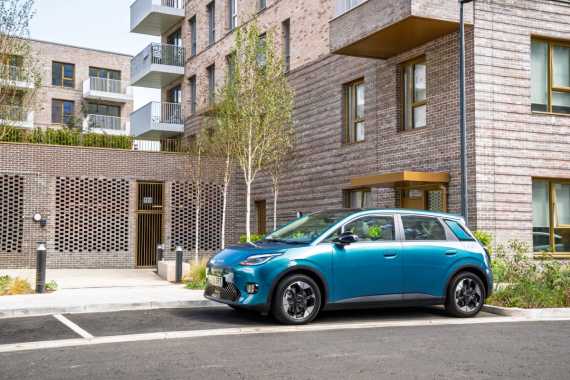
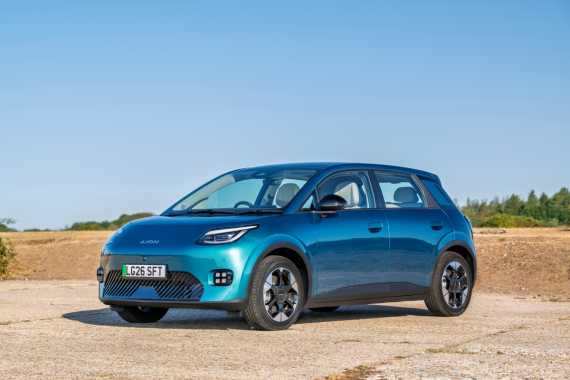
The UT has a design reminiscent of European aesthetics, due to GAC's choice to position its design HQ in Milan. While it may lack the flair of some other cars, it's still appealing.
The front end features a rounded shape that apparently draws inspiration from an owl. It has smooth contours, large headlights positioned at the edges, a lower black grille beneath the number plate, and square, almost pixel-like fog lights.
From the side, the Aion's length becomes more pronounced. Measuring 4.27 metres, it's about 35 centimetres longer than a Fiat Grande Panda, with the Omoda E5 just 10 centimetres longer than the UT.
Again, the profile is sleek except for the contours around the wheel arches, and the bodywork subtly rises at the base to accommodate the cladded side skirts.
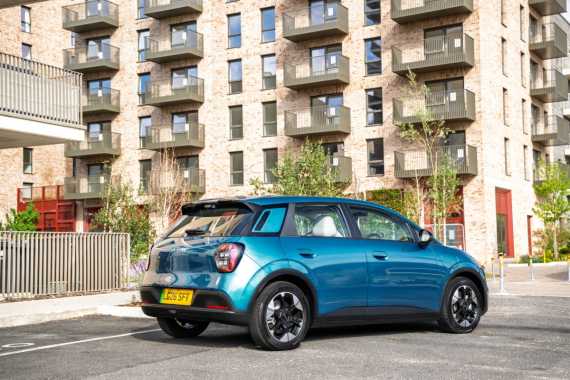
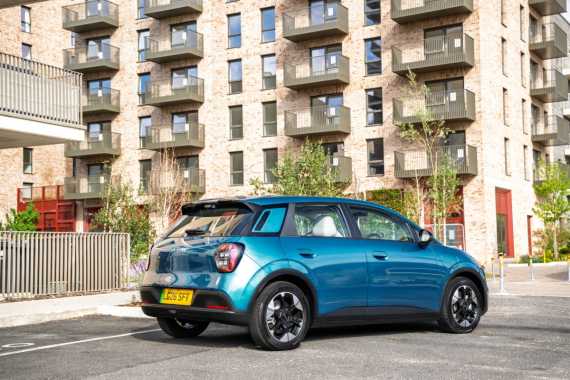
The rear design is reminiscent of a Mini Cooper, with pronounced shoulders and rounded taillights on each side, and a significant blank area in the centre.
Officially, there's one trim available, though theoretically there are two variations.
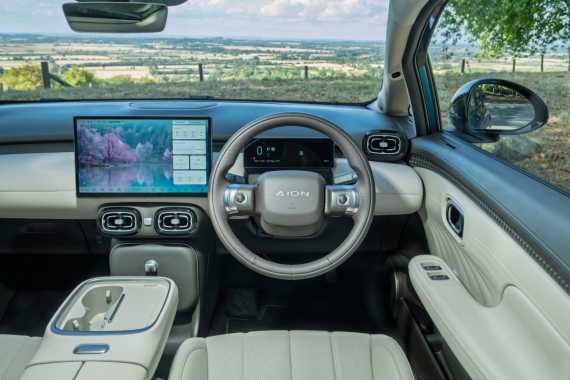
Standard features include 17-inch alloys, a 14.6-inch infotainment touchscreen with Apple CarPlay and Android Auto, digital radio, satellite navigation, voice control, and an 8.8-inch digital display for the driver.
The car comes with LED headlights and taillights, synthetic leather seats, electronically adjustable heated seats, a heated steering wheel, a 360-degree surround-view camera, and climate control.
A noteworthy addition is a heat pump that heats the cabin more efficiently while reducing battery drain.
There's also a 'Premium Pack' edition, which adds a panoramic glass roof with an electric shade, power-folding side mirrors, a three-stage ventilated driver's seat, wireless phone charging, and a smart tailgate.
This pack also includes tasteful silver exterior frills and exclusive interior colour upgrade options.
While technically an optional upgrade on the base model, it's effectively marketed as a standalone version, akin to a higher trim level.
On a technical note, the Aion houses a single electric motor that propels the UT's front wheels, delivering 204PS.
Space & Practicality
Finding a comfortable driving position is quite straightforward, thanks to the standard electric seat adjustment in the front.
The seats are generously sized, well-cushioned, and allow you to settle in and unwind.
However, the absence of adjustable lumbar support feels a bit surprising, especially in a vehicle that, with the Premium Pack, even offers heated and ventilated seating options.
Visibility is fairly decent at the front, thanks to the sloping windscreen and slim pillars.
On the other hand, the rear pillars are significantly larger; there's no third side window, and the broad black frame around the rear windscreen somewhat obstructs visibility.
Nevertheless, the standard 360-degree surround-view camera helps mitigate this drawback.
Despite the seats' substantial feel, the cabin remains spacious, allowing for some lounging.
Front headroom and legroom are satisfactory, and the cabin's width helps prevent shoulder clashes with your passenger.
The rear is pleasantly spacious too, particularly for legroom, making it comfortable for adults to sit behind a tall front occupant without discomfort.
While headroom is slightly less generous in the back, fitting three adults can be a bit of a squeeze.
On the plus side, the sizeable cabin doesn't sacrifice boot capacity, with the UT offering 440 litres, surpassing many of its more seasoned competitors, which typically offer mid-to-high 300s.
With the rear seats folded, boot space extends to approximately 1,600 litres in a 60:40 split configuration.
Additionally, the loading lip is modest, and you can remove it thanks to a height-adjustable boot floor.
There's ample space throughout the UT, including under the floating centre console, a cubby beneath the central air vents, and generously sized door bins.
Ownership
Running Costs
The fully electric Aion UT boasts an 87kW charging capacity.
While many vehicles on the market exceed three figures, Aion claims that with its modest battery size, it can charge from 30% to 80% in about 24 minutes, which is quite reasonable.
We estimate a full charge from 0 to 100% could take between six and a half and eight hours with a 7.4kW home wallbox.
The car comes with vehicle-to-load (V2L) technology as standard, letting you power other devices or even run your household during a power outage, with the right setup.
You can also monitor charging through a smartphone app.
Unsurprisingly, running costs are very low since there’s no petrol tank to refuel.
If you primarily charge at home and avoid public charging stations, which tend to be significantly more expensive, the savings compared with petrol or diesel will be substantial.
During our test drive, we averaged around 3.5 miles per kWh, resulting in an achievable range of 210 miles.
The first year’s road tax is only £10, but you'll have to dig deeper to pay the full amount after that, which is currently £200 annually.
Even with the Premium Pack, the total cost remains well below the threshold that would trigger the Government's Expensive Car Supplement, now set at £50,000 for zero-emission vehicles.
As is common with many Chinese automakers, long-term reliability remains uncertain due to limited historical data. However, Aion offers reassurance through what it calls the 'Great 8' promise.
This includes an eight-year, 100,000-mile warranty, a 125,000-mile battery warranty, and eight years of servicing and roadside assistance.
Verdict
The Aion UT is an appealing electric vehicle that offers pretty good value for money.
It comes well equipped with a comfortable interior, ample passenger space, and a sizeable boot, making it one of the most practical options in its category.
Even with the addition of the Premium Pack, which includes a wealth of useful features, it still represents admirable value.
It may not be the most exciting car to drive; nonetheless, if you're in the market for a cost-effective electric car that looks good, is comfortable, and accommodates the whole family well, the Aion UT is certainly worth serious consideration.