Why we love it:
- Good value for money
- Great warranty
- Roomy cabin
Where it could be better:
- The boot could be bigger
- Fuel efficiency could be better in the non-hybrid model
- Steering could be sharper
Introduction
Chery is a prominent brand in China, having sold over 2.5 million vehicles globally last year - six times more than Jaguar Land Rover, writes Tim Barnes-Clay. This impressive figure positions it as one of the world's largest manufacturers.
Chery has already introduced a selection of cars in the United Kingdom through its sub-brands, Omoda and Jaecoo, which it owns. However, the Tiggo 7 marks Chery's first venture into the British motoring market with its own branding, debuting as a mid-size SUV alongside its bigger sibling, the seven-seater Tiggo 8. Additionally, two more models will follow: the Tiggo 4 and the flagship Tiggo 9. Today, though, our focus is on the 7.
While new to the UK, the Tiggo 7 has been in existence for nearly a decade, having first appeared back in 2016. A refreshed version was launched four years later, receiving a facelift in 2023 and another slight update planned for 2025, which has given Chery the confidence to introduce the vehicle to European markets, including Britain.
The initial success of Chinese brands in the UK has been a mixed bag; some have produced subpar vehicles, a few have quickly become contenders against established giants, while most fall somewhere in between.
One aspect that stands out about Chery is its emphasis on providing good value for money. So, will the Tiggo 7 represent a cheap and nasty offering, or will it prove to be a delightful SUV?
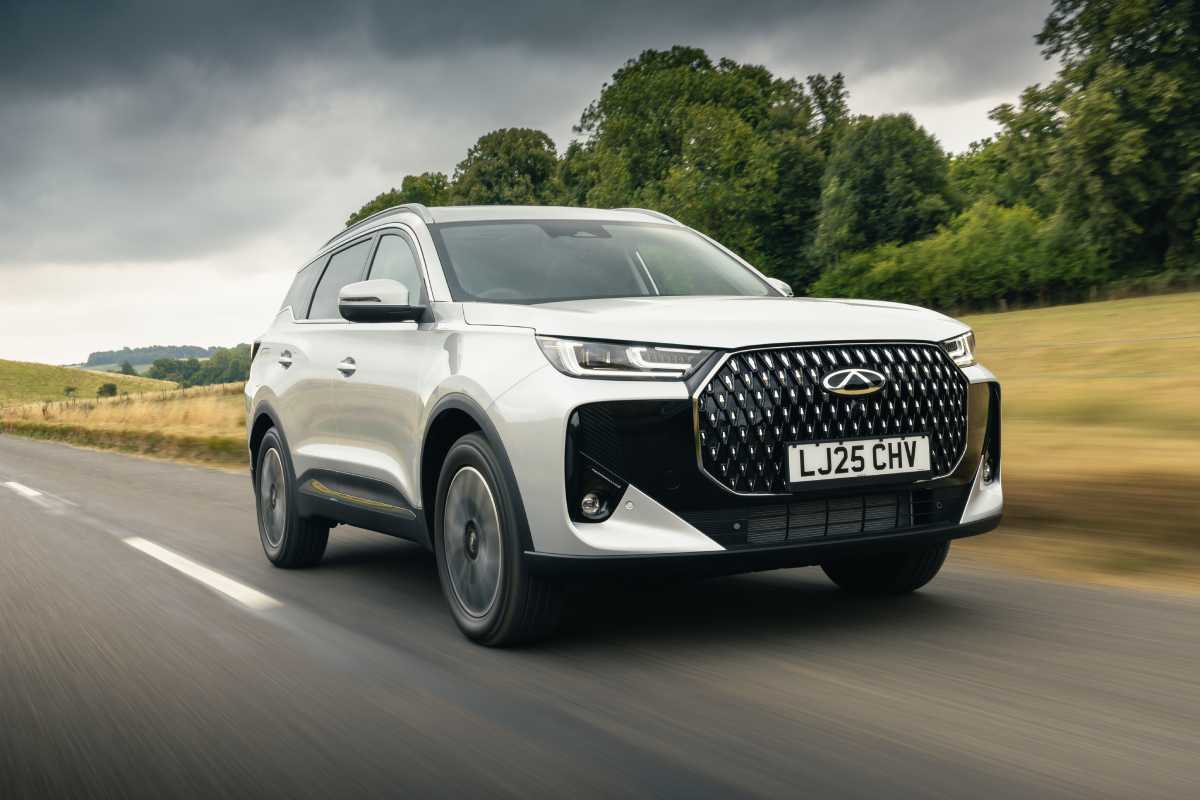
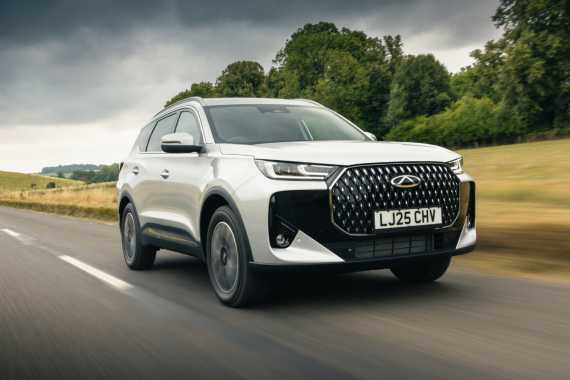
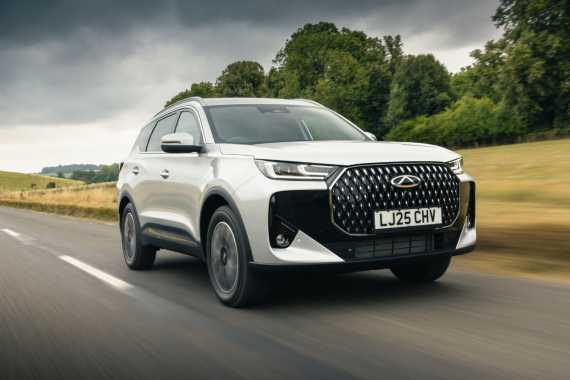
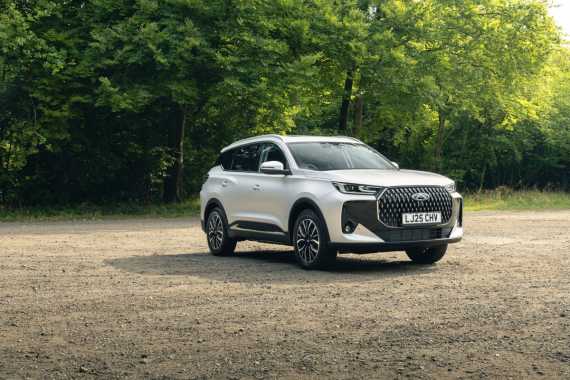
There's no need to fret if you're unsure whether Chinese design will suit your taste. The Tiggo 7 has a distinctly European appearance, featuring a prominent grille reminiscent of Audi's style that dominates the front end, complemented by large black cutouts that enhance its aggressive stance. The slender headlights also evoke Audi's design language, resulting in a front that appears sharp, squared-off, and somewhat menacing.
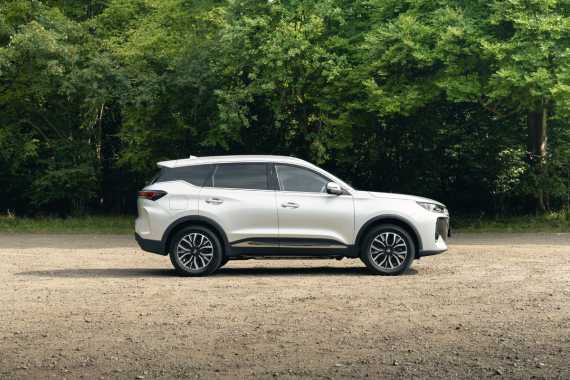
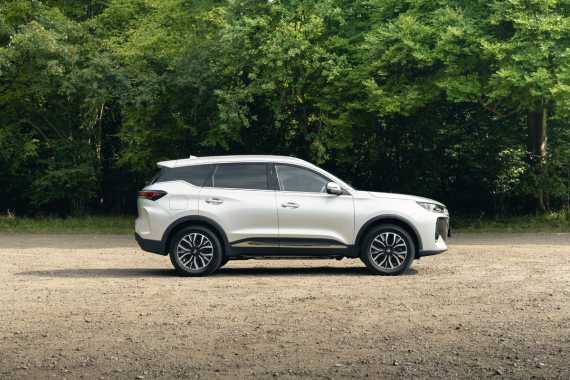
Moving to the sides, the design is less overtly aggressive, yet it benefits from well-placed creases and a substantial side skirt that injects a touch of definition and character.
At the rear, a horizontal light bar stretches across the boot, curving around the edges of the vehicle. Two sizable vertical slits flank either side, suggesting aerodynamic capabilities, while generous cladding, a tasteful roof spoiler, and a gently rounded lower edge on the back windscreen add to the overall appeal.
The Tiggo 7 is visually pleasing. There's nothing particularly revolutionary about its design, and it may not necessarily draw attention, but it certainly won't be an eyesore either.
The model has two trim levels. The Aspire variant features 18-inch alloy wheels and a 12.3-inch dual infotainment display compatible with Apple CarPlay and Android Auto. It also includes DAB radio, voice control capabilities, and a 12.3-inch digital instrument cluster; however, it doesn’t come with built-in satellite navigation.
Additionally, the Aspire trim is equipped with a rear-view camera, three driving modes, dual-zone climate control, LED headlights and taillights, along with six-way power adjustment for the driver’s seat.
Moving up to the Summit trim, you’ll find enhancements such as 19-inch alloy wheels and four-way power adjustment for the front passenger seat. This variant also boasts a powered tailgate, an eight-speaker Sony audio system, and a 540-degree panoramic camera view.
On The Road
Handling & Performance
The Tiggo 7 is powered by a 1.6-litre turbocharged petrol engine that produces 147PS and is mated to a seven-speed dual-clutch automatic gearbox, similar to what you'll find in a Jaecoo 7. Additionally, there’s a variant known as the Super Hybrid, featuring a 1.5-litre turbocharged petrol unit paired with an electric mill, resulting in an output of 204PS. This model is a plug-in hybrid, with the added capability of the engine functioning as a generator to recharge the battery when its level is low.
The pure petrol Tiggo 7 offers a decent performance, clocking in a 0-62mph time of 9.4 seconds, which can be trimmed to 8.5 seconds for the Super Hybrid variant.
Both models leap forward off the mark, almost as if they’re delivering their power in one overwhelming surge. However, despite this impressive delivery, the 7 doesn’t provide the same level of refinement found in other vehicles that feature near-instant acceleration, which can manage power more gracefully. That said, the Super Hybrid does appear to be the more composed option of the two.
Neither the 1.5 - nor the 1.6-litre engines make much of an impression in terms of sound and can produce a rather screechy note at higher revs. Yet, at lower speeds, both engines perform commendably well, with the Super Hybrid benefiting from all-electric driving, a useful feature for navigating stop-and-start traffic during rush hour. The engine for the Super Hybrid activates when needed, and the transition is so seamless that it’s hardly noticeable.
At higher speeds, the additional power becomes evident, as the non-hybrid can feel a bit sluggish. Conversely, the electric motor in the Super Hybrid provides an extra boost for performance, enhancing versatility when it comes to overtaking. This is further supported by a responsive automatic gearbox, which is always at the ready for quick gear changes.
The Super Hybrid is undoubtedly the preferred choice, especially for those who frequently find themselves in heavy traffic or on faster dual carriageways and motorways.
In a positive turn, Chery has shown a willingness to address customer feedback. Its sub-brand, Omoda 5, ushered into Britain in 2024, faced problems with its driver assistance systems, which felt as if they were wresting control away from you. Chery has worked on these systems, and while they remain in place, they are less intrusive and no longer create more issues than they resolve.
However, the Integrated Cruise Assist can still be overly aggressive in its attempt to keep the vehicle precisely centred in the lane. This can be particularly bothersome on narrow, twisty roads where straddling the white lines may be safer. Fortunately, it can be deactivated by pressing a button on the steering wheel.
Regarding ride comfort and handling, both variants perform as expected. While the 7 is generally pleasant to cruise in, bumpy road surfaces and potholes tend to unsettle both models.
The Tiggo 7 exhibits a fair amount of lean through faster corners, but it’s manageable, offering a respectable balance between comfort and sportiness. However, it’s not particularly keen on navigating twisty roads - after all, few SUVs are - and any opportunity for an engaging driving experience is hindered by the steering, which lacks feel, particularly in the Super Hybrid, where it is noticeably lighter.
Nonetheless, the 7 carries its weight well; the non-hybrid tips the scales at 1,500kg, while the Super Hybrid is around 300kg heavier. It delivers a satisfactory driving experience, even if it’s not particularly memorable.
Furthermore, the Super Hybrid is equipped with regenerative braking, which can be adjusted via the touchscreen, and it provides significantly more stopping power compared with the non-hybrid version.
Space & Practicality
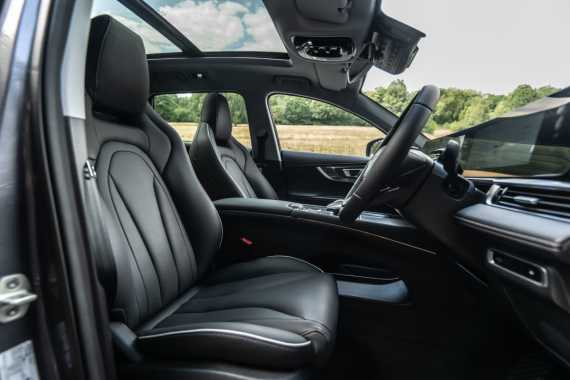
Finding an appropriate driving position in the Tiggo 7 is a simple affair, made even easier by the six-way electric seat adjustment. For those selecting the top trim, the front passenger seat also enjoys a four-way powered adjustment.
The lofty seating position provides a commanding view of the road ahead, greatly enhancing forward visibility. Rear visibility is passable as well, thanks to a large all-glass panel that extends to the back of the vehicle, where it meets the edges of the rear roof spoiler. However, the thick black border around the rear windscreen does consume a fair amount of visual space.
While we have encountered worse designs, the inclusion of front and rear parking sensors alleviates some concerns, complemented by Chery's innovative 540-degree camera system, named for its ability to create an image that renders the car invisible. This advanced camera technology is only available on the higher Summit trim, but even the entry-level Aspire model comes equipped with a standard rear-view camera.
Headroom is ample in both the front and rear, despite the sloping roofline that slightly reduces ceiling height in the back seats. Legroom is also generous, with plenty of space in the front and a roomy back that benefits from the absence of a central transmission tunnel. Accommodating three adults in the rear is feasible, although the middle seat is slightly elevated and not quite as comfortable as the outer seats.
Unfortunately, this impressive interior space does come at the expense of boot capacity, which is limited to 565 litres in the non-hybrid variant and decreases to 484 litres in the Super Hybrid. This falls short of expectations within this segment, as most competitors offer over 500 litres even in their plug-in hybrid models.
Additionally, the rear seats only provide a 60:40 split, allowing for a maximum cargo space of 1,396 litres in the non-hybrid and 1,305 litres in the Super Hybrid. Rivals from Hyundai and Kia feature a more versatile 40:20:40 split arrangement.
Interior storage options are decent, with a reasonably sized cubby under the centre console, although the door bins and glove compartment are on the smaller side.
You'll find a couple of cupholders and a wireless phone charger as well, which is designed to remain cool to prevent overheating issues.
Ownership
Running Costs
The petrol-only model returns just 32.7mpg, emitting 163g/km of CO2, which isn't great at all.
The Super Hybrid, on the other hand, manages 256.8mpg, producing just 23g/km of CO2. However, expect around 47mpg with depleted batteries – achieving anywhere near the higher mpg figure depends on keeping them topped up.
The Tiggo 7 Super Hybrid's battery charges up at a maximum rate of 40kW DC. That means a 30-80% top-up takes just 20 minutes. Charging up using a home wallbox is limited to 6.6kW, with a 0-100% top-up taking around three hours.
If you're a company car driver, then the Super Hybrid is a no-brainer, with its 56-mile all-electric range helping it into the 9% Benefit In Kind tax bracket.
Road tax will cost £1,360 and £110 for the first year in the non-hybrid and Super Hybrid, respectively, and £195 for both in subsequent years, subject to tax rises.
As Chery is a new marque, it's impossible to gauge reliability at present, and a clear picture of where in the league tables it fits won't become known for several years yet.
Nevertheless, peace of mind is offered in the form of a seven-year, 100,000-mile warranty.
Verdict
In summary, the Chery Tiggo 7 marks a respectable entry for the Chinese manufacturer as it makes its introduction to the UK market.
It comes generously equipped and underprices many competitors, featuring a pleasant interior and offering a satisfactory driving experience.
The non-hybrid model has relatively poor fuel efficiency, so the Super Hybrid stands out as the superior choice, offering improved performance. However, if you prefer not to transition to electrification, the non-hybrid still performs pretty well.
The engines lack a certain level of refinement, and if you're someone who relishes an engaging driving experience, it may be wise to explore other options.
The 7 is a suitable choice for those needing to transport four or five adults regularly, although the boot space is somewhat limited compared with most rivals.
The best feature is undoubtedly price: even the highest specification trims are more affordable than many entry-level alternatives, although brands like Dacia remain cheaper.
All in all, the Tiggo 7 holds its own, largely thanks to its attractive pricing.