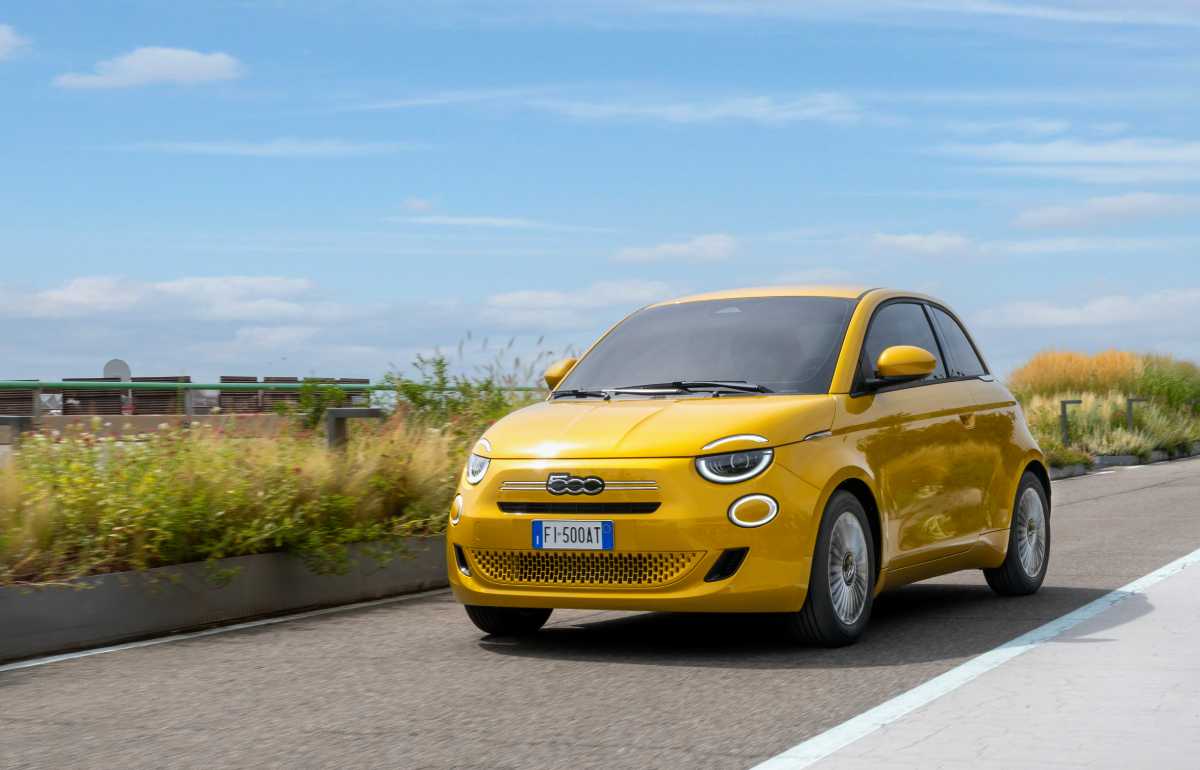
Why we love it:
- Fashionable looks inside and out
- Iconic image
- Relatively efficient to run
Where it could be better:
- It could be quicker
- Could sound better
- Can we get to a five-star Euro NCAP rating?
Introduction
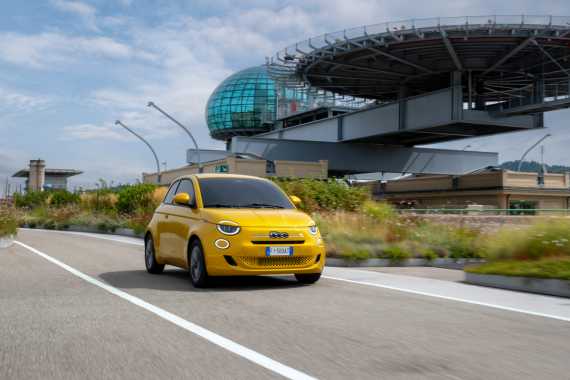
The 'new' Fiat 500's history dates back to the 1950s with the original model. This milestone is significant, as the current car has now been in production for just as long as its predecessor, which was axed in 1975.
However, there's little to celebrate, as sales of the 500 have been declining due to a shift toward larger SUVs and more economical options like hybrids and electric vehicles. The all-electric Fiat 500e poses a real challenge, featuring a modern design that the petrol 500 lacks, especially since Fiat didn't update the latter when the former launched.
Now, Fiat has finally introduced a hybrid version of the 500 that aligns its design with the 500e, five years after the 500e's launch, claiming it represents the 'natural evolution of an icon.' Yet, this sounds more like PR spin, as sales of the 500e have fallen short and many see keeping the old 500 alongside the new model as a mistake.
In a unique move, Fiat has added an engine to a car designed for electric power. Will this strategy rejuvenate the 500 and its Cabriolet version? Our motoring journalist Tim Barnes-Clay finds out.
On The Road
Handling & Performance
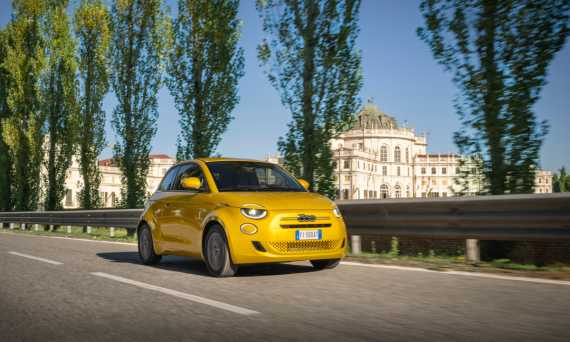
We are currently evaluating the Coupe version in the Torino specification.
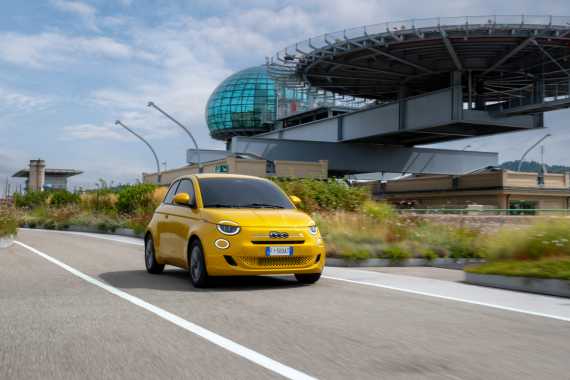
The Fiat 500 Hybrid lacks power by any standard, and it's rare to encounter a vehicle with horsepower figures in the double digits rather than the triple digits. In fact, it ranks among the least potent cars you can buy in the UK at present.
Given its compact size and a kerb weight of approximately 1,000 kg, there’s not much bulk for it to move, though this offers little solace when considering its 0-62 mph time of 16.2 seconds.
For those considering the upcoming 500C Hybrid convertible, prepare for an even slower experience, clocking in at a rather dreary 17.3 seconds.
Inevitably, this makes it one of the slowest cars available on the British market today.
When accelerating onto a motorway, the Fiat may leave you feeling underwhelmed; even if you downshift, you might be surprised by the lack of enthusiasm in building up speed.
The gearbox performs reasonably well, the clutch pedal offers a predictable, precise experience – both areas have improved since the previous model – and the overall driving experience is quieter than its predecessor.
However, the engine doesn’t have a particularly pleasing sound, whether at low revs or when pushed to its limits.
Nevertheless, performance and engine noise aren't the 500 Hybrid's focus – it's essentially a city car.
In traffic or when tackling a busy town centre, the 500 Hybrid excels, delivering the agility needed to weave through lanes effortlessly. The lack of rapid acceleration is quickly forgotten in the cityscape.
Regarding handling, the 500 Hybrid is again best suited for urban driving. Changing lanes is straightforward, and you'll find navigating the tight corners of city backstreets is a breeze, thanks to the exceptionally light steering (which becomes even lighter when the car's 'City' mode is activated).
However, on rural roads, it feels out of place, with the steering failing to provide much weight or feedback, leading to a lack of engaging driving experience and minimal excitement.
While there's not an excessive amount of body lean, it's still more than we would prefer for a car in this category, and it doesn't feel as stable at higher speeds as its competitors.
The 500 Hybrid offers decent suspension that handles potholes and uneven surfaces, providing a comfortable ride. The 16-inch alloys on our Torino-trimmed test car likely contribute to this comfort; larger 17-inch rims found on the mid-range La Prima variant may sacrifice some ride comfort.
Styling
The Fiat 500 Hybrid comes in two primary trim levels, with a special edition also available at launch.
The entry-level Icon features 16-inch alloy wheels, a 10.25-inch infotainment touchscreen that supports Apple CarPlay and Android Auto, DAB radio, a seven-inch digital instrument cluster, LED headlights, and a combination of black and ivory fabric seats. It also includes automatic air conditioning, rear parking sensors, and glossy black door mirror caps.
The La Prima trim enhances the standard offerings with 17-inch rollers, tinted rear windows, a fixed glass sunroof, chrome door sill plates, eco-leather seats, a matte pearl dashboard, and a two-tone premium steering wheel. This trim further includes heated front seats, automatic high-beam assistance, satellite navigation, and a rear-view camera.
The special launch edition, named Torino, offers fewer features than the La Prima. It has smaller 16-inch alloys, distinctive Torino badging, and a combination of fabric and vinyl seats.
For those who may not know, "Torino" is Italian for Turin, the city where Fiat has been based for over 125 years.
While this model is labelled as a "hybrid," it's important to note that it’s actually a mild hybrid. It includes a tiny electric motor that enhances fuel efficiency through energy recovery during braking, along with an engine stop/start system that turns off the mill when idling or coasting to a stop after disengaging the clutch. However, it doesn't allow for driving without the engine running.
Under the bonnet, the Fiat 500 Hybrid is powered by the 'FireFly' 1.0-litre, three-cylinder petrol engine, offering front-wheel drive with a six-speed manual gearbox and generating a modest 65PS.
Furthermore, Euro NCAP has not yet tested the 500 Hybrid, but as it’s based on the 500e, its 2021 four-star rating is a good indicator of potential performance.
That said, Euro NCAP occasionally updates its criteria, so a lower score for the 500 Hybrid would not be surprising.
The 500e scored 76% for adult occupant safety, 80% for child protection, and 67% for safety assists.
Space & Practicality
For those who are quite tall, this may not be the ideal car for you; however, two adults should generally find it easy enough to access the front seats.
The driver's seat has limited adjustment options, but pushing it back to its furthest position should be adequate for those with longer legs. Given that this is a compact city car, you sit at a relatively high position, which provides a better view of the road ahead. Taller individuals might feel as if they’re peering through the topmost part of the windscreen, though.
While the front windscreen pillars aren't particularly thick, visibility to the rear leaves something to be desired. The rearward visibility is hampered by wider pillars and a prominent black border around the rear windscreen.
In the back, the seats are less generous when it comes to space – with only two available, it's designed as a four-seater – and the absence of rear doors doesn't help. Taller passengers may find it cramped, but it works reasonably well for a couple of children; other competitors do offer more room.
The boot space is notably smaller than rivals', measuring just 183 litres, especially compared with the Hyundai i10's 252 litres.
Even moving up a segment to a supermini, like the Vauxhall Corsa, will provide you with 309 litres, making the 500 Hybrid seem quite limited in comparison to many other vehicles.
When you fold the rear seats down (which split 50:50 since there are only two), the boot capacity increases to 440 litres – although this is less than the previous model offered.
On a positive note, the Fiat offers a surprising amount of storage in the cabin, given its compact dimensions.
While the door bins are not exceptionally spacious, the glovebox offers ample room, and the cubby area between the front seats has decent storage capacity as well.
Ownership
Running Costs
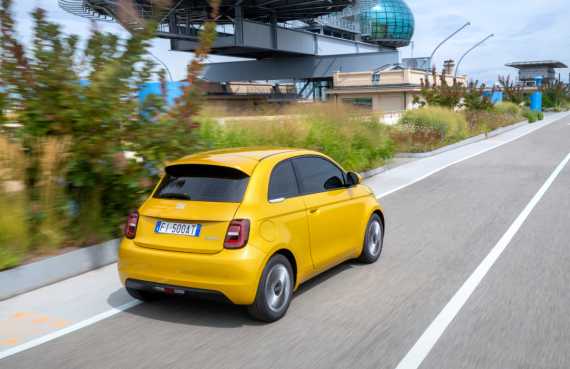
The Fiat 500 Hybrid achieves an impressive 53.3mpg, with CO2 emissions of 119g/km. While this figure isn't too shabby, it's approximately 8mpg lower than its predecessor and produces slightly more carbon dioxide, though it remains competitive with rivals.
While it's doubtful that many city cars are selected for company use, their appeal is diminished by increased Benefit-In-Kind tax rates. Nowadays, plug-in hybrids and electric vehicles are much more sensible choices for company vehicles.
To make matters worse, despite its decent fuel efficiency and rather lacklustre performance, the Fiat's initial road tax will still set you back £440.
Reliability is another area of concern, as Italian brands typically don't fare well in this regard, with Fiat being a notable contender in this long-standing issue.
The previous iteration of the Fiat 500 Hybrid hasn't had much success either, so perhaps a redesign could turn its fortunes around.
Verdict
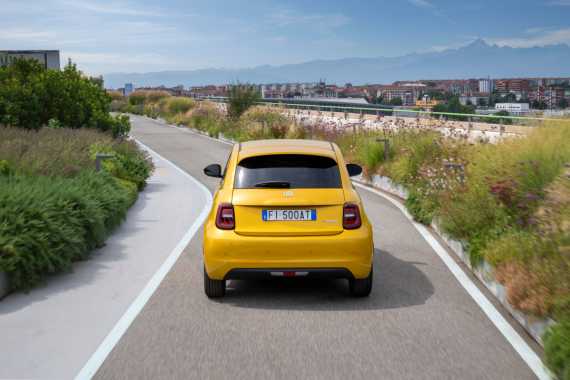
The Fiat 500 Hybrid represents a significant advancement following the launch of its all-electric sibling, the 500e.
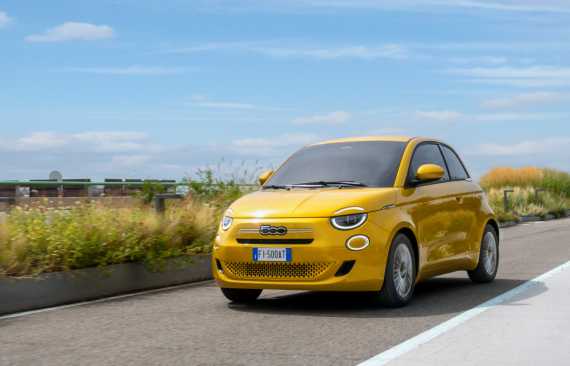
This Italian's main selling points are its stylish design and charming appearance, along with a vibrant, refreshed interior. Additionally, the improved infotainment system is a significant benefit.
It is challenging to recommend a specific trim; our test car, the Torino, lacks many features compared with the higher-end La Prima trim, while the entry-level Icon is reasonably well-equipped as standard.
As a city-driving vehicle, the Fiat 500 Hybrid shines. However, it reveals its limitations in rural settings, where performance is underwhelming, and handling is uninspiring.
While city cars are designed for urban convenience rather than heart-thumping driving on winding roads, direct opponents offer more thrills, added comfort, and bigger and better practicality.
If aesthetics are not a priority for you, one of Fiat's foes may better suit your needs. However, if purchasing a visually appealing vehicle is your primary concern, you may find it challenging to find a city car that surpasses this one.