Why we love it:
- Dynamic styling and engaging performance
- Packed with tech inside a luxurious cabin
- A one-million mile battery warranty
Where it could be better:
- Only sold as an EV in the UK and in 2WD
- Quite expensive
- Will it stand out alongside top German rivals?
Introduction
Lexus originally launched in the UK with the LS limousine and it was shortly followed to market by the first generation ES saloon. That was back in 1989 but fast forward to 2026 and we are seeing the all-new eight-generation ES. It is larger and more dynamically-styled than its predecessor and boasts a wealth of new technology, but still remains true to its loyal Lexus fanbase.
It is only being sold in the UK with a fully electrified powertrain and front-wheel drive, but customers can choose from three generously-equipped trim levels called Premium, Premium Plus and Takumi.
All cars feature the same capacity 77kWh battery, but the range does vary slightly due to differing wheel sizes. But the ES can deliver up to 361 miles on a single charge, increasing to 427 miles in the city, with prices starting from £59,345.
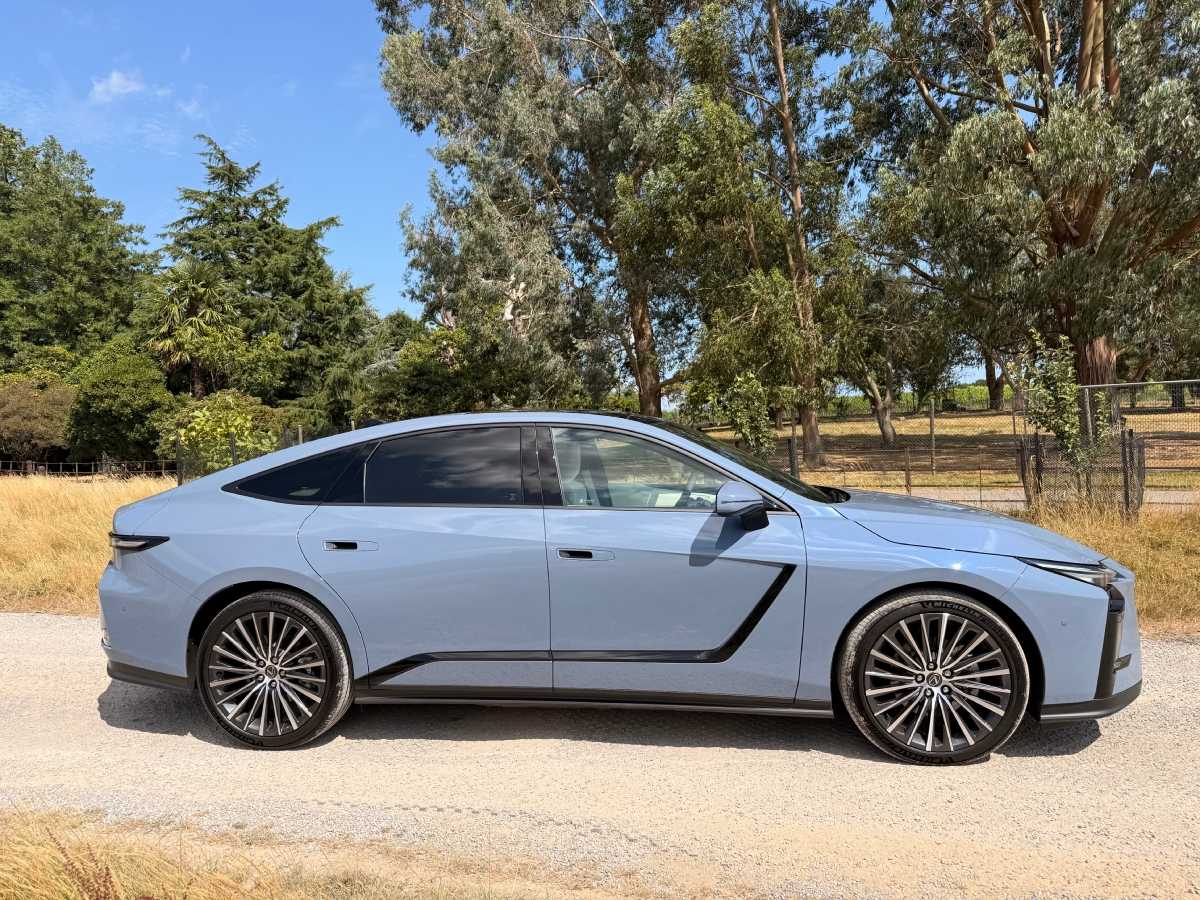
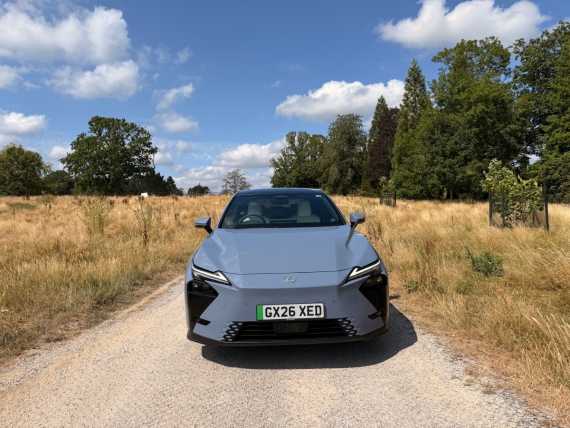
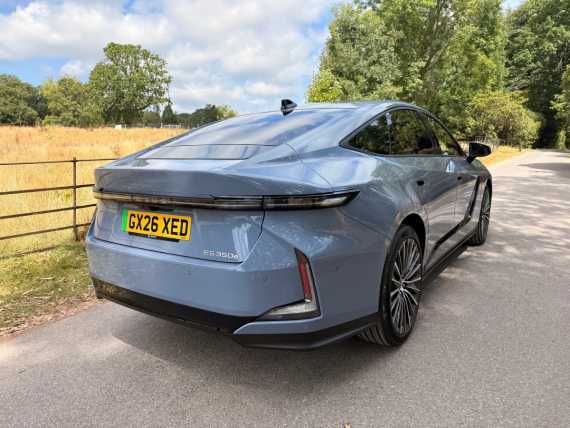
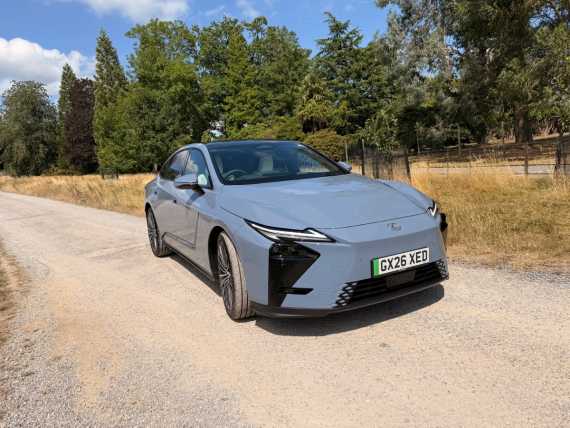
We opted for mid-grade ES Premium Plus for our test drive and it was sporting the new Glacier Blue shade which really looked the business.
On The Road
Handling & Performance
Powering the Lexus ES is a 77kWh battery with a single electric motor on the front axle for front-wheel drive. With 221bhp and 269Nm of torque, this full-sized, executive saloon can sprint from 0-62mph in 8.0 seconds and maxes out at 99mph. Yes, there are faster, more powerful and more dynamic rivals out there, but this car prioritises refinement which is something Lexus owners really appreciate.
And it’s certainly no slouch, reaching a 70mph cruising speed on motorways where it will sit effortlessly eating away at the miles. It’s easy to manoeuvre in busy towns and the remote automatic parking, from Premium Plus trim upwards, is a blessing as the car stretches more than five metres in length.
When faced with more testing A and B roads with lots of twists and turns, the ES is confident, grounded and very assured when pushed on through long sweeping bends. There is no sign of body sway and the ride is exceptionally good – even on the larger 21-inch wheels. That said; it gets a little fidgety on rougher road surfaces, of which there are many!
Overtaking slower-moving vehicles is achieved in the blink of an eye. And the steering wheel paddles can be used to alter the strength of the regenerative braking. In its highest setting it will gradually bring the car to a standstill, but there is no single-pedal driving function.
There are drive modes called Eco, Normal, Sport, Range and Custom that alter the dynamics and handling of the car, and the driver can also adjust the volume on the Active Sound set-up that mimics a traditional engine.
Special mention to the more compact steering wheel which looks and feels nice, and this now features the LEXUS name in the centre instead of the company emblem.
Styling
The Lexus ES is steeped in history here in Britain as it was one of the very first vehicles the Japanese carmaker launched back in 1989. It was a looker then, but these days it has developed into complete eye-candy thanks to its dynamic, sleek streamlining.
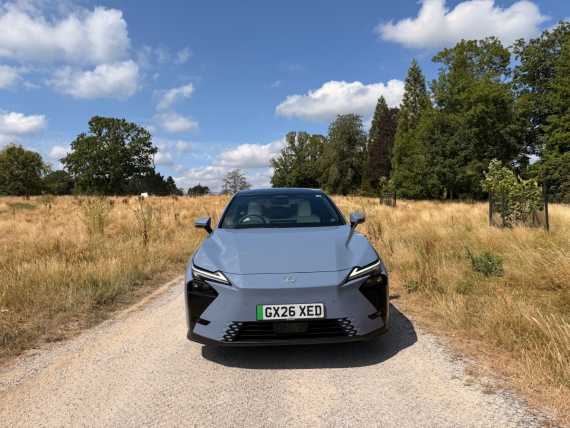
The four-door saloon has grown considerably compared to the outgoing car, but is perfectly proportioned and boasts a truly strong road presence. The traditional spindle body design makes the vehicle instantly recognisable as a Lexus and it extends across the bonnet to the outer edges of the bumper. There are new front lighting signatures that create a twin L-shape with outward facing indicators and inward facing daytime running lights – this will become the new lighting signature on Lexus models moving forwards.
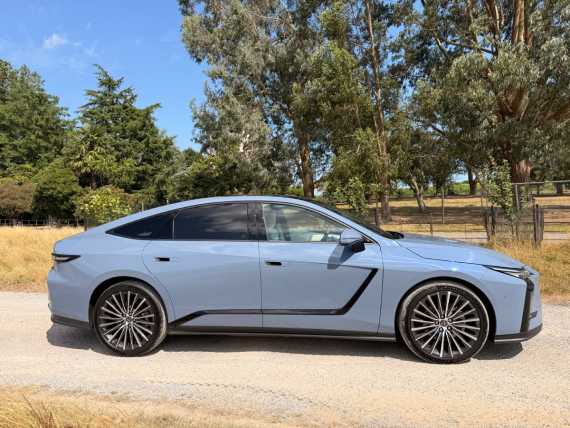
The car has a dynamic silhouette when viewed from the side with the cabin roofline tapering away at the rear, where there is a single light bar housing the Lexus logo and this connects to the tail and brake lights. Once again, they are housed in L-shaped units positioned on the outer corners to help highlight the vehicle’s width.
Other eye-catching features include rear privacy glass, a panoramic roof, flush door handles and either 19- or 21-inch alloy wheels.
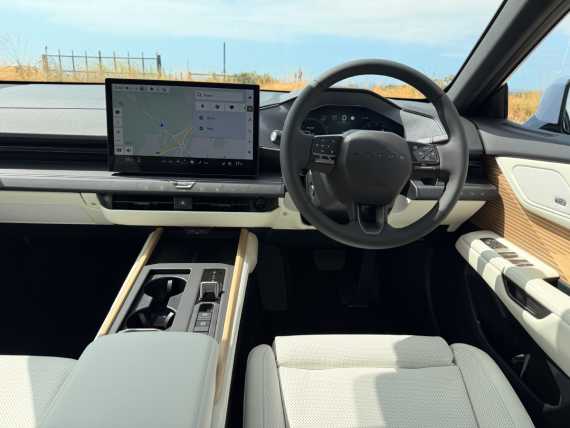
Moving inside, the cabin is premium quality throughout with a wealth of high-end fixtures and fittings. There is a new-look compact steering wheel that can be heated, along with Tahara synthetic leather or perforated semi-aniline leather seat upholstery. The seats are powered, can be heated or ventilated and also have slimmer headrests for the first time.
The main focal point is the 14-inch infotainment screen that offers quick and easy access to the many on-board features, including sat nav, Apple CarPlay and Android Auto smartphone connectivity, Bluetooth, a DAB radio, a pitch perfect 17-speaker Mark Levinson sound system (10 speakers on Premium grade cars) and plenty more besides. Additionally, a 12.3-inch digital driver display clearly shows the important numbers, such as speed and existing driving range. This can also be customised to taste and there is a head-up display too.
A panel of hidden switches light up on the dashboard when the vehicle starts and they are used for simple tasks such as demisting the screens and temperature control. And special mention to the beautifully-designed door panels that have been crafted using Bamboo Layering. This involves using advanced printing and light transmission techniques with an end result that is exceptionally striking and is enhanced further thanks to the 64 shades of ambient lighting.
So, lots of new tech, but existing Lexus customers will be relieved to hear everything remains really user-friendly.
Space & Practicality
The latest Lexus ES has grown in size and that’s good news for occupants who now benefit from extra cabin and storage space. The vehicle stretches 5,145mm in length, is 1,920mm wide, 1,560mm tall and has a 2,950mm wheelbase.
The cabin is immense with bundles of space for a couple of six-foot-plus adults to stretch out up front. And two more can sit in the back too. Add a third and it gets a little cosy and any middle-seat occupant will also have to straddle a fairly high hump.
The boot has a powered lid and is really deep with a capacity of 512 litres. It is large enough to sit four full-sized sets of golf clubs next to each other. Although the rear seats do not fold forward, there is a ski hatch to transport any longer items.
There is no extra storage space beneath the bonnet, but there are numerous options scattered throughout the cabin. These include a deep central cubby with side hinges, making it easy for the driver and front passenger to access, a lockable glovebox, front and rear cup holders, seat back pockets, door bins with a bottle compartment, twin wireless charging pads, a large area below the centre console, plus four USB-C ports (two front and two rear).
Unlike some EVs, there is no Vehicle to Load facility on the Lexus ES to power up external appliances. And speaking of charging, the 77kWh battery can be boosted from 10 to 80 per cent in 28 minutes using a 150kW fast charger, or from 10 to 100 per cent in four hours via a 22kW AC charger. Again, close competitors offer faster charging capabilities.
Ownership
Running Costs
The Lexus ES is not a cheap car, but neither are its closest rivals that generally stem from the top German marques. The entry-level ES Premium costs £59,345, mid-trim Premium Plus is £68,245 and the Takumi model costs £72,545. Our Premium Plus test car featured 21-inch alloy wheels (upgraded from 19-inch) costing £1,600 extra, along with Special Metallic Paint priced at £1,250. That meant the final cost crept up to £71,095.
The first-year tax bill for electric vehicles is just £10, but this increases to the standard £200 charge after 12 months. However, as the Lexus ES, exceeds the government’s £50k Expensive Car Supplement threshold, owners will need to pay an extra £440 from years two to six.
It’s better news for any business drivers though as the car’s green credentials are rewarded with an attractive four per cent Benefit in Kind tax rating.
Day-to-day costs can be kept down by charging the vehicle at a home or work-based wallbox and it’s worth trying to negotiate a cheaper overnight tariff with your energy supplier if possible.
Lexus has a superb record for developing reliable models and its confidence in the ES is backed with a world-class warranty package that sees the battery covered for eight years or one million miles, whichever comes first. The rest of the vehicle is covered by a standard three-year, 60,000-mile warranty, but this can be extended to 10 years or 100,000 miles if the car is serviced at an approved Lexus centre.
Insurance group details are yet to be announced.
Verdict
Lexus has certainly proved it can move with the times, adopting fresh styling cues and modern technology without being overly flashy or garish in the process.
This luxury saloon will be taking on some big hitters in the sector, many from premium German brands, but it can certainly stand shoulder-to-shoulder with them on many aspects. It’s beautifully stylish, packed with all the everyday creature comforts imaginable and its performance is also rewarding and engaging, while maintaining excellent refinement levels along the way.
Admittedly, it’s not cheap, but models of this quality seldom are. Only time will tell if it’s too steep a price to attract conquest sales and even to temp existing Lexus customers to sign on the dotted line.