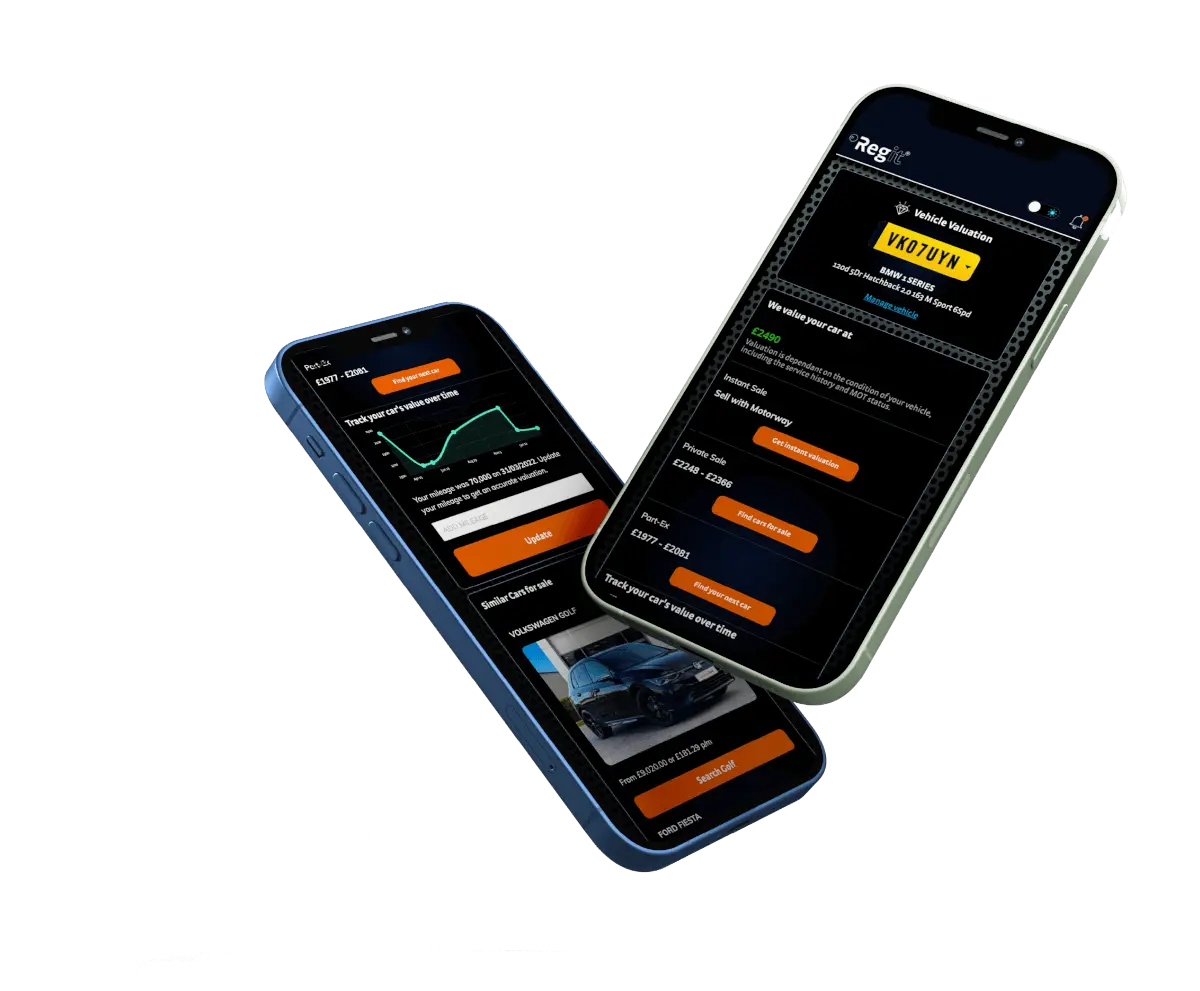
Free Car Valuation
Get accurate car valuations by simply entering your registration number.
- Instant sale price
- Private sale price
- Part-exchange price


Autotrader Car Valuation: How It Works
Want to know how much your car could be worth? An Autotrader car valuation uses your registration number and mileage to provide a guide price based on current used-car market data. Find out how the valuation works, what the figure means and why it may differ from the price you ultimately achieve when selling. If you would rather skip straight to a price, Regit's free car valuation gives you instant sale, private sale and part-exchange figures from your registration alone.
What Is an Autotrader Car Valuation?
An Autotrader car valuation is a free online estimate of what your car could be worth in the current market. Autotrader's valuation tool uses your vehicle registration number and mileage to identify the car and provide a guide price.
The valuation can help you understand your car's potential market value before deciding how to sell it. It is a guide rather than a guaranteed selling price, as the amount you eventually receive can depend on the vehicle, its condition and how you sell it.
Who are Autotrader?
Autotrader is the UK's largest automotive marketplace, connecting buyers and sellers across its platform. The business was founded in 1977 and has evolved from a classified advertising publication into a digital automotive marketplace.
Today, Autotrader provides services including vehicle listings, car valuations and vehicle history checks.
The market data behind an Autotrader car value
Autotrader's valuation data draws on more than 800,000 adverts, information from more than 3,500 dealer websites, major car auctions and values from ex-fleet and leasing vehicles. Its valuation data is updated daily, helping its estimates reflect changes in the used-car market.
How to Get an Autotrader Valuation, Step by Step
Getting an Autotrader valuation is a simple online process. You can use the tool to find out what your car could be worth without having to advertise it or commit to selling.
- Enter your registration number – Start by entering your car's registration number. This allows Autotrader to identify the vehicle.
- Enter your mileage – Add the car's current mileage so the valuation can take this into account.
- Check your vehicle details – Make sure the vehicle details shown by Autotrader match the car you own.
- View the valuation – Once your details have been confirmed, Autotrader provides a guide to your car's current market value.
The valuation is free to obtain, so you can use it to research your car's value even if you are not ready to sell.
What you need before you start (reg, mileage, history)
You need your registration number and current mileage to get an Autotrader valuation. It is also useful to have information about your car to hand so you can judge how closely it matches the vehicle assumed by the valuation.
- Registration number – Used to identify your vehicle.
- Current mileage – Enter the most accurate mileage reading available.
- Service history – Useful when assessing your car's condition and deciding what price you might achieve when selling.
- Condition – Consider the car's cosmetic and mechanical condition before comparing the guide price with offers from buyers or dealers.
Autotrader's private-sale valuation methodology assumes the vehicle is in good condition for its age, with some minor wear and tear expected. The valuation itself does not assess the car's individual condition.
Private sale price vs part-exchange price: what's the difference?
Autotrader can show different valuations depending on how you plan to sell your car. A private-sale valuation estimates what you could potentially achieve by selling the car directly to another motorist, while a part-exchange valuation reflects what your car could be worth when you trade it in with a dealer.
The part-exchange figure is typically lower than the private-sale figure because a dealer needs to account for the costs and margin involved in taking your car, preparing it and reselling it. This doesn't mean your car is suddenly worth less; the two figures represent different selling routes.
The difference between the figures can therefore be useful when deciding how to sell. A private sale may offer the potential for a higher price but usually involves more work, while part exchange can be more convenient when you're buying another car.
It is worth remembering that these are guide prices, not guaranteed offers. The amount a dealer or private buyer actually offers can vary depending on the individual vehicle and the transaction. Regit's free car valuation shows you instant sale, private sale and part-exchange figures side by side.
Autotrader Instant Offer: Selling Your Car Directly
Autotrader has offered an Instant Offer service designed to give sellers a quick cash price for their car, providing an alternative to advertising privately or part-exchanging it. The service was introduced to give motorists a faster way to sell, with Autotrader describing it as an instant cash offer based on information provided about the vehicle.
An offer is based on the details you provide about your car, so it is important that the information is accurate. Where an offer is subject to a vehicle inspection or collection, the final amount can depend on the car matching the description and details originally provided.
This type of direct-sale route can be more convenient than selling privately, but a guaranteed or fixed offer should not be confused with the guide price produced by Autotrader's free valuation tool. The valuation is an estimate of market value, while an Instant Offer represents a specific price for selling the vehicle through the relevant buying service.
How Autotrader Values Used Cars
Autotrader uses market data to estimate the value of used cars. Its valuation system draws information from a large number of vehicles and different areas of the automotive market rather than relying on a single price guide.
For private-sale valuations, Autotrader says its methodology takes factors including the vehicle's make, model, age and mileage into account. The resulting figure is intended to provide a guide to the current market rather than a guaranteed selling price.
Where the data comes from (adverts, auctions, fleet sales)
Autotrader says its valuation data comes from several sources, including more than 800,000 adverts, more than 3,500 dealer websites, major car auctions and ex-fleet and leasing values.
This gives Autotrader visibility across different parts of the used-car market. Advertised prices show what vehicles are being offered for, while auction and fleet data provide additional information about vehicle values across the wider automotive market.
Vehicle condition assumptions built into every valuation
Autotrader valuations assume a vehicle is in good condition for its age, with normal wear and tear. The valuation does not directly assess individual vehicle condition when generating the guide price.
Good condition typically includes:
- Minor or cosmetic wear to bodywork, wheels, tyres and interior
- Minor cosmetic marks to lights, glass or mirrors
- Tyres that are safe and legal
- All keys and documentation present
Factors that can affect the price achieved:
- Significant damage or excessive wear
- Non-working equipment or features
- Gaps in service history
- No current MOT
- A vehicle in excellent condition or with full service history may achieve a higher price than the guide
Fair condition (part-exchange guidance):
- Minor bodywork repairs required
- Noticeable chips, scratches or interior wear
- Some equipment may not work
- Current MOT required
- No outstanding finance
- Vehicle must not have been written off
It's important to remember that these condition factors can affect the price you ultimately achieve, but they are not used to calculate Autotrader's private-sale guide valuation.
How often valuations are updated
Autotrader says its valuation data is updated daily. Used-car prices can change as market supply, demand and advertised prices change, so the estimated value of the same vehicle can be different when checked at another time.
For that reason, an Autotrader valuation should be treated as a snapshot of the market rather than a permanent value for your car.
How Accurate Is an Autotrader Valuation?
An Autotrader valuation is a guide to what your car could be worth based on current market data, not a guaranteed selling price. Autotrader uses a large amount of market information to produce its valuations, but the price you ultimately achieve can vary depending on your car and how you sell it.
The valuation is therefore best used as a benchmark when researching your car's value, comparing offers or deciding whether to sell privately or through a dealer.
Why your valuation might be lower than expected
There are several reasons your Autotrader valuation might not match the figure you had in mind.
- Market prices change. The value of a car can rise or fall as supply, demand and prices for comparable vehicles change.
- Mileage matters. Autotrader's valuation methodology takes mileage into account, so a higher mileage can affect the estimated value of a vehicle.
- The guide price is based on assumptions. For private-sale valuations, Autotrader assumes the car is in good condition for its age, with minor wear and tear expected. If your car has significant damage, mechanical problems or other issues, you may find it difficult to achieve the guide price.
- Your car's individual specification may differ. Autotrader says its private-advert valuation does not take optional extras or modifications into account, so these may influence the price you achieve even though they are not reflected in the guide figure.
Why different valuation sites give different figures
Different car valuation services can produce different estimates because they use different data sources, methodologies and assumptions.
One valuation may focus more heavily on private-sale prices, while another may reflect dealer or trade values. Differences in the vehicles used as comparisons, the age of the data and the type of sale being considered can all affect the result.
A difference between valuation sites does not necessarily mean one figure is incorrect. It can simply reflect different approaches to estimating the value of the same vehicle.
Autotrader Vehicle Check: What It Tells You
An Autotrader Vehicle Check is a separate product from the free car valuation. While the valuation estimates what a car could be worth, a Vehicle Check provides information about its recorded history.
Depending on the vehicle and information available, an Autotrader Vehicle Check can provide details including whether the vehicle has been reported stolen, recorded as an insurance write-off or has outstanding finance. It can also include mileage information, import or export status, vehicle specification and other recorded details.
A Vehicle Check is a paid product, so you do not need to purchase one to use the free valuation tool. The two services have different purposes: the valuation helps you understand what your car may be worth, while the Vehicle Check helps you investigate its history.
Regit's Car History Check covers similar ground, and the free MOT History Check lets you view previous MOT results, advisories and recorded mileage before you buy or sell.
Value your car free with Regit
Enter your registration to see your instant sale, private sale and part-exchange prices in seconds.
Get a Free Car ValuationOr read more about how our free car valuation works.
Frequently Asked Questions
An Autotrader car valuation is a guide based on current market data rather than a guaranteed selling price. The amount you eventually receive can differ depending on your car and how you choose to sell it.
Yes. Autotrader provides an online car valuation free of charge, allowing you to check your car's estimated value without committing to sell it.
Your valuation may be lower than expected because of changes in the used-car market, your vehicle's mileage or the assumptions used to produce the guide price. The private-sale valuation assumes a car is in good condition for its age and does not account for optional extras or modifications.
A private sale means selling directly to another motorist, while part exchange involves trading your car in with a dealer. The part-exchange figure may be lower because the dealer needs to account for the costs and margin involved in reselling the vehicle.
Autotrader does not simply buy every car itself. Instead, it provides a selling route through its network of dealers, allowing sellers to receive offers from participating dealers.
For its private-sale valuation, Autotrader assumes the vehicle is in good condition for its age, with some minor wear and tear expected.
Yes. You can use Autotrader's free valuation tool to find out what your car could be worth without committing to sell it.
Autotrader says its valuation data is updated daily. This means the estimated value of a vehicle can change as the used-car market changes.