Why we love it:
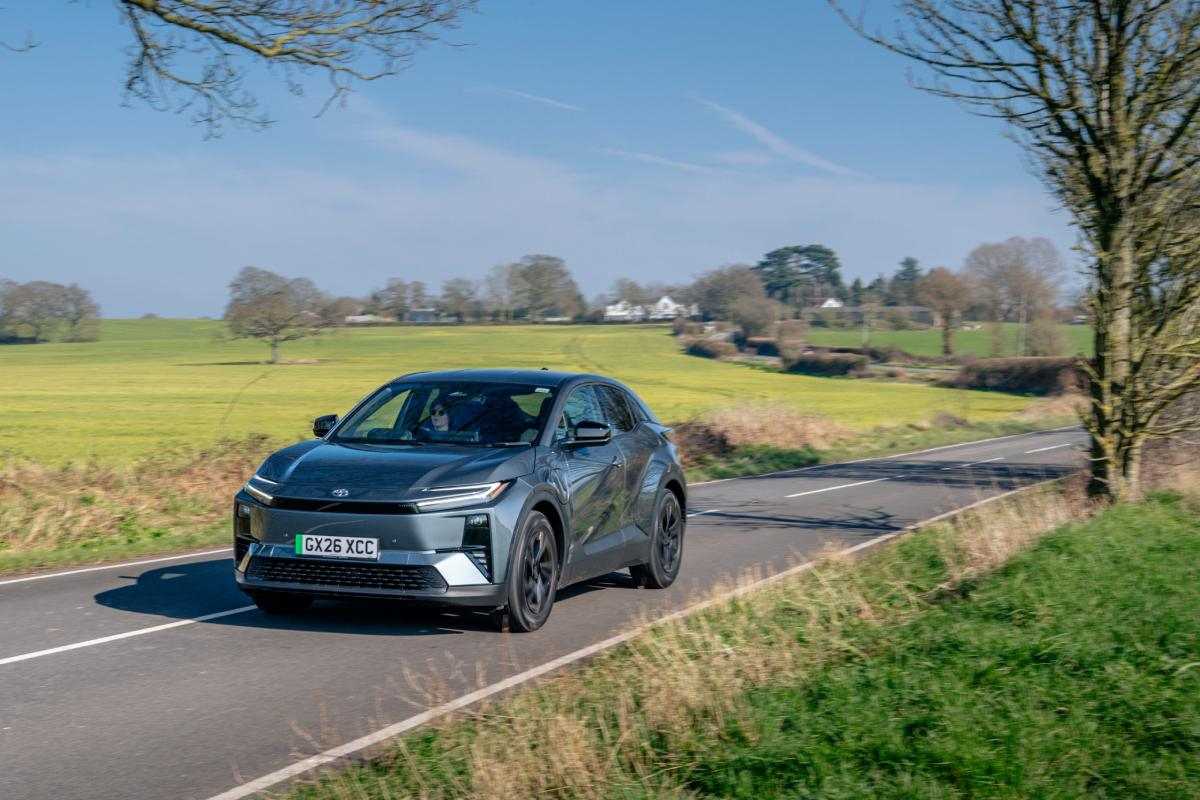
- It is a handsome car
- We appreciate its efficiency and warranty
- We love the build quality of the cabin
Where it could be better:
- Rear cabin is rather dark
- Less body roll would make it even more fun
- Could it be made even more affordable?
Introduction
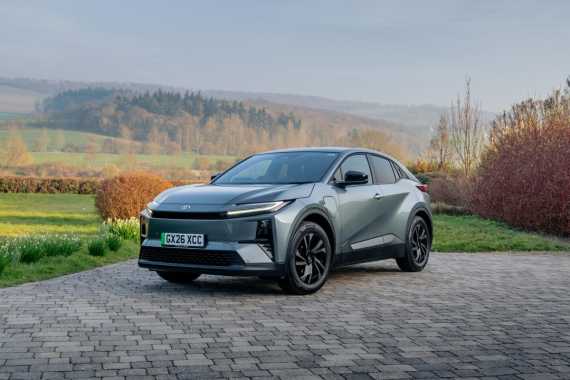
Building on the success and popularity of the C−HR compact crossover SUV, Toyota has introduced an all-electric version, the C−HR+.
The Toyota Battery Electric Vehicle (BEV) is available in three trims - Icon, Design and Excel – and offers a driving range of up to 376 miles. It is also equipped with technology designed to optimise range and charging performance.
Our motoring journalist Tim Barnes-Clay was at the European media launch of the all-new C-HR+ in Portugal to see what it's like.
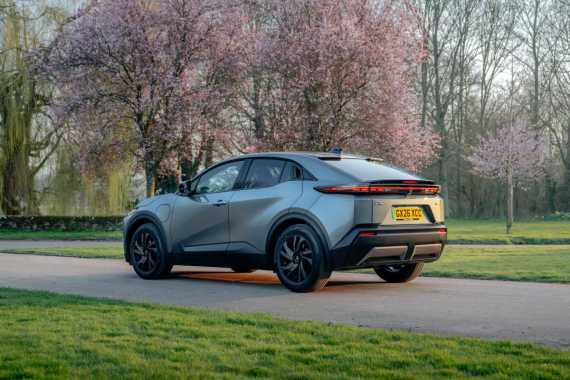
From every angle, the Toyota C-HR+ exudes agility, intention, and a modern aesthetic. Its defined lines and shapes give the car a sense of movement even when it's stationary. The stance and low roofline lend it a sporty look – and the most notable feature is that the roof is designed without compromising the headroom of the occupants in the back.
The front end has Toyota's distinctive 'hammerhead' appearance with LED headlights and a clean front-end arrangement, as you'd expect from a BEV. The defined character lines at the rear, combined with sleek lighting, give this vehicle an advanced look, while the low rear bumper emphasises its nimble handling.
For the Icon and Design trims, five colour options are available: Cement Grey, Galaxy Black, alongside new Mineral metallics, and Platinum Pearl White, along with Metal Oxide premium finishes. The top Excel specification includes a bi-tone finish – Cement Grey with a black roof as standard, with other hues available as options. The 20-inch alloy wheels on the Excel variant (an optional upgrade for the Design model) give the car an athletic appearance with an injection of urban sophistication. However, for maximised driving range, standard 18-inch wheels are featured on the Icon and Design grades.
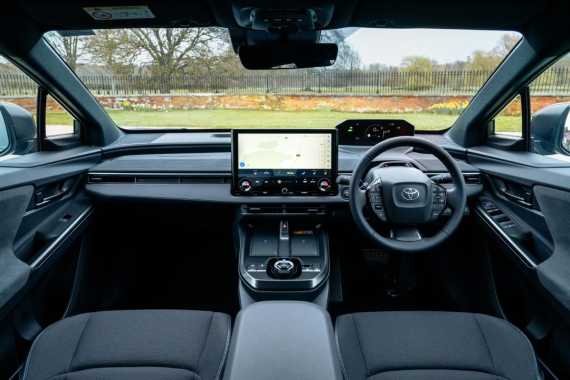
Inside the Toyota, technological enhancements are evident as well. A high-resolution seven-inch graphic combimeter is used instead of traditional analogue instruments. You are presented with clear information that can be adjusted according to your needs and driving conditions. The data includes speed, battery level, range, regenerative braking intensity, and turn-by-turn navigation.
At the centre of the cabin lies a fully digital 14-inch multimedia display, strategically placed for easy visibility and accessibility for you and your front passenger. The intuitive interface seamlessly manages the multimedia system and cloud-based navigation.
The stock kit also includes a six-speaker audio system, while an optional JBL Premium Audio upgrade features nine speakers, an 800W amplifier, and a subwoofer.
The £34,495 Icon model is equipped as standard with a 57.7kWh battery and an 11kW onboard charger, combination fabric and artificial leather upholstery and a heated steering wheel. The comprehensive Toyota Safety Sense and driver assistance systems include a Blind Spot Monitor with Safe Exit Assist. Two wireless device chargers are also provided, along with wireless smartphone integration via Apple CarPlay or Android Auto.
The £36,995 Design grade, driven for this review, introduces a higher-capacity 77kWh battery, along with a power-operated tailgate and rear privacy glass.
At the top of the range, the pricey £40,995 Excel model comes equipped with a 22kW onboard charger, power driver’s seat adjustment, synthetic suede and leather upholstery, headlight cleaners, and a Panoramic View Monitor to help with precise manoeuvring in tight spaces. An enhanced safety and assistance package encompasses Front Cross Traffic Alert, Lane Change Assist and touch-sensor controls for the Lane Trace Assist system.
On The Road
Handling & Performance
Toyota says its dedicated eTNGA architecture for BEVs has been crafted to enhance the Toyota C−HR+. You can tell; it boasts a robust body structure and a pretty dynamic driving experience.
A key feature of the eTNGA design is the underfloor-mounted battery, which is securely attached to the underfloor frame. This setup improves torsional rigidity by 30%. It lowers the centre of gravity by 65mm compared with the hybrid and plug-in hybrid C−HR, all while maintaining a ground clearance of 186mm.
The Design grade will accelerate from 0 to 62mph in 7.3 seconds – although it sometimes feels faster. Indeed, the front-wheel drive car (the UK only gets this setup, although all-wheel drive is available in other markets) is prone to wheelspin. We found this when pulling away from junctions – and it's fine in dry weather – but could be a little disconcerting in the wet. Oh, and if you’re wondering, top speed is 99mph.
The car has a good balance between agility and comfort – and the electric power steering is responsive, providing a light touch at lower speeds and a more direct feel as the pace increases. There is some body roll when entering off-ramps from motorways, and the car doesn't quite cushion potholes or scarred tarmac enough. That said, it does cope pretty well with twisty rural routes – enough to produce a grin – and a sickly stomach if you overdo it on corners.
You can choose from four regenerative braking levels, activated via paddle shifters behind the wheel. Furthermore, the electric motor's response allows for coasting deceleration of up to 0.15G when the accelerator is released. This provides a natural driving experience while compensating for up to 80% of the deceleration when the car is in motion. Additionally, it optimises the car's efficiency by charging the battery during braking.
The Toyota C−HR+ is also designed with noise-insulating and noise-absorbing materials, as well as strategically placed cabin silencers. All that still doesn't quite mute a bit of wind roar around the wing mirrors at speed, though.
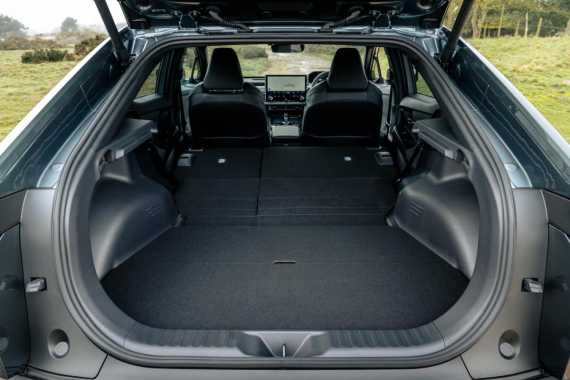
Space & Practicality
The Toyota C−HR+ has a generous interior that blends modern aesthetics with premium comfort and versatility.
The interior dimensions are comparable with those of the larger Toyota bZ4X, with a 900mm front-to-rear couple distance - 35mm longer than the original C-HR - providing ample headroom and generous legroom. This spaciousness is achieved within a 2,750mm wheelbase and an overall length of 4,530mm, which are respectively 110mm and 168mm longer than the Toyota C−HR.
The C-HR+ boasts a load capacity of up to 416 litres, thanks to a rear overhang that's 50mm longer than the standard C-HR's. This storage area features a dual-level deck board and an underfloor compartment, allowing for a boosted load height of 74mm.
With the rear seats upright and the deck board positioned at its lower level, there's ample space to accommodate two 82-litre suitcases. Additionally, the underdeck area houses a tool kit, a charging cable, and a warning triangle. On the Design and Excel trims, a powered tailgate is standard.
Ownership
Running Costs
As alluded to earlier, the Toyota C−HR+ is available with two battery capacity options. A 57.7kWh (gross capacity) battery is featured in the Icon model, delivering 165bhp and a driving range of up to 284 miles (WLTP combined cycle).
If you want more power and maximum driving range, the 77kWh battery is available on the Design and Excel models. With a maximum power of 221bhp, this enables a driving range of up to 376 miles, the longest of any model in Toyota’s current BEV SUV line-up.
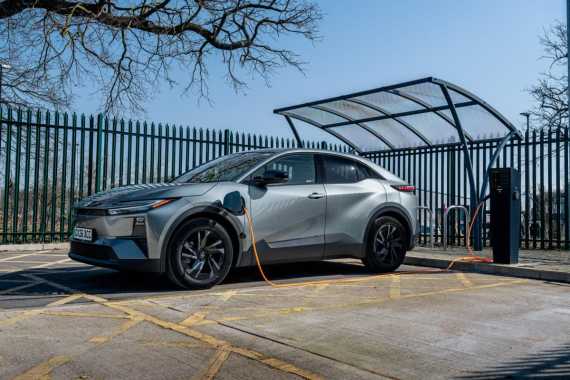
Toyota offers 150kW DC charging across the full C−HR+ line-up. High performance across a wide temperature range, particularly in cold conditions, is supported by battery control systems and a pre-conditioning function.
And, as previously mentioned, an 11kW onboard AC charger is included as standard, while the Excel grade allows for faster charging with a 22kW unit, reducing recharging time by half.
Indeed, a 10 to 80% 11kW AC charge will take 4 hr 48 min, while a 22kW AC charge will only keep you waiting for 2hr 12 min. Meanwhile, a 150kW DC charge takes just 28 minutes.
Verdict
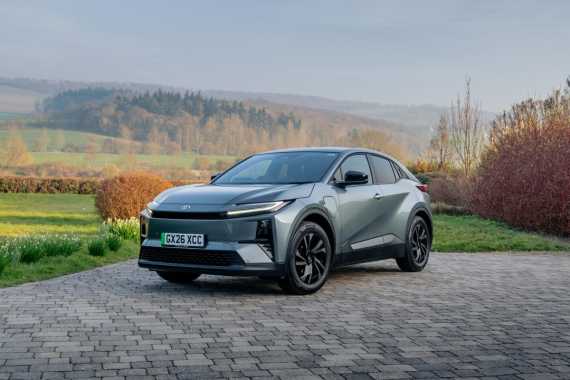
The C-HR+ is not a car you’d kick off your driveway any time soon. It looks great, has a robust character, and delivers on range.
The Toyota is very well built – especially inside – and provides a comfortable drive, that’s actually pretty speedy – and definitely puts a smile on your face.
The rear is too dark and could feel cramped and claustrophobic for three-up, so two will fare better. The front wheels spin easily as well if you're too eager with the accelerator pedal. That said, you'll soon learn how not to do that once you get used to the car.
What's more, like every new Toyota, the C-HR+ is eligible for up to 10 years or 100,000 miles of warranty protection. This comprises a three-year manufacturer's guarantee, followed by up to seven years of service-activated warranty.
If you’re after a compact crossover SUV that runs on nothing but electric power – and you have around £329 per month for the Design grade tested here, or can splash out the full £36,995 - then the C−HR+ has to be on your list of cars to check out.