Why we love it:
- Fab looking
- Versatile
- Desirable image
Where it could be better:
- Could be more affordable
- The ride might be too firm for some
- A simpler range would be great
Introduction
For more than 20 years, the Volkswagen Transporter Sportline has carved out a reputation as the UK’s original sports van - a commercial vehicle with genuine road presence, loyal fans, and enough attitude to make most motors look a little forgettable. Now, Volkswagen is aiming to push that legacy even further.
The new Transporter Sportline arrives as the flagship of the line-up, blending the everyday practicality you expect from a working van with a far sharper, more premium edge. Whether specified as a panel van or Kombi, it’s designed to handle the realities of daily life while looking considerably racier doing it.
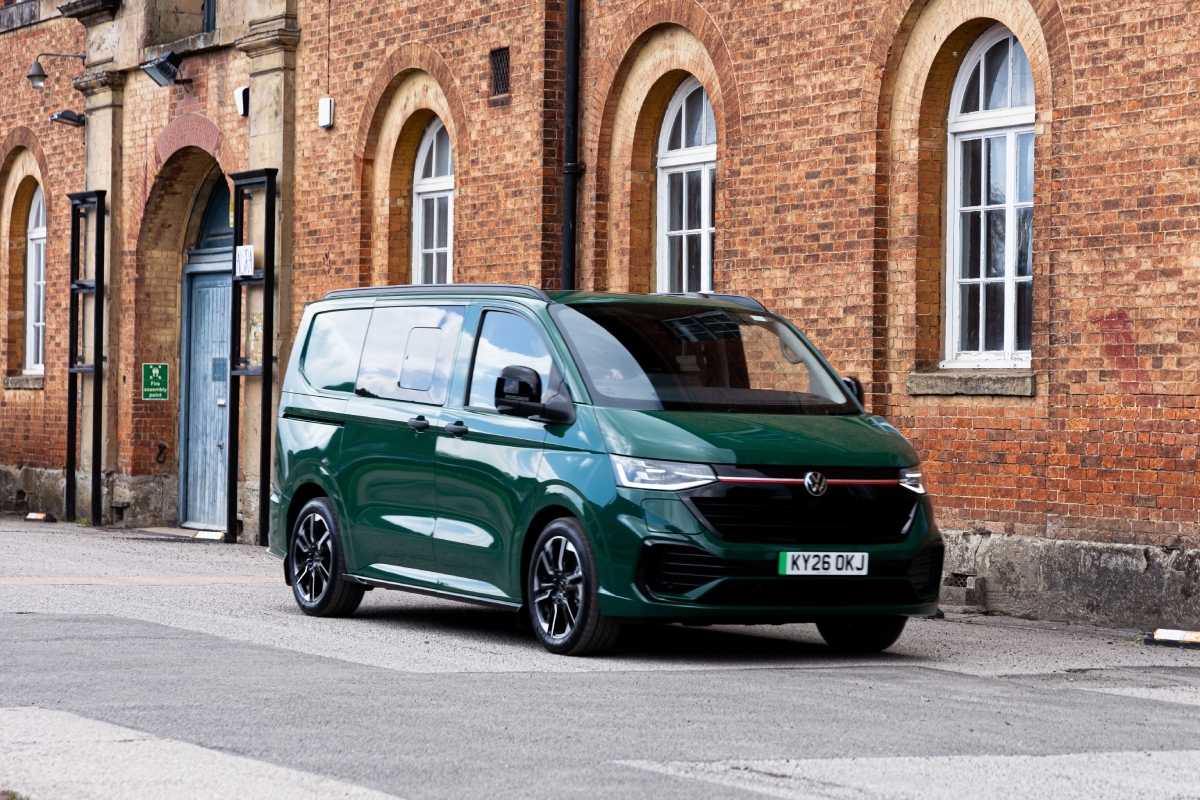
And racy is exactly the word. Lowered Eibach suspension, aggressive Sportline bumpers, gloss-black detailing, Matrix LED headlights, and striking 19-inch alloys give the latest model a planted, unmistakably attractive, athletic stance.
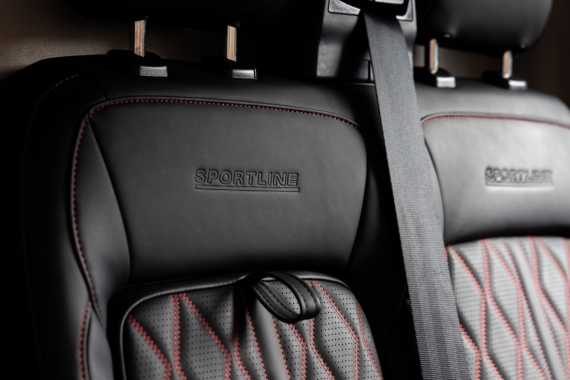
Inside, things feel more upmarket than ever, with eco-leather sports seats, red contrast stitching, and a driver-focused cabin that feels a long way removed from the commercial metal boxes of old.
But this isn’t just about appearance. Volkswagen has broadened the Sportline’s appeal with electric, plug-in hybrid, and diesel powertrains, meaning you can choose from all-electric efficiency to a torque-heavy 170PS oil burner with four-wheel drive, arriving next year.
And, to celebrate 75 years of the Volkswagen Bus, there’s even a limited-run Sportline 75 Special Edition - a numbered model finished in exclusive Moss Green paint with bespoke detailing throughout.
The question is: has Volkswagen successfully evolved the Sportline formula for a new bunch of kids on the block, or has the original sports van lost some of its sorcery along the way? Our motoring journalist Tim Barnes-Clay found out more at VW’s UK-based media event - so, refreshingly, no planes were needed for him getting to this launch!
On The Road
Handling & Performance
The performance of this model has been designed and crafted to provide a feel that’s just as impressive as its style. No matter whether you pick electric or diesel, the ride promises quick acceleration and controlled driving.
The fully electric e-Transporter Sportline, like all EVs, will deliver instant torque, giving it a sharp throttle response and smooth, effortless acceleration from standstill. Both the 218PS and 286PS variants will feel particularly responsive in urban environments.
The 218PS model completes 0-62 mph in 8.6 seconds, while the more potent 286PS variant delivers even stronger acceleration (0-62 mph in 7.4 seconds), making it one of the quickest and most responsive Transporter models to date. The top speed for all electric-powered Sportline variants is 93mph.
Note that if you want the plug-in hybrid (eHybrid) version, you'll have to wait, as it won't be available until later this year.
If you prefer diesel grunt, Volkswagen provides a 2.0-litre four-cylinder TDI engine developing 170PS and 390Nm of torque between 1,750 and 2,500rpm. Offered exclusively with an eight-speed automatic gearbox, the Euro 6e EB-compliant engine we drove delivers smooth, refined poke and strong mid-range pulling power, making it particularly well-suited to heavier payloads and long-distance driving. Zero to 62mph is 14 seconds, and the top speed for all diesels is 109mph.
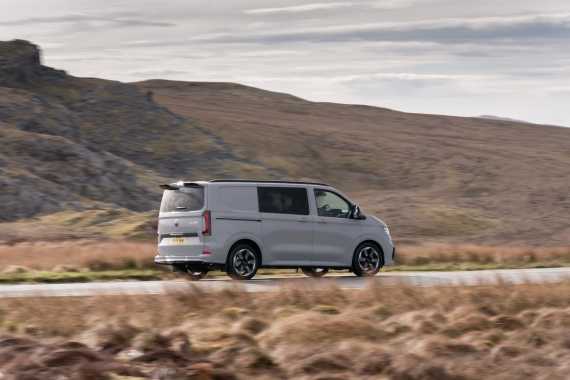
To ensure the driving experience matches the Sportline’s more aggressive appearance, both panel van and Kombi models are equipped with Eibach suspension springs as standard. These give the van a lower, more planted stance and noticeably sportier road manners. Combined with precise steering and improved body control, the suspension setup helps the new Sportline feel more agile and composed through corners. That said, it does mean a stiffer ride, which may not suit you if you have a dodgy back!
Styling
The seventh-generation Volkswagen Transporter already arrived with a bolder, more confident look than its predecessor - but in Sportline trim, it gains the sort of visual aggression that makes it feel less like a commercial vehicle and more like a performance flagship.
Despite being completely new, VW has made an effort to preserve the Transporter's identity. There are subtle nods to earlier models everywhere you look. The front grille takes inspiration from the T5. At the same time, the headlights echo the T6.1's design language, helping the new van maintain a strong visual connection to a lineage that stretches back to 1949 and the original Bulli.
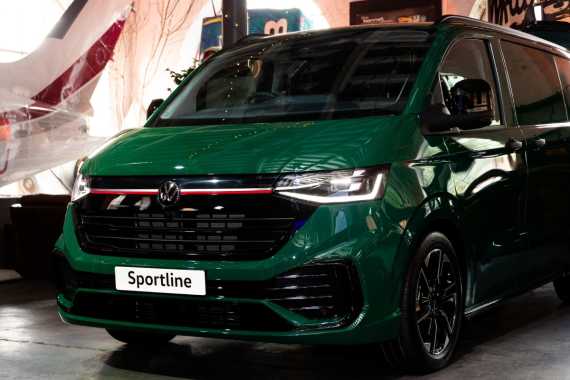
The Sportline treatment adds considerably more attitude. At the front, a bold dogbone-style bumper, a gloss-black grille, and a signature red accent line combine with IQ.Light LED Matrix headlights to create a far more purposeful face. Dynamic Light Assist technology also gives the van a sophisticated lighting signature at night, automatically adjusting the beam pattern to suit surrounding traffic and road conditions.
From the side view, the silhouette is still instantly recognisable as a Transporter. The shoulder line, which runs from the headlamps to the back, keeps the profile very sharp. Conversely, the 'Bulli line,' which divides the vehicle's upper and lower parts, is a tribute to the first generation of the Transporter.
Sportline-specific details sharpen the look further. Gloss-black mirror caps, black roof rails, and extended side skirts all help visually lower the van, while the 29mm-lowered Eibach sports suspension gives it a noticeably more hunkered-down stance than standard models. Sitting beneath the arches are striking 19-inch diamond-cut alloy wheels with etched spoke detailing and bespoke Sportline centre caps, which complete the performance-inspired appearance perfectly.
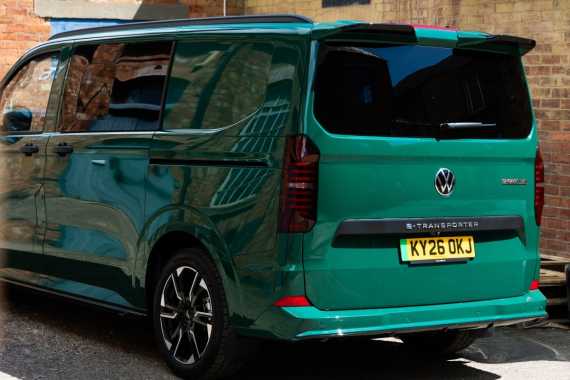
At the rear, Volkswagen has worked hard to make the van feel more premium without sacrificing practicality. The wide-opening tailgate extends deep into the bumper to keep the load sill low and accessible, but the styling additions stop it from looking purely functional. A sculpted rear spoiler, redesigned bumper and black diffuser element with vertical aerodynamic fins all add a sporty finishing touch that wouldn't look out of place on a high-performance SUV.
The result is a van that balances heritage, practicality and road presence remarkably well. It still looks unmistakably like a Transporter - just one that's spent far more time in the gym, or taking steroids.
Inside, the new Sportline places a strong emphasis on technology, giving the cabin a far more modern, connected feel than previous Transporter models.
At the centre of the dashboard is a fully digital cockpit setup, combining a configurable 12-inch digital display with a large 13-inch infotainment touchscreen. Wireless smartphone integration is standard with App Connect Wireless, allowing access to Apple CarPlay/Android Auto without a cable. DAB+ digital radio is also included.
Technology extends beyond infotainment, too. The cabin features USB-A, USB-C and 12V charging points throughout, helping keep phones, tablets and work devices powered during the day. Optional 230V power sockets further boost functionality, allowing the van to run equipment such as laptops, tools or charging devices directly from the vehicle. With a total system output of 2.3kW, the Transporter Sportline can effectively function as a mobile power hub for professional users.
Space & Practicality
Inside, the new Sportline has been designed with a much stronger focus on comfort and day-to-day practicality, making it feel more versatile than previous generations.
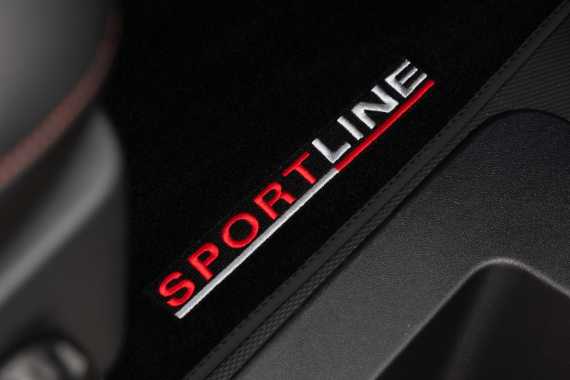
As well as eco-leather sports seats with Sportline embossing and red stitching, Volkswagen has reworked the interior layout to create a cleaner, more open cabin. The ushering in of an electronic parking brake with Auto Hold and a steering column-mounted gear selector frees up valuable space between the seats, allowing for a less cluttered centre console. The result is a cabin that feels roomier, more organised and better suited to long working days.
Storage practicality is also no problem throughout the cabin, with multiple compartments designed to accommodate everyday essentials such as phones, paperwork, bottles and tools.
The new Transporter Sportline offers a marked improvement in volume, too. The width has increased by 148mm to 1,392mm between the wheel housings, and the short-wheelbase variant now provides a load length of 2,602mm - up by 61mm over the outgoing van. Meanwhile, the long-wheelbase now boasts 3,002mm.
Thanks to the increases, overall load capacity has expanded. The short-wheelbase panel van provides a load compartment volume of 5.9 cubic metres, while the long-wheelbase model expands to 6.6 cubic metres and can carry up to three Euro pallets. This added space makes the new Transporter Sportline more capable for both commercial operators and ‘van life’ lifestyle users needing maximum versatility.
Kombi variants add even more convenience, with sliding doors standard on both sides that offer easy access, even where space is tight. There is also carpeting in the cab and three seats that can be folded down or removed, allowing quick conversion between carrying passengers and carrying goods.
The payload capacity is another highlight of the range. The diesel variants have a payload capacity ranging from 950kg to 1,168kg, whereas the battery-powered e-Transporter models still offer excellent cargo capacities of 693kg to 990kg.
Combined with improved cabin comfort and smarter use of interior space, the new Transporter Sportline successfully balances everyday usability with the flexibility expected from a modern commercial vehicle.
Ownership
Running Costs
The new Transporter Sportline offers strong running costs, allowing buyers to choose between fully electric efficiency and long-range diesel economy based on their needs.
The electric e-Transporter Sportline uses an 83kWh lithium-ion battery with 70 kWh of usable capacity and delivers a WLTP combined driving range of 199-206 miles. For many business users, this provides enough range to comfortably cover daily urban and regional driving without the fuel costs associated with a traditional diesel van. Rapid charging capability also helps minimise downtime, with DC charging at up to 125kW enabling a 10-80 per cent recharge in around 30 minutes. AC capability of up to 11kW ensures easy workplace or home charging, too.
For drivers regularly travelling longer distances, the 2.0-litre TDI diesel lump remains a practical option. In this guise, the Sportline returns around 34mpg, helping keep fuel costs competitive for a vehicle of this size and capability.
Other ownership benefits include Euro 6e EB emissions compliance for the diesel engine and reduced servicing requirements for the electric e-Transporter, which has fewer moving mechanical components than a conventional combustion-powered van. Together, these factors make the new Transporter Sportline a cost-effective option for both commercial fleets and private owners.
Verdict
The new Volkswagen Transporter Sportline successfully modernises the original sports van formula without losing the character that made previous Sportline models so popular in the first place. It still delivers the visual impact and road presence you expect, but now combines that with more advanced technology, improved refinement and a more premium feel throughout.
Yes, the lowered suspension, aggressive body kit and striking 19-inch wheels give it undeniable showroom appeal, but underneath, it remains a highly practical and capable van. Increased load capacity, improved cabin storage and clever interior packaging ensure it still works hard as a commercial vehicle when needed.
Ultimately, whether you want a vehicle that works like a dog while still standing out as the best-looking van in the company car park, or you’re seeking a trendy ‘van life’ experience, Volkswagen has delivered a very compelling package.