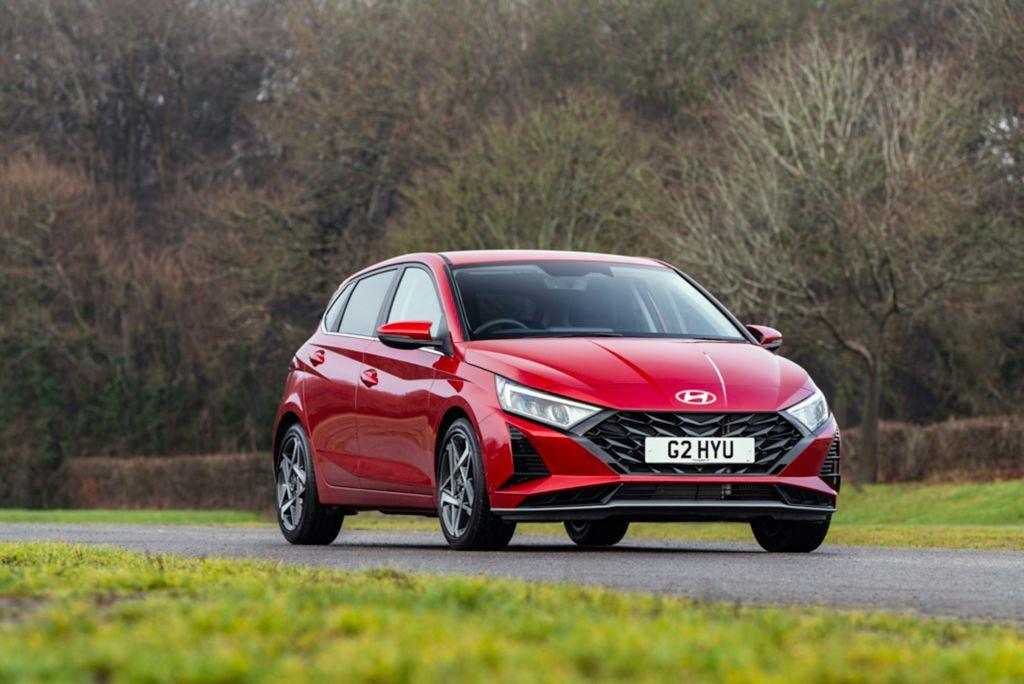
Why we love it:
- Not bad performance for a small engine
- Fun to drive with responsive handling
- Spacious rear seating for adults
Where it could be better:
- The rear view could be better
- Interior design lacks variety
- Use of low-quality hard plastics in the cabin
Introduction
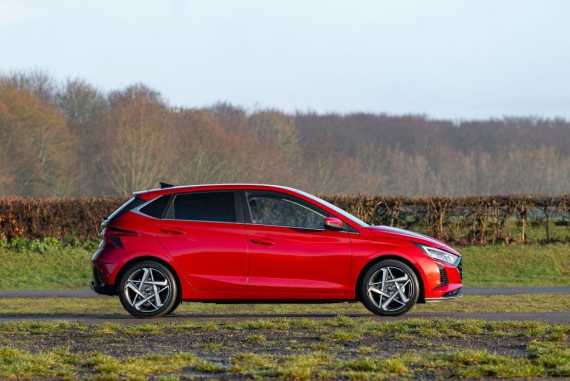
Hyundai has been part of the automotive landscape since the late 1960s, but the South Korean car-maker didn’t officially enter the British market until 1982, writes our motoring journalist, Tim Barnes-Clay.
It took some time for Hyundai to establish itself here, but after the turn of the millennium, the brand began to gain significant traction. In 2002, it broke away from the industry norm of a 'three-year, 60,000-mile warranty.' Instead, it introduced an impressive five-year, unlimited-mileage guarantee, which greatly contributed to positive perceptions about the marque.
Investment in UK dealerships and a renewed focus on customer service further enhanced the company's reputation. One of the models that kicked in during this turnaround was the i20 hatchback, first unveiled in 2008. Now in its third generation, the i20 faced some delays due to the Covid pandemic in early 2020.
Then, in a surprising move, Hyundai discontinued its i20 mild-hybrid models for the 2024 model year. This decision made the car more affordable and simplified its offerings, as the market increasingly shifted towards SUVs.
Despite these changes, the purely petrol-propelled i20 continues to enjoy a solid reputation. We have taken the latest version for a test drive to discover what makes it so appealing.
On The Road
Handling & Performance
All i20s come with a 1.0-litre petrol mill. Although our hatchback offers a modest 90PS, you might expect the 0-62mph time to be languishing in the teens, yet that's not the case.
It manages a respectable 11.5 seconds with the manual gearbox tested here, while the automatic version takes a bit longer at 12.8 seconds.
If you opt for the N Line S version with 100PS, the sprint time improves to 10.4 seconds when paired with its manual transmission, which is notably competitive compared with some hatchbacks boasting double the power.
The manual gearbox, on the whole, is fairly well refined, providing smooth shifts accompanied by an easy-to-operate clutch pedal.
Reaching motorway speeds is generally straightforward, though once there, the i20 can feel a bit underpowered, which may limit overtaking flexibility.
At lower speeds, the ride can feel quite firm compared with many rivals, but it's not uncomfortable. On a positive note, it feels stable and well-planted, adeptly handling potholes and the uneven surfaces of rural roads better than several competitors.
Indeed, this firmer suspension effectively manages body roll during cornering, giving it a nimble, agile feel. The steering gains weight nicely as you increase your pace, and the tyres grip the road confidently. Even though Hyundai has phased out the hot hatch variant of the i20, its influence remains apparent.
While the car clearly isn't solely designed for driving enthusiasts, it still performs admirably as a driver's car. Compared with many family hatchbacks, which tend to be rather ordinary to drive, the i20 at least injects a bit of enjoyment into the experience, even if it isn't class-leading in handling.
At higher speeds, wind and tyre roar are moderate, but most competitors don't perform significantly better in this regard.
Styling
If you closed an eye and looked at the pre-facelifted model, you might have noticed that the i20 resembled an Audi, albeit with a nose after it'd been punched in a round with Mike Tyson.
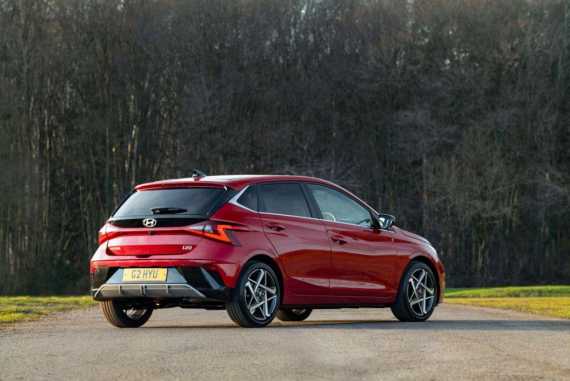
While this resemblance still exists, it’s now less pronounced due to styling enhancements at the front. These updates have better integrated the headlights into the grille, added a light bar that spans its width, and given the bodywork sharper, more aggressive angles.
The side of the Hyundai features more defined creases, and an athletic stance is noticeable at the rear.
Hyundai has also introduced new alloy wheel designs, making the hatchback look significantly sexier than the previous-generation model.
The Hyundai i20 comes in four different trims. The base model, Element, features 16-inch alloy wheels and rear parking sensors.
Moving up to the Black Line, you get enhanced LED headlights and taillights, along with rear privacy glass.
The Tech Line, driven for this review, offers 17-inch wheels and adds front parking sensors to the mix.
Finally, the premium N Line S trim includes front fog lights, an N Line rear bumper, side skirts, and stylish twin chrome exhausts.
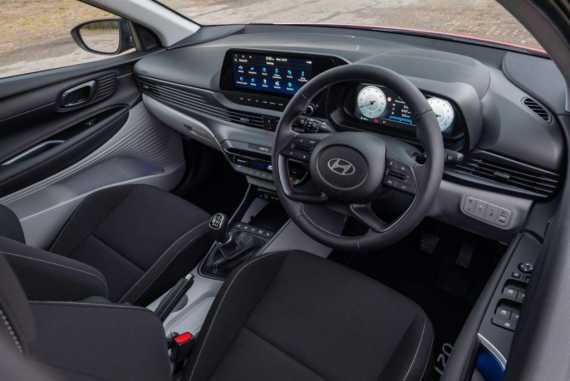
The i20 features user-friendly technology, as evidenced by the 10.25-inch infotainment screen installed on the dashboard.
This screen has a clear resolution, making it easy to navigate the displayed menu. It also has a touchscreen, enhancing the user experience.
A useful aspect of the infotainment system is its ability to find nearby fuel prices and direct you to the cheapest petrol station, which adds practicality.
It also features touch-sensitive shortcut buttons, providing convenience, though not without flaws. Higher-end models include a digital instrument display beside the infotainment screen. Yet, it lacks customisation options and the ability to show navigation maps on the main display, which is a missed opportunity.
Fortunately, physical controls for air conditioning remain, making temperature adjustments straightforward while driving.
Space & Practicality
Finding a comfortable driving position in the i20 is straightforward, even without the convenience of electric seat adjustments.
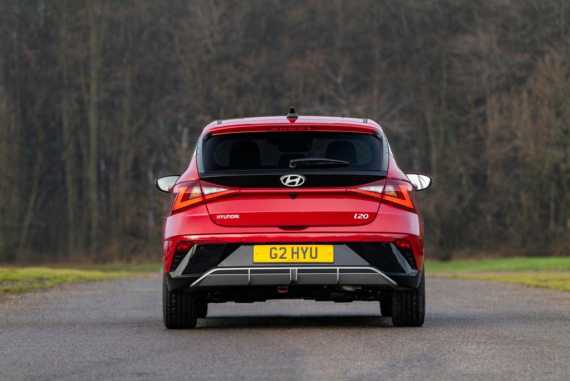
Visibility at the front is commendable for a non-SUV, largely thanks to the slender windscreen pillars, which minimally hinder your view. However, the rear windscreen's steep angle results in a rather shallow sightline.
Inside the i20, there's ample legroom and headroom, accommodating even taller drivers comfortably. It is reasonably wide for its class, so unless you have two passengers with particularly broad shoulders, space shouldn't be an issue.
The rear seats impress as well, offering generous head and legroom despite the slightly sloping roofline. Although three adults in the back may feel a bit cramped, the i20 ranks highly among its competitors in this regard.
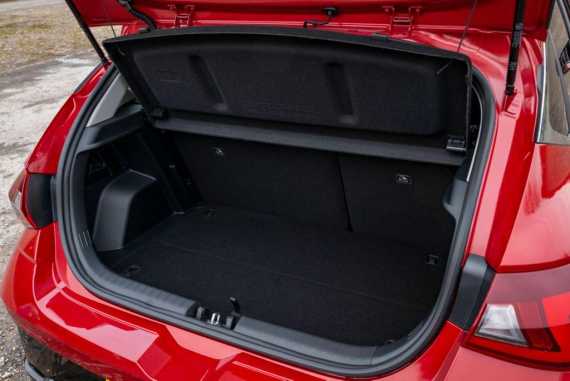
With the discontinuation of the mild-hybrid versions, Hyundai has significantly increased the boot space, boosting it from 262 litres to a generous 352 litres. This enhancement places the i20 on par with most of its rivals in terms of cargo capacity.
When the rear seats are folded down in a 60:40 split, the cargo area expands to an impressive 1,165 litres, an increase of 90 litres over the previous mild-hybrid model. While folding the seats creates a ridge, the adjustable boot floor helps alleviate it and lowers the loading lip for better access.
For interior storage, you'll find several compartments, including a glove box and door pockets. There are a couple of storage cubbies in the front, along with two cup holders.
Ownership
Running Costs
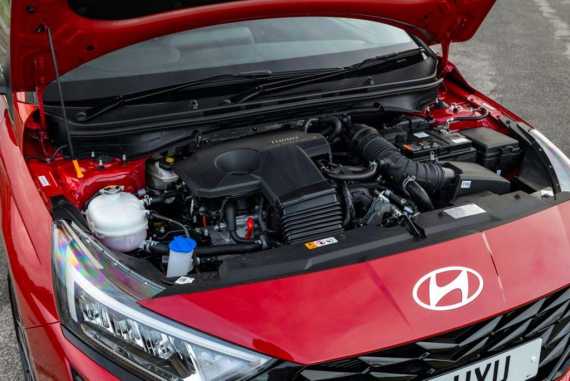
As previously mentioned, every i20 is equipped with a 1.0-litre petrol engine, and our test model in the Tech Line trim delivers 90PS.
The Tech Line variant achieves up to 47mpg and emits 136g/km of CO2 when paired with a manual gearbox. The automatic version emits slightly more CO2; however, Hyundai asserts that the fuel consumption remains unchanged.
The MPG figures for the lower versions with smaller wheels come in at 49.6, and the CO2 levels start at 129g/km. The sturdier 100PS model actually boasts better performance, with a 52.3mpg figure on the manual gearbox and only 123g/km CO2.
This means that a road tax of £440 or £540 is payable for the first year, depending on whether the emissions are above or below 130g/km. In subsequent years, the tax payable will be £195 annually, subject to annual variations.
If you're considering a company vehicle, explore plug-in hybrids or, where feasible, fully electric cars, as their low or zero emissions qualify them for the most favourable Benefit-In-Kind tax rates.
Historically, the i20 has shown commendable reliability. Nonetheless, Hyundai's dependability ranking has dipped in recent years, likely due to competitors catching up.
Hyundai offers an unlimited warranty for five years. Similarly, Kia and MG Motors offer a seven-year warranty. Toyota and Suzuki Motors offer up to ten years of warranty; however, the servicing must be done at their dealerships.
Verdict
The latest Hyundai i20 is a worthy option with decent standard equipment, okay practicality, and a pretty enjoyable driving experience.
That said, it doesn't shine in any particular area, and many of its competitors surpass it in terms of interior quality, drivability, or boot space. Therefore, if any of those factors is a priority, better alternatives are available.
But, if you're in the market for an affordable family hatchback and you're frequently ferrying a couple of adults in the back, few small cars can meet your requirements as effectively as the Hyundai i20.