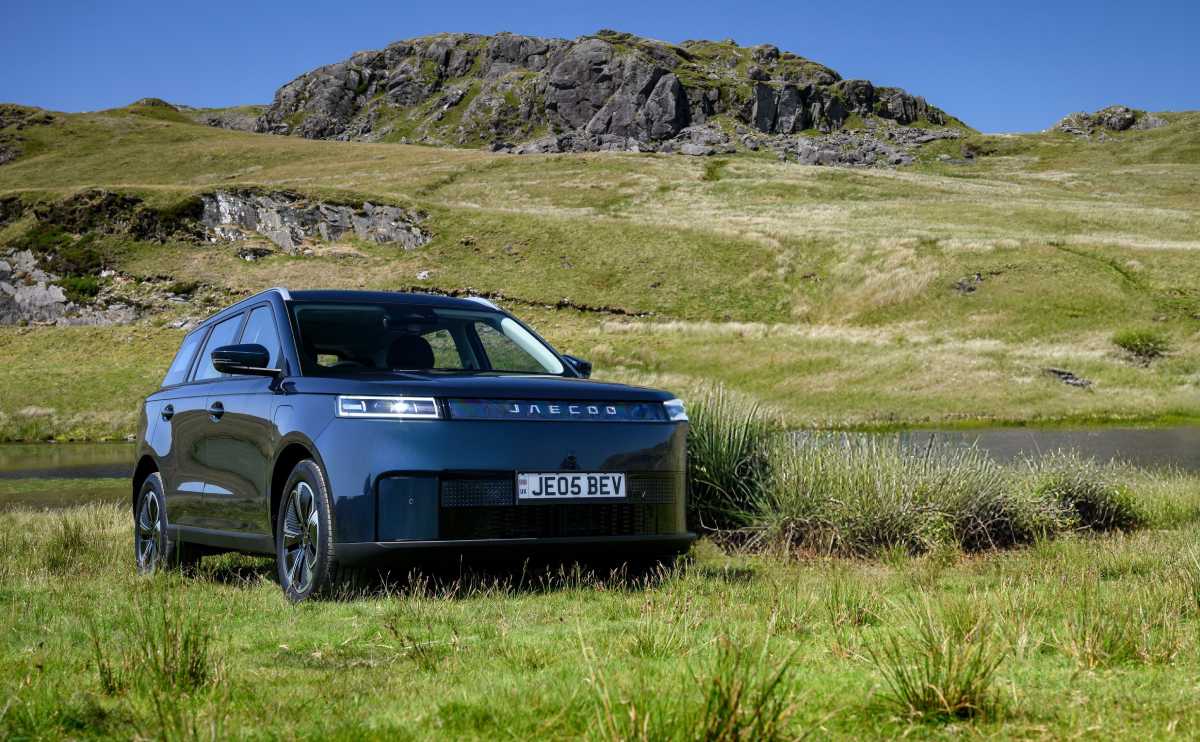
Why we love it:
- Good-looking interior
- Decent performance
- Generous kit list and warranty
Where it could be better:
- Could be more engaging to drive
- The electric range and charging times could be better
- Rear visibility could be improved
Introduction
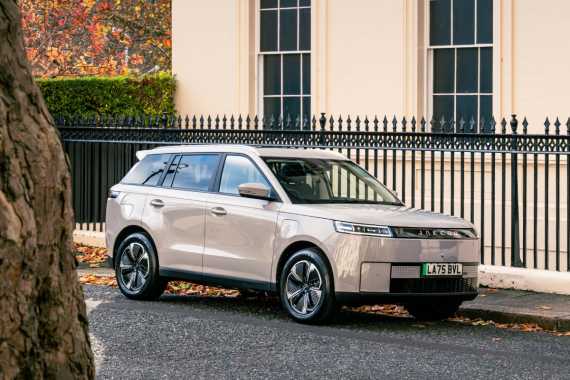
You may have noticed that a plethora of previously unheard-of car brands have emerged across the UK. What many of them have in common is that they hail from China, but their backstories and the journeys that led them to manufacture cars vary significantly.
Some have been established as new enterprises in recent years, while others can trace their origins back decades to industries more associated with fridges and cameras than automobiles. Jaecoo somewhat fits both categories, writes Tim Barnes-Clay.
Although it has only been operating since spring 2023, it was founded as a sub-brand of Chery, one of China’s largest manufacturers, which has been around for nearly 30 years. However, Chery has always been rooted in the automotive sector.
Even Chery might not be a name you recognise. Nevertheless, it has the financial resources and influence to ensure that Jaecoo gets off to a robust start – Chery has also launched its own-branded vehicles here, alongside another of its sub-brands, Omoda.
Jaecoo has already rolled out two out of the three SUVs it plans to sell in this country: the 5 and 7, with the larger 8 set to debut soon.
In the case of the 5, it's virtually identical to the model we're testing here, except a 1.6-litre petrol unit powers it.
Now, the E5 has been launched and, as you might have guessed, it stands for Electric: the E5 utilises an electric motor with 207PS, roughly 40% more powerful than the petrol variant.
A word of caution: sister brand Omoda also features two cars called the 5 and E5, so do ensure you check the differences, as they’re sold from the same showrooms.
On The Road
Handling & Performance
The Jaecoo E5 isn't designed to be a performance car, but it does accelerate relatively quickly.
With 207PS, it may not seem like a huge amount, but the E5 manages to achieve 0-62mph in a respectable 7.7 seconds, although its sister car, the Omoda E5, can do it half a second quicker.
A surge of torque gives it a pleasantly brisk feel off the line, although it can sometimes threaten to spin the wheels if you're a bit too eager with the throttle.
Nonetheless, if you gauge the grip levels correctly, it feels at ease reaching motorway speeds and doesn't struggle when overtaking.
The torque surge can make it a tad jerky to drive at lower speeds, though.
In terms of handling, the E5 is about what we anticipated. It's more eager to turn in than the Jaecoo 7, with slightly less body roll. However, there is still quite a bit of it, and the overall driving experience is relatively uninspiring, especially considering the additional weight compared with the petrol-powered model 5, which makes it less engaging on bends.
The steering also feels exceptionally light, which means there's a lack of feedback through the wheel.
When it comes to comfort, it's not too bad, gliding along on smoother roads. However, on rougher surfaces, bumps and potholes can unsettle it, and it takes a while for the bouncing to cease.
Given that it's only front-wheel drive, we are uncertain about Jaecoo's claims that it can handle off-road conditions. While we don't doubt it'll manage fine on gravel or a bit of sand, it will be no match for Jeep, whose all-electric Avenger shares similar approach and departure angles.
We can't imagine many buyers will be opting for a Jaecoo to tackle mountains, in any case.
Overall, it's a decent car, but there are better alternatives available if an engaging driving experience is a top priority for you.
Styling
The Jaecoo E5 might not win many awards for its looks, but it's clear who its designers have been keeping an eye on.
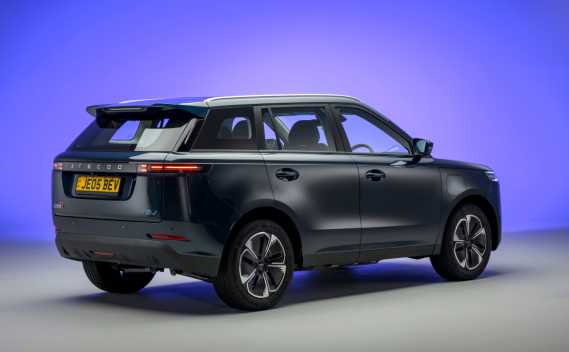
From more than one angle, there's an unmistakable resemblance to Land Rover, with aspects that look like a reasonably good copy of a Range Rover Velar (albeit the original) or Evoque.
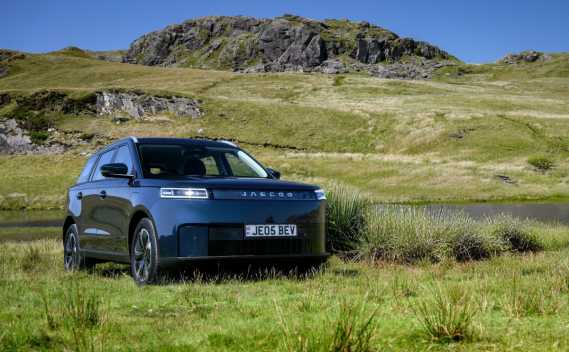
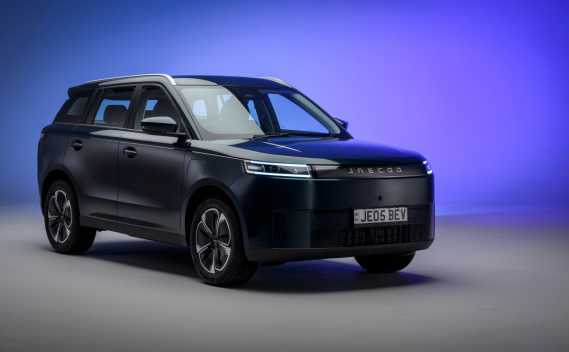
The front features lots of black space, a very rectangular lower grille and some squared-off thin headlights, while the side has stick-out shoulders, a crease above the side skirt and silver roof rails.
The large vertical spokes of the petrol engine's grille are notably missing, though, replaced by a blank panel in this electric version, with the manufacturer's name on it.
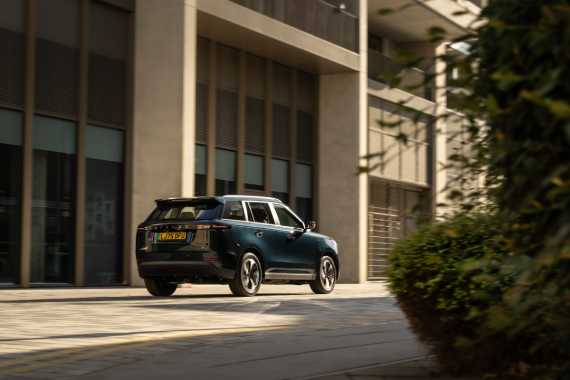
Around the back, the raised roof spoiler and general silhouette really look like someone has taken tracing paper to one of the Range Rover models, with a slight wedge shape to the rear end.
It looks awkward in places, but from some angles, it's pretty impressive.
The E5 is offered in two trims, with the base model ''Pure'' getting 18-inch alloy wheels, a 13.2-inch central LCD with Apple CarPlay and Android Auto, DAB radio, acoustically treated glass and a so-called ''540-degree'' panoramic view camera.
The Luxury trim adds another £3,000 to the sticker price, with LED headlights, a powered tailgate, heated and ventilated six-way electrically adjustable front seats, a panoramic sunroof, and an eight-speaker Sony sound system.
And, to top it off, you'll find the more expensive model gets multi-coloured ambient lighting, a cooled wireless phone charger and a refrigerated storage box, along with dual-zone climate control.
Space & Practicality
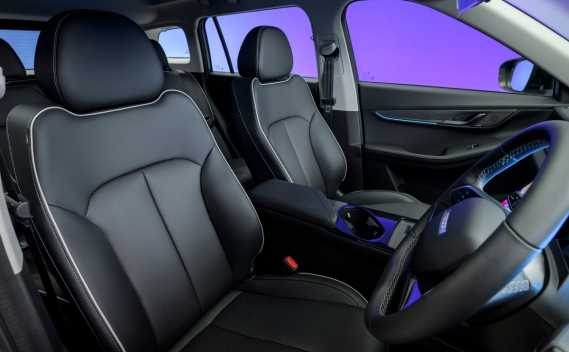
The E5’s seats are pretty comfortable, meeting expectations, with the synthetic leather coverings looking smooth and attractive (though the entry-level Pure model comes with cloth seats).
As mentioned earlier, if you choose the higher Luxury trim, both front seats come with electric adjustment.
Visibility out the front is decent, thanks to relatively thin pillars and a swept-back windscreen, although the large, flat bonnet does obstruct your view directly in front of the car.
Looking out from the back, the pillars are considerably thicker, and there’s a substantial border surrounding the rear windscreen and the rearmost side window, which makes over-the-shoulder visibility less than ideal.
However, front and rear parking sensors come as standard, along with a ‘540-degree’ camera system – aptly named as it can provide an image that allows you to see through the car as if it were transparent.
There’s ample space up front, with plenty of headroom and legroom available.
The back is not too shabby either, although only very tall adults may find it a bit cramped.
In terms of width, there’s sufficient space for two adults in the front, but the rear comfortably accommodates only two grown-ups, as three would likely result in a tighter fit.
Those needing the latter might want to consider the larger Jaecoo 7 (though, unlike the 5, it’s available as a plug-in hybrid rather than fully electric).
Boot capacity measures 480 litres, expanding to 1,180 litres by folding the rear seats over in a 60:40 split, and Jaecoo claims there are over 35 interior storage compartments for additional belongings.
Ownership
Running Costs
The Jaecoo E5 is equipped with a 61.1kWh battery, boasting a claimed range of 248 miles.
Interestingly, this is less than its sibling vehicle, the similarly specced Omoda E5, which can likely be attributed to inferior aerodynamics.
The range figure isn't particularly impressive – it does surpass a couple of rivals, but most competitors can achieve better figures these days.
DC charging isn't especially rapid either, requiring 27 minutes to charge from 30 to 80% at a modest 80kW speed. While 27 minutes might seem reasonable, most manufacturers provide figures for a 10-80% top-up, which makes it sound more favourable than it actually is.
Home charging (AC) up to 11kW is supported, although most properties in the UK will only utilise a maximum rate of 7.4kW from home wallboxes.
If you can charge it at home, then the running costs of the E5 should be impressively low. Hopefully, the extra investment over the petrol variant will be recouped swiftly, although this will depend on your annual mileage, of course.
Sadly, you will still need to pay the standard rate of road tax, despite it being an electric vehicle, so expect a bill of at least £195 a year, although the first year will only set you back £10.
Reliability remains an unknown, as with all Chinese brands venturing into the UK market, so it has a lot to prove.
However, Jaecoo has certainly done its part to provide peace of mind with a generous seven-year, 100,000-mile warranty, with no mileage limit for the first three years.
Verdict
The new Jaecoo E5 starts at £27,505, which is £3,000 more expensive than the petrol model. It is competitively priced, though, with many similarly sized non-electric SUVs costing more at entry level. What’s more, and as mentioned, the hope is you’ll recoup the electric offering’s extra price over the standard Jaecoo 5 in fuel savings.
Neither the E5 nor its petrol-powered sibling, the 5, has yet been assessed by crash-testing experts Euro NCAP. However, the larger Jaecoo 7 SHS (the plug-in hybrid version) was tested earlier in 2025, achieving a five-star rating, with scores of 81% for adult occupants, 80% for children, and 80% for safety assists.
The similarly sized Omoda 5 from Jaecoo’s sister brand was evaluated back in 2022, also earning a five-star rating with scores of 87%, 87%, and 88% respectively.
As standard, the safety features include automatic emergency braking, lane change assist, driver monitoring system, lane departure prevention, front collision warning, hill descent control, rear cross traffic alert, and adaptive cruise control.
So, if safety is a priority for you, it seems you’ll be in good hands with the Jaecoo E5, too.