Why we love it:
- Well-equipped and attractive pricing
- Easy to drive
- Impressive warranty
Where it could be better:
- Too touchscreen dependent
- Ride is a little fidgety
- Boot space is quite limited
Introduction
The Chinese car manufacturers found a massive hole in the UK market and are successfully filling it to the point of bursting. In a day and age when would-be buyers are watching their pennies, they want their hard-earned cash to spread as far as possible. And that’s just where the Chinese carmakers come into their own by offering exceptionally well-equipped cars with bargain-basement pricing.
One such company is Omoda and, in particular, the Omoda 5. The car was available in fully electrified guise or powered by a petrol engine, but now customers can also choose a self-charging hybrid variant, called the Omoda 5 SHS-H (it stands for Super Hybrid System – Hybrid).
There are two trims to choose from called Knight and Noble and we opted for the latter for our test drive.
On The Road
Handling & Performance
With a 1.5-litre turbo petrol engine, a 1.83kW battery and 51-litre fuel tank, the front-wheel drive Omoda 5 HEV can achieve a total driving range of 650 miles without a trip to the fuel pumps. The self-charging powertrain can deliver 224PS and 296Nm of torque which sees the 0-62mph sprint ticked off in just 7.9 seconds and a top speed of 108mph. So it’s certainly no slouch then.
It’s a comfortable cruiser and will sit effortlessly at 70mph. Then when faced with more testing country lanes, complete with twists and turns, it also copes well. It feels nicely planted with next-to-no sign of body roll. It does get a little fidgety if pushed on too hard through tighter bends, but it felt far more confident than the larger Omoda 7 that we also drove.
The hybrid set-up is really smooth and is deceptively refined. That does change briefly when you floor the accelerator for a quick turn of pace, but calmness returns when driven with a little more consideration.
There are three drive modes that alter the handling and responses and these are called Eco, Normal and Sport. Additionally, three levels of regenerative braking called Low, Medium and High can be found by navigating your way through the touchscreen menus – it’s far better on some rivals that offer steering wheel paddles to control this function.
With good driver visibility and well-weighted steering, the Omoda 5 is easy to manoeuvre in busier towns and villages, but watch out for any potholes because they do tend to send quite a shudder through the car.
We should also mention the comprehensive list of safety features on the Omoda 5. It was awarded a maximum five stars when tested for its Euro NCAP rating and boasts 20 Advanced Driver assistance Systems as standard – some of which do bing and bong quite loudly, but can easily be silenced.
Styling
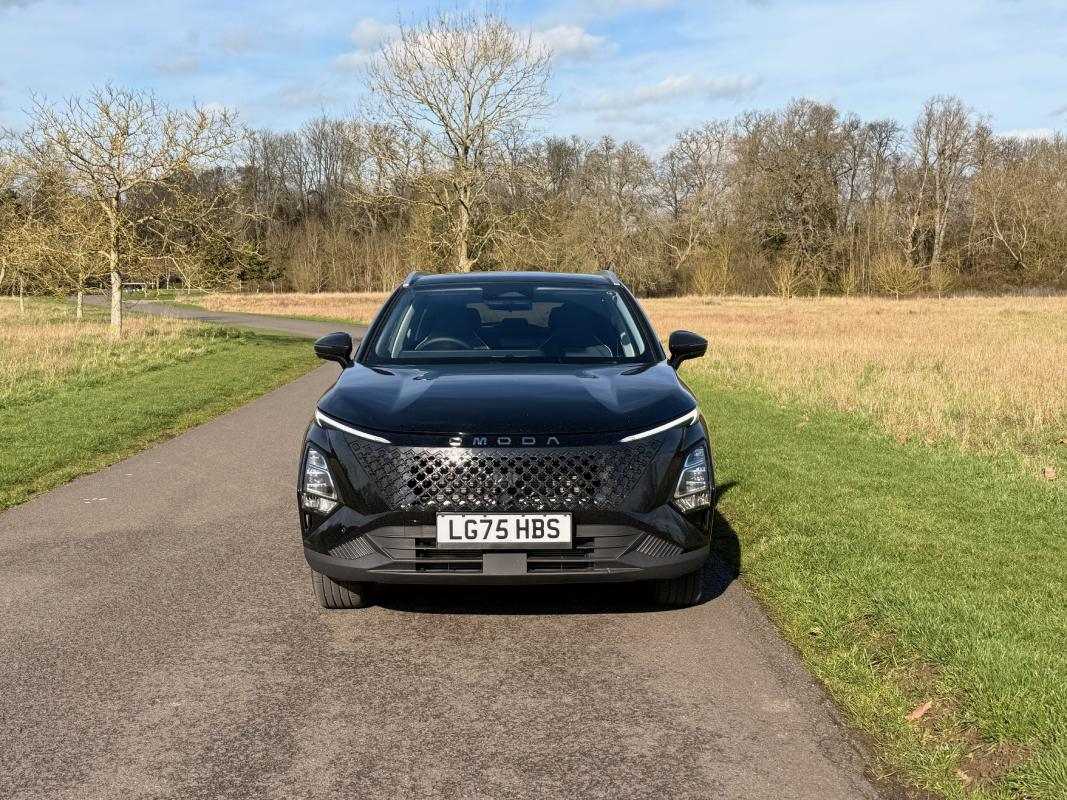
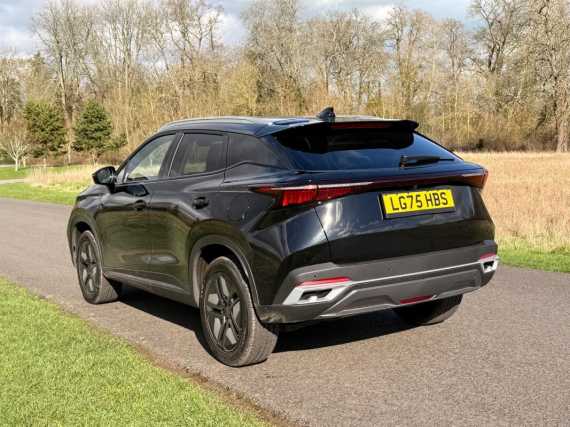
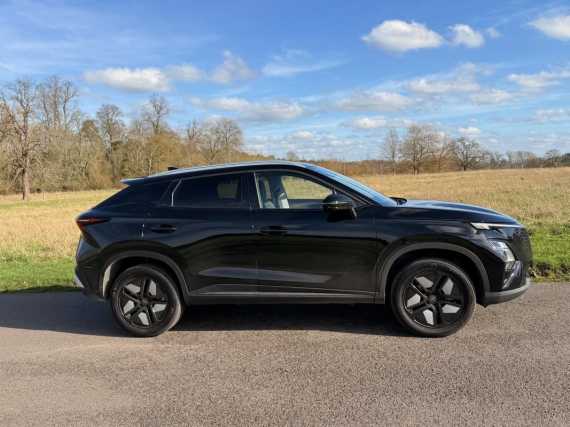
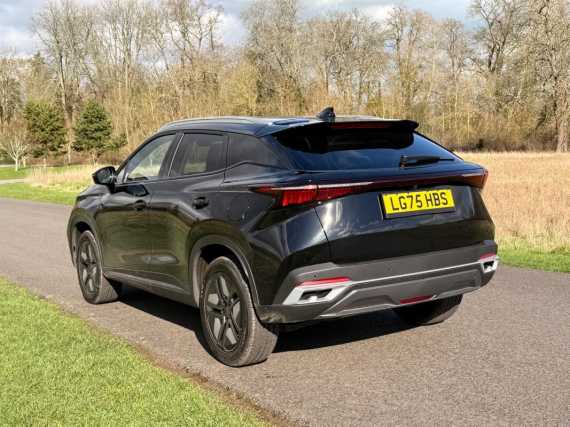
Unlike some Chinese counterparts that seem to morph into one another, the Omoda 5 does boast quite a distinctive design with a bold, X-shaped front end featuring a large grille with diamond elements. There are tinted rear windows, slim headlights, wide LED tail lamps, a rear spoiler, body-coloured door handles, a sunroof, roof rails and 18-inch alloy wheels.
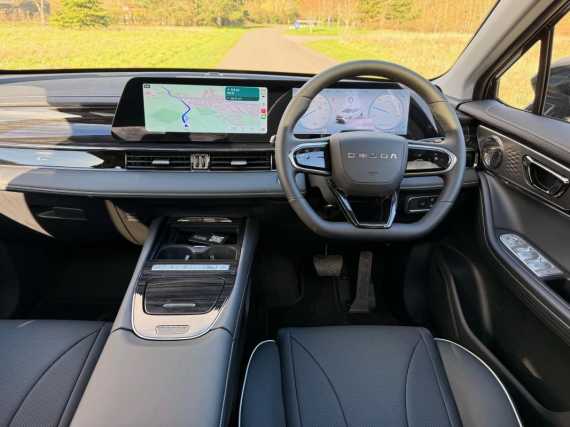
Moving inside, the interior is exceptionally modern and clutter-free with physical controls few and far between, but lots of tech to explore.
The powered seats are upholstered in a synthetic leather material that looks and feels quite upmarket, and there is a leather heated steering wheel to fend off the winter chill. The seats can also be heated or ventilated for added comfort.
The main focal point is the 12.3-inch infotainment screen that offers access to the wealth of on-board tech that, as we mentioned, is included as standard. Expect to find a pitch-perfect eight-speaker Sony sound system, wireless Apple CarPlay and Android Auto, sat nav, DAB radio, Bluetooth, and ambient lighting with 256 shades to choose from.
This screen merges into another 12.3-inch driver display where all the vital performance data is clearly shown, such as speed and speed limits.
There are quality fixtures and fittings throughout with soft-touch, black leather surfaces featuring neat contrast stitching, which helps give the car a premium feel. However, we would prefer some additional physical controls to make day-to-day driving a little easier. That said; there are ‘proper’ buttons to operate the air con, drive modes, screen de-misting and for the hazard lights.
Space & Practicality
When it comes to practicality, the Omoda 5 ticks all the right boxes to an extent. The car stretches 4,820mm in length, is 1,930mm wide, 1,710mm across and has a 2,820mm wheelbase.
With powered seats and ample steering wheel adjustment, finding the perfect driving position takes just seconds and front seat occupants are treated to bundles of space too.
Sadly, the same can’t be said for rear passengers. Despite the generous amounts of legroom, the sloping roof design of the car impacts on headroom and there is very little space for your feet beneath the front seats. However, the area would be ideal for youngsters with Isofix anchors to secure child seats.
The small rear windows, which are once again a result of the car’s dynamic profile, mean those occupants sitting in the back have limited visibility.
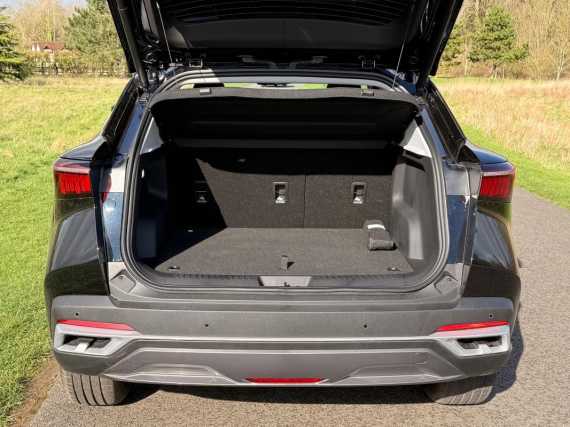
The boot features a powered tailgate for added convenience and it can accommodate 307 litres of luggage. This is quite poor compared to the Omoda 5’s closest rivals, but is still ample space for the weekly shopping run. And the capacity can be increased further by dropping the 60:40 split-folding rear seats.
In addition, there are numerous handy storage options scattered throughout the car, including a glovebox, deep central cubby with chilling function, seat back pockets, door bins, front and rear cup holders, a large area beneath the centre console, trays, a wireless charging pad and USB-C ports to keep devices connected on the move.
Ownership
Running Costs
The Omoda 5 line-up has been completed by the introduction of the self-charging model which costs slightly more than its petrol sibling, but less than the EV. The entry-level Knight specification is £25,740 (full petrol is £23,990) while the high-end Noble trim, as tested, costs £29,240 (£27,490 for ICE). The fully electric line-up starts from £33,065.
As the cars come generously equipped as standard there will be little need to go searching for any options. And the day-to-day running costs impress with a WLTP-tested combined fuel efficiency figure of 53.3mpg and carbon emissions of 120g/km.
That CO2 figure would result in a first-year road tax bill of £455 dropping to the standard 2026/27 charge of £200 after 12 months. And anyone considering the Omoda 5 HEV for a business car will see a Benefit in Kind tax rating of 30 per cent.
There is good news concerning the Expensive Car Supplement too because none of the Omoda 5 line-up costs anywhere close to the government’s new £50,000 threshold for 2026/27.
It’s always difficult to predict the reliability of newer models, but for added peace of mind, the Omoda 5 comes with an attractive seven-year, 100,000-mile warranty package with no mileage limit for the first three years.
Verdict
It’s impossible to overlook the exceptional value for money that Omoda offers with its models and that’s the main reason we are seeing so many of their cars, alongside sister company Jaecoo, on our roads today.
While they may have the likes of the Nissan Qashqai and Kia Sportage in their sites, the overall package still has some way to go, especially when it comes to refinement and ease of use. And there is the added issue of fighting off fellow Chinese rivals such as BYD, MG and Leapmotor too.
But the Omoda 5 is definitely worth exploring if a tight budget is the priority.