Why we love it:
- Like the looks
- Dig the handling
- Love the performance
Where it could be better:
- Less pricey, please
- Can we have even more electric range?
- Is more rear room possible?
Introduction
I used to want a Peugeot 205 GTi more than anything. It had to be the 1.9 - not the 1.6, though. For whatever reason, I never managed to buy one. They were out of reach as a student, so I ended up purchasing a Golf GTi when I could afford a car instead. Yes, it was a legend too - but it wasn't a 205.
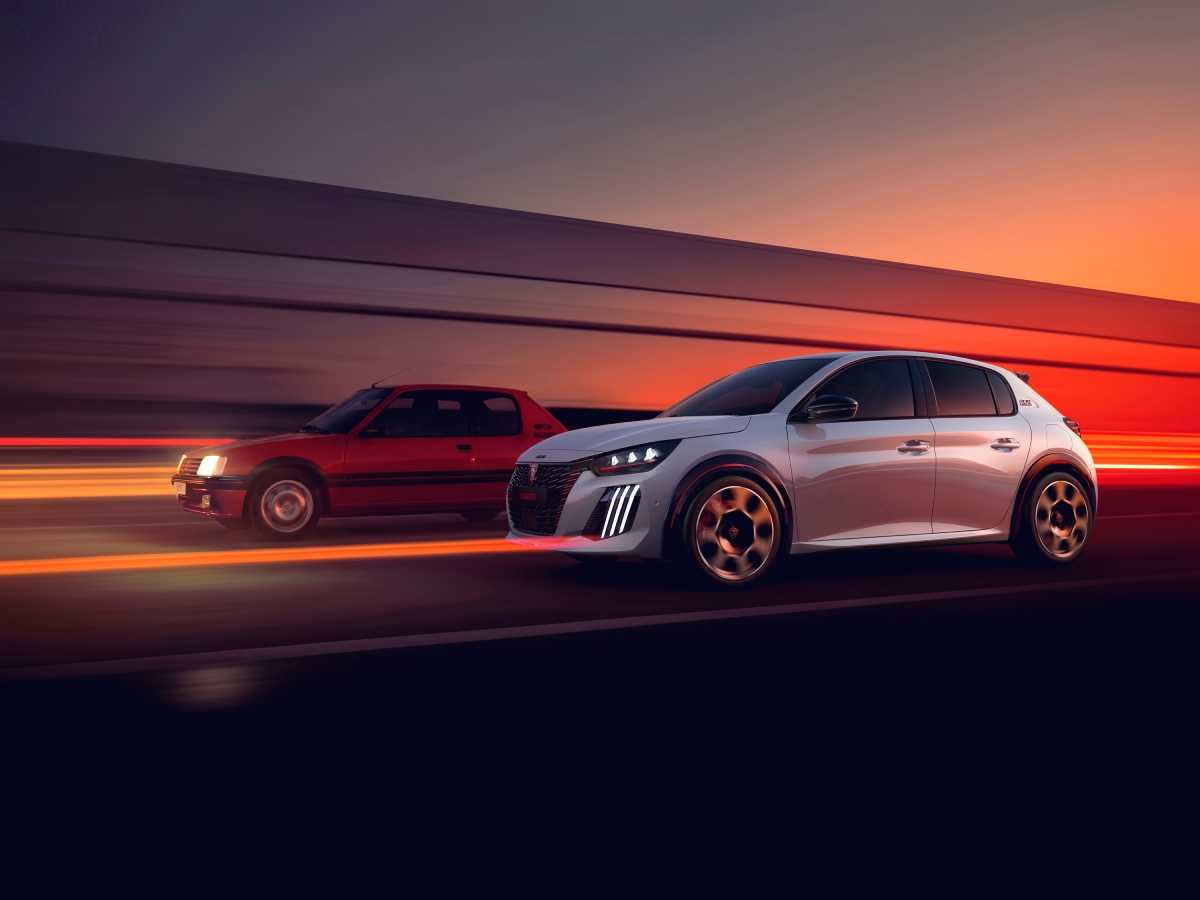
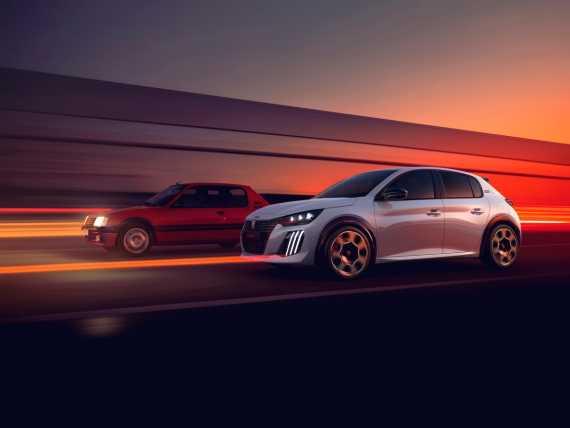
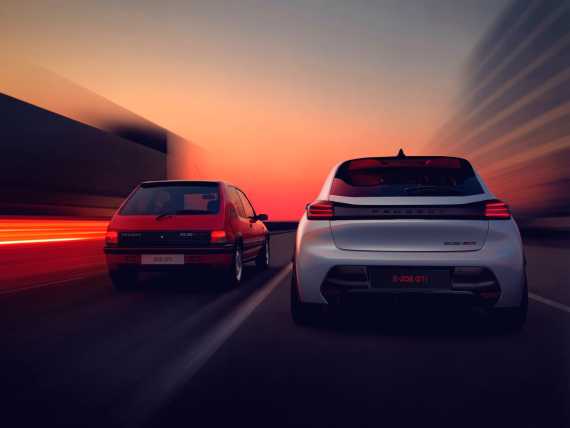
Fortunately, a career in motoring journalism has more than made up for never owning a 205 GTi – especially when something as cool as the e-208 GTi comes along. Why? Well, it means I can drive one for starters. But, more than that, it builds on the success of the Peugeot 208 range, the heir to one of the French automaker’s most celebrated model lines, and continues the GTi story that began four decades ago with the iconic 205 GTi.
The new Peugeot e-208 GTi is the first fully electric GTi ever made. Devised in France by Peugeot Sport and Peugeot Design, it heralds a new chapter for one of the most celebrated badges in hot hatch history.
Peugeot says the e-208 GTi blends driving enjoyment with best-in-class performance, athletic styling and the daily versatility that has always been key to the GTi recipe.
On paper, it delivers hard. A 281PS electric motor sends poke to the front wheels, shooting the electric supermini from 0-62mph in a mere 5.5 seconds, while a range of up to 233 miles keeps it sane enough for daily motoring.
I travelled for what seemed like forever to Scotland to drive the e-208 GTi at its media launch - and it quickly became obvious that Peugeot hasn't just made a faster electric 208. This little beast feels like a genuine attempt to capture everything aficionados adored about the GTi badge while ushering it into the EV era.
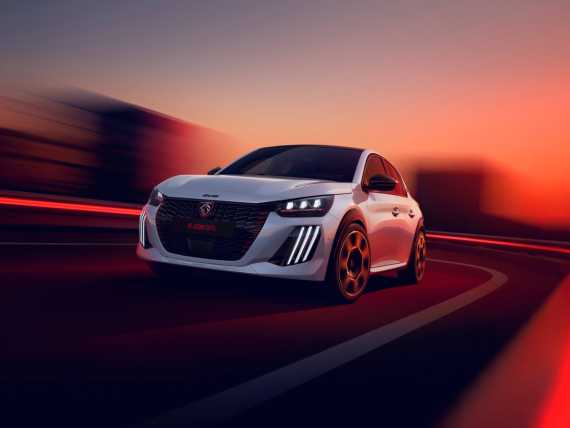
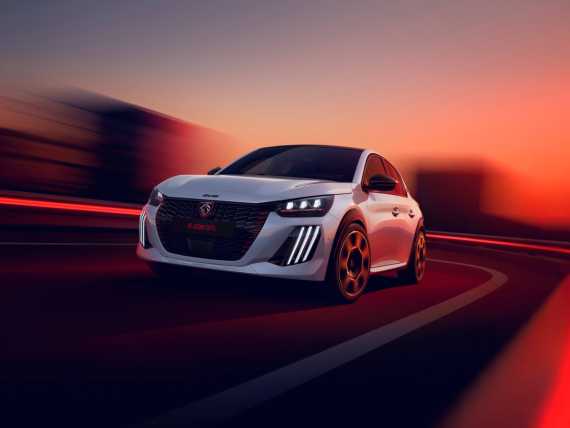
The e-208 GTi is refreshingly understated. It’s athletic, but it doesn’t look like it was styled by an angry teenager stimulated by energy drinks. Instead of larger-than-life spoilers and outsized bodywork, Peugeot has modernised the traditional GTi look with confident restraint.
Speaking at the media drive event, Peugeot Design Project Manager Michael Trouve said the team wanted to honour the 205 GTi without creating a retro copy. That approach is noticeable throughout the vehicle.
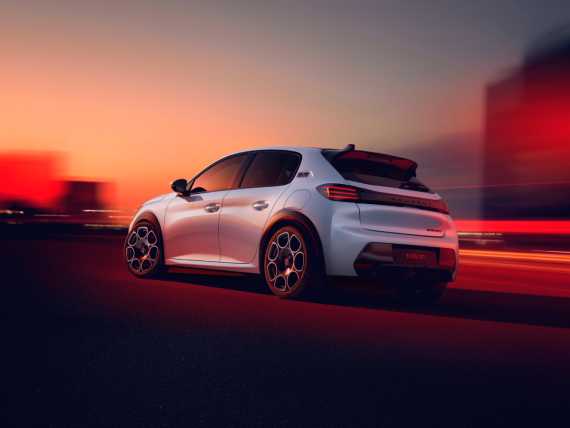
Peugeot’s body sits 25mm lower than a stock e-208, while the front and rear tracks have been widened for a more planted stance. Bespoke 18-inch perforated alloy rollers are a shrewd nod to the fabled wheels of the 205 GTi, and unobtrusive red detailing appears around the car’s grille, brake callipers, rear spoiler and wheel arches.
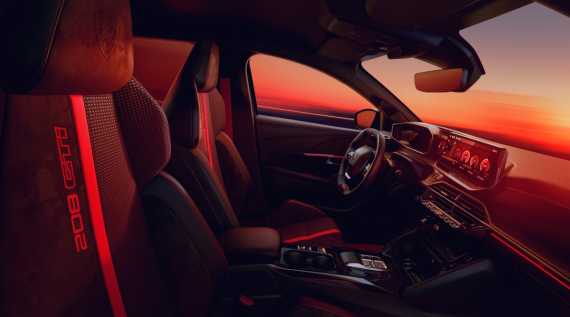
Inside, Peugeot leans even heavier into its heritage. Red seatbelts, red carpets and red stitching immediately bring to mind earlier GTi cars, while hip-hugging sports seats include integrated headrests and a characteristic red centre stripe. Alcantara on the shirt-button-sized steering wheel and the centre console give the cabin a high-quality edge, and GTi-specific digital graphics add a sportier vibe without being chavvy.
Tech-wise, you get the now-expected wireless Apple CarPlay and Android Auto, plus intuitive "OK PEUGEOT" voice recognition to control key functions.
Ultimately, though, Trouve told me the objective was to create something "immediately recognisable as a Peugeot GTi" through details that would become stamped on your memory rather than blatant nostalgia - and I'd say the designers have got that balance bang on.
On The Road
Handling & Performance
This is where the Peugeot e-208 GTi really punches hard.
The 281PS motor generates 345Nm of torque, making it the most hardcore GTi Peugeot has ever put together.
Engineers from Peugeot Sport's World Endurance Championship programme have reworked the chassis massively to make the e-208 GTi feel like a hot hatch through and through rather than just an energetic EV. As mentioned earlier, the car hits 62mph in 5.5 seconds and tops out at 112mph.
The Pug has a mechanical limited-slip differential, tailored springs and dampers with hydraulic bump stops. The hot hatch also boasts a more substantial rear anti-roll bar and 355mm front brake discs with four-piston callipers. The car's Sport mode even turns off regenerative braking, letting you concentrate solely on braking and cornering.
Trouve was keen to point out that the GTi has never been defined purely by what’s under the bonnet, and after driving the e-208 GTi through Scotland's snaking roads, it's hard to argue. The steering is as quick as a greased pig at a fair - and as confident as a chef who doesn't use recipes or measurements. The electric supermini’s front axle grips like a wet pair of jeans right after a bath - and the chassis feels as playful as a box of ferrets on espresso – well, as far as electric cars go.
The donut-esque steering wheel, something Peugeot has championed for what seems like forever, works splendidly here. It gives the e-208 GTi an enthusiastic, lively feel that makes you want to keep on moving long after you've reached your journey's end.
Space & Practicality
As with every awesome GTi before it, the e-208 GTi has schizophrenic leanings.
You see, some cars are all mouth and no trousers and are about as entertaining as a root canal without the nitrous oxide. This Peugeot is genuinely fun, though. It’s utterly engaging on a demanding road, but it will be an easy motor to live with day in, day out.
The five-door design makes getting in and out as simple as a dog's daily schedule; visibility is great, and the Pug’s compact dimensions suit everything from narrow rural routes to stupidly tight urban parking spaces.
Okay, this hatch is meant to seat five people, but four are more realistic - and two adults in the front with empty back seats is even better. But seriously, you could use this car on the school run to drop off up to three kids - depending on how tall they are.
And when it comes to the boot, there’s 309 litres of cargo space. In real-world terms, you'd fit one medium suitcase and a couple of smaller overnight bags in there, along with some food shopping. Fold the rear seats over – and that room balloons to 1,118 litres - which will enable you to load, say, boxes or several big travel bags.
Cabin storage is a mixed bag, with good proportioned front door bins that will swallow a water bottle each side. You also get twin cup holders in the centre console, plus a wireless phone charger – and a rather tiny glovebox that'll just about take a packet of extra-strong mints.
Meanwhile, the GTi seats are supportive without being as firm as a cheap motel mattress that doubles as a wooden board, so longer journeys - cross-country or on the motorway - shouldn't be a ball ache. Despite the athletic suspension, the supermini never loses the daily usability that has always been part of the French automaker's GTi recipe.
That balance is perhaps its biggest triumph. The e-208 GTi still feels like a Peugeot 208 - just one that’s sharper and packs enough sass to give a paper cut to a diamond.
Ownership
Running Costs
Performance doesn't always mean putting your head in the sand about running costs. And this is where owning an electric hot hatch has its advantages.
The e-208 GTi’s 54kWh battery can handle 100kW DC rapid charging, meaning it can charge from 20-80% in 27 minutes, while a slower 7.4kW home wallbox can fill it from 0-100% in around 7 hours 20 minutes.
Peugeot also includes route planning, remote pre-conditioning, and Vehicle-to-Load capability, which means the battery can juice up external gadgets. So that’s pretty handy if you’re out camping with your Pug.
With up to 233 miles of official electric range, no tailpipe emissions, and Peugeot's eight-year/100,000-mile battery warranty, the e-208 GTi should be a fair bit cheaper to run than a corresponding petrol - or diesel-powered hot hatch.
Verdict
Expectations were high for this car - but Peugeot has more than met mine. The e-208 GTi is a hoot to power around bends and on the straights.
You almost forget it's electric - the hot hatch grips the tarmac so well that you feel you'll never come unstuck. Even on a gravelly section of road, the car barely twitched when pushing it hard into a left-hander.
Yet, as a dad of three, I can also see myself driving this Pug like a non-GTi – doing school and college runs without feeling the need to turn into a hooligan.
After spending a day testing the Gallic car across Scotland, I'm confident the French automaker has understood what made me - and lots of others - drool over the 205 GTi back in the day.