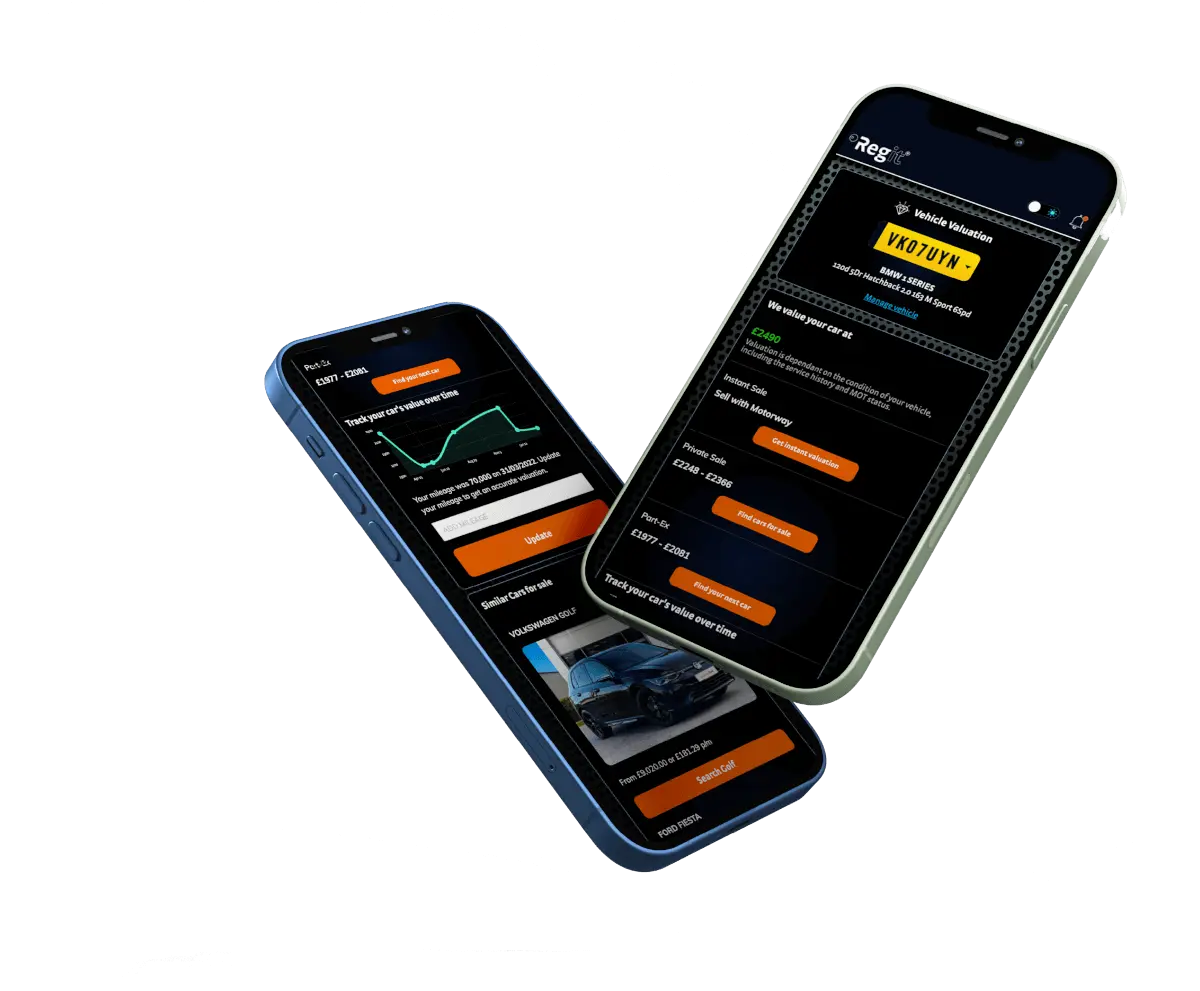
Free Car Valuation
Get accurate car valuations by simply entering your registration number.
- Instant sale price
- Private sale price
- Part-exchange price

How to Sell a Car for Cash in the UK
By Mathilda Bartholomew · Reviewed by Tom Gibson · Last updated
Selling a car for cash means agreeing a price with a buyer and receiving the full amount for your car, rather than using it as a part-exchange or taking finance. Payment is usually made by bank transfer, although a private buyer may offer banknotes.
You can sell to a dealer, an online car buyer, through a dealer-auction marketplace or directly to a private buyer. Whichever route you choose, the safest approach is the same: agree the price, make sure the money has cleared into your own account, then hand over the car and paperwork.
Before you speak to a buyer, it can help to check what your car is worth today using Regit's free valuation by registration number. This gives you a useful benchmark when comparing offers.
What "Selling a Car for Cash" Actually Means
When people talk about selling a car for cash, they usually mean being paid in full for the vehicle rather than taking another form of value in exchange.
A cash sale is different from a part-exchange. With a part-exchange, your existing car is used as credit towards another vehicle. You may receive a part-exchange value for your car, but you do not receive that amount as cash in your bank account.
Despite the name, a cash sale does not normally mean being handed a large pile of banknotes. Professional car buyers generally pay by bank transfer. For example, Motorway says its dealers do not pay sellers in cash. Private buyers are the main situation where physical cash may still be offered.
The amount you can receive also depends on who buys your car. A dealer, online buyer, auction-based service and private buyer may each arrive at a different price because they have different costs, risks and reasons for buying the vehicle.
If you want to understand why different valuations can exist for the same car, see how Regit's car valuation works. You can also check your car's current value for free with Regit before deciding which selling route to use.
Who Buys Cars for Cash in the UK
If you want to sell your car for cash, you have several types of buyer to choose from. You can sell directly to a dealer, use an online instant car buyer, put your car through a dealer-auction marketplace, find a private buyer, or use a scrap or salvage buyer if the vehicle is damaged or at the end of its life.
Each route works differently. The person or business buying the car sets the offer, and the amount you receive can change if the vehicle's condition, mileage or other details are different from those originally provided. Payment is usually made by bank transfer, although a private buyer may offer banknotes.
A dealer buying your car outright
A dealer can buy your car without you having to purchase another vehicle from them. This is a straightforward way to sell a car for cash and is different from a part-exchange, where the value of your old car is put towards another vehicle.
When you sell directly to a dealer, the dealer will normally inspect or appraise the car before making an offer. Its buying price needs to leave enough room for the costs involved in preparing and selling the vehicle, including any necessary repairs, servicing, warranty cover and its margin when the car is eventually sold.
The offer can therefore depend on factors such as the car's condition, mileage, specification, age and demand for that particular model. If the car does not match the information provided when the initial offer was made, the dealer may change the amount before the sale is completed.
Payment is normally made by bank transfer, although the exact timing depends on the dealer's process. Some dealers may arrange payment on the day of collection, while others may take longer to process the transaction, so confirm the payment arrangements before handing over the car.
If you are buying another vehicle at the same time, the transaction becomes a part-exchange rather than a straightforward cash sale. Learn more about getting the best price for your car.
An online instant buyer: the quote, the inspection, the final figure
Online instant car buyers allow you to get a price without initially taking your car to a dealership. You typically provide details such as the registration number, mileage and condition, and the buyer uses this information to produce an initial quote.
The important point is that an online valuation is not necessarily the final amount you will receive. The buyer can inspect the car at a branch or during collection. If the vehicle's actual condition differs from what was described, the final offer may be reduced.
For example, damage, mechanical problems, warning lights, missing equipment or excessive wear can affect the final figure. Being accurate when describing the car can therefore help avoid an unexpected change to the offer.
The length of time an online quote remains valid, any transaction fees and the precise payment process vary between companies. Always check the individual buyer's terms before accepting an offer. For information about one of the major online car-buying services, see Regit's guide to WeBuyAnyCar valuations.
Once the sale has been agreed, payment is generally made by bank transfer. Do not assume that an online quote means the money is guaranteed until the vehicle has been inspected and the sale has been completed.
If the final offer is less than you anticipated, use Regit's guide to find out why a car valuation can be lower than expected.
A dealer-auction marketplace: several dealers bid, one collects and pays
A dealer-auction marketplace gives your car exposure to multiple dealers rather than asking you to negotiate with just one buyer.
You create a profile for your vehicle which is then presented to a network of dealers, who can bid for it. If you accept the winning offer, the purchasing dealer arranges the collection and payment. This means the dealer who ultimately buys your car is responsible for completing the transaction, rather than you having to arrange a sale with every dealer who expressed an interest.
Regit's selling service uses Motorway to connect sellers with verified dealers. Find out more about selling your car through Regit.
The amount offered can depend on the vehicle's condition, specification, mileage and current demand from dealers. Because dealers are competing to buy the car, the offer comes from the bidding process rather than from a single buyer making an initial valuation.
Payment is made by bank transfer, with the exact timing and arrangements subject to the current terms of the service and the purchasing dealer. Check these details before accepting an offer and completing the handover.
For a deeper explanation of how dealer bidding works and the factors that can affect the price, read how online car auctions can get you more for your car.
If you have outstanding finance on your vehicle, this can affect how the sale is completed. Read our guide to selling a car with finance and other tax, MOT and car-history considerations.
A private buyer: the highest figure, the most work, the only route where banknotes are realistic
A private buyer is another individual looking to purchase the car for their own use. Selling privately means you deal directly with the person who wants to buy the vehicle rather than selling it to a business.
You can advertise the car through an online marketplace, a local advert or even a sign displayed with the vehicle. Once someone is interested, you will normally need to deal with enquiries, arrange a viewing, answer questions about the car and agree a price.
The price is negotiated directly between you and the buyer. The buyer may inspect the car and ask questions about its history and condition before agreeing to purchase it, so be prepared for the final price to depend on what they find.
Payment can be made by bank transfer or, in a private transaction, potentially by banknotes. If you agree to a bank transfer, check your own bank account to confirm the money has arrived before handing over the keys. If a buyer wants to pay in cash, take appropriate precautions when checking and depositing a large amount of money.
The paperwork also needs to be completed correctly. Once the sale is agreed, make sure the buyer receives the appropriate part of the V5C and that DVLA is notified of the change of keeper.
For advice on preparing your vehicle, setting an asking price and negotiating with a private buyer, see Regit's guide on how to get the best price for your car.
Scrap and salvage buyers: when the car is worth more as parts
Scrap and salvage buyers provide another option if your car is damaged, no longer roadworthy, a non-runner or approaching the end of its useful life.
A salvage buyer may purchase a damaged vehicle for its repair or parts potential, while a scrap vehicle is generally handled through an Authorised Treatment Facility (ATF). The amount offered will depend on the vehicle and its condition, but this route is generally about finding a buyer for a car that may not be suitable for a normal dealer or private sale.
Collection is often arranged as part of the process, particularly when a vehicle cannot be driven. Payment arrangements vary between buyers, but reputable professional buyers commonly use bank transfer.
Before accepting an offer, confirm who is buying the vehicle, how it will be collected and when you will be paid. If you are scrapping the car, make sure to follow the DVLA process.
If you are selling the car to a salvage buyer rather than having it completely scrapped, check the buyer's process carefully. The DVLA steps can differ depending on what happens to the vehicle, so do not assume that a salvage sale is the same as scrapping it.
How the Money Arrives: Bank Transfer, Banknotes and the Cleared-Funds Rule
In most private and motor-trade sales, payment is made by bank transfer. The safest approach is simple: don't hand over the keys, car or paperwork until you have confirmed the money has arrived in your own bank account.
A buyer may show you a payment confirmation or screenshot, but this is not proof that the money has reached your account. Check your own bank account and make sure the funds are there before completing the handover.
Bank transfer: what "cleared" means and how to check it yourself
With a bank transfer, the buyer sends the agreed amount to your bank account. Before handing over the car, log into your own banking app or online banking and check that the payment has arrived.
Do not rely on a screenshot from the buyer or an email claiming that the payment has been made. If your account shows the payment as pending, or the money has not appeared, wait before handing over the vehicle.
UK bank transfers can arrive very quickly, but payments can sometimes be delayed by bank checks or other issues. If a payment is delayed, the safest option is to delay the handover too.
For a private sale, it is also sensible to keep a written receipt showing the vehicle registration, agreed price, date of sale and the names of the buyer and seller. Both parties should keep a copy.
Banknotes: when they are acceptable and how to handle them
Cash in the form of banknotes can be used for some private car sales, but it comes with practical risks. Large amounts of cash can be difficult to verify, transport and deposit, and you need to be confident that the notes are genuine.
If you agree to a cash payment, consider completing the transaction at a bank where the notes can be checked and paid into your account immediately. Do not leave with a large amount of cash simply because the buyer has counted it in front of you.
Professional car-buying services generally use bank transfers rather than banknotes. If a scrap or professional buyer proposes a different payment method, check its terms and make sure you understand when you will receive the money.
The frauds aimed at sellers — and the one habit that defeats all of them
Selling a car privately can expose you to scams. Some common warning signs include:
- A buyer claims to have paid, but the money does not appear in your account.
- You receive a fake payment confirmation, screenshot or email.
- A buyer sends too much money and asks you to refund the difference.
- Someone asks you to use an unfamiliar courier, escrow service or payment platform.
- A potential buyer asks for copies of documents or personal information before there is a genuine need for them.
- A buyer takes the car for a test drive and does not return.
The simplest protection is also the most important: do not hand over the car, keys or relevant paperwork until you have confirmed payment yourself.
For a test drive, check that the driver is appropriately insured and consider accompanying them rather than allowing an unknown buyer to take the car away alone.
If you believe you have been the victim of fraud, report it through the appropriate UK fraud-reporting service, such as Action Fraud.
Which Buyer Fits Your Car and Your Timescale
The right buyer depends on your car, how quickly you need to sell and how much of the selling process you want to manage yourself.
If you have outstanding finance or are missing your V5C, you may still be able to sell, but there are additional checks and paperwork to deal with. If the car is a non-runner or written off, a scrap or salvage buyer may be more appropriate. For a rare, modified or high-value car, a private or specialist sale can put you in front of buyers specifically looking for that type of vehicle. For an ordinary used car, you have more routes to choose from, including dealers, online buyers, dealer auctions and private buyers.
Your timescale matters too. If you need the money quickly, an online instant buyer or dealer-auction service can usually reduce the time spent advertising and arranging viewings. An instant buyer typically gives you an initial quote that is confirmed or changed after the car is inspected, while a dealer-auction route puts the car in front of multiple dealers and the final price depends on the winning bid. If you're prepared to spend more time selling and want to deal directly with individual buyers, a private sale gives you more control over the asking price, but can mean waiting longer and handling enquiries, viewings and negotiations yourself.
Your choice also depends on how comfortable you are dealing with buyers directly. A private sale means managing viewings, payment and the handover yourself, while professional buyers can take more of this work away from you, although the amount you receive or any fees involved will depend on the route and buyer.
Ready to Sell for Cash? Where to Start
Whichever selling route and transaction you choose, start by finding out what your car is worth. Use Regit to get a free car valuation by registration number and use the result as a starting point when comparing offers.
If you want to sell through Regit, our partner Motorway puts your vehicle in front of thousands of verified dealers who can bid for it.
If you own a van, make sure to use Regit's free van valuation.
Once your car has been sold, you need to tell the DVLA. GOV.UK explains how to tell DVLA you've sold, transferred or bought a vehicle. Once DVLA has been notified, your vehicle tax is cancelled and you can receive a refund for any full months of vehicle tax remaining.
About This Guide: Author, Sources and Disclosure
Written by: Mathilda Bartholomew, Marketing Executive. Reviewed by: Tom Gibson, Head of Customer Communications. See the Regit authors page for more information about the people involved in our content.
Last updated: .
Sources: This guide draws on Regit's own valuation and selling information, Motorway's published selling and payment information, and GOV.UK guidance for DVLA and vehicle-tax requirements.
Disclosure: Regit may earn a commission when a user sells their car through a partner via our platform. Vehicle valuations and this guide remain free for users. See our disclosure policy for more information.
For information about Regit's editorial standards, including how content is reviewed and updated, see our editorial policy.
Value your car free with Regit
Enter your registration to see your instant sale, private sale and part-exchange prices in seconds.
Get a Free Car ValuationOr read more about how our free car valuation works.