Regit has been keeping its readers informed about China's rapidly growing influence on the global automotive industry, particularly the increasing number of Chinese brands and models heading for European and UK roads.
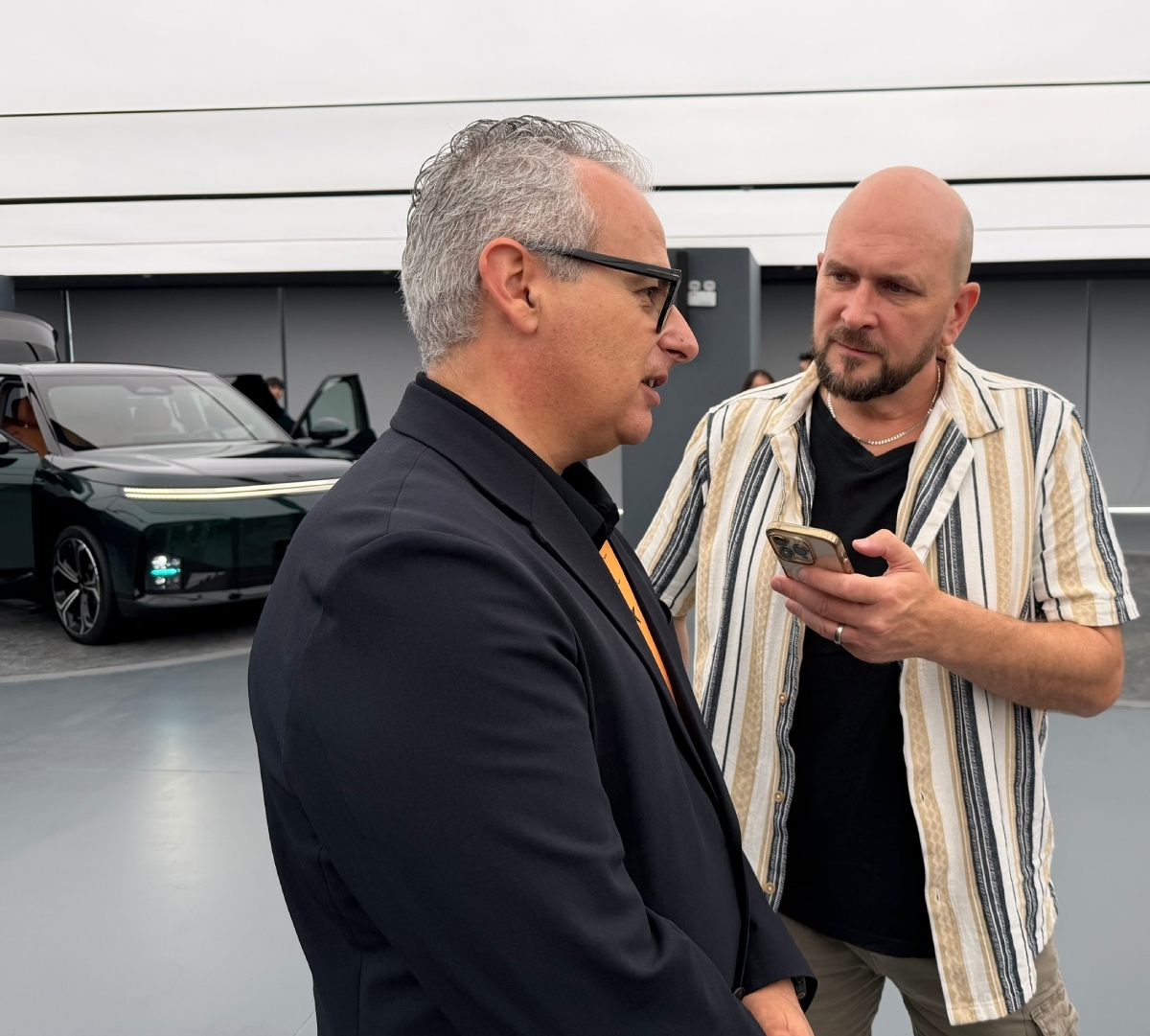
Without publications like Regit reporting on what is happening at source, British motorists may not be as informed about the huge changes taking place across the car industry. So, rather than simply reporting on China's new cars from thousands of miles away, our motoring journalist Tim Barnes-Clay flew to Guangzhou, China, as a guest of Xpeng, going the extra mile to discover more about the company, its technology and the people behind its latest products.
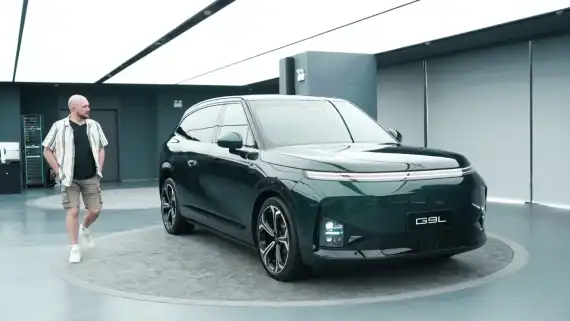
The focus of the trip was the Xpeng G9L, the company's new technology flagship SUV.
The "L" stands for luxury, and the G9L is being positioned as a more premium evolution of Xpeng's large SUV. It will officially premiere in Europe at the Paris Motor Show in October.
There is a limit to what we can reveal about the G9L at this stage. Xpeng has yet to officially unveil the European version, so we can’t give away too much before its Paris debut.
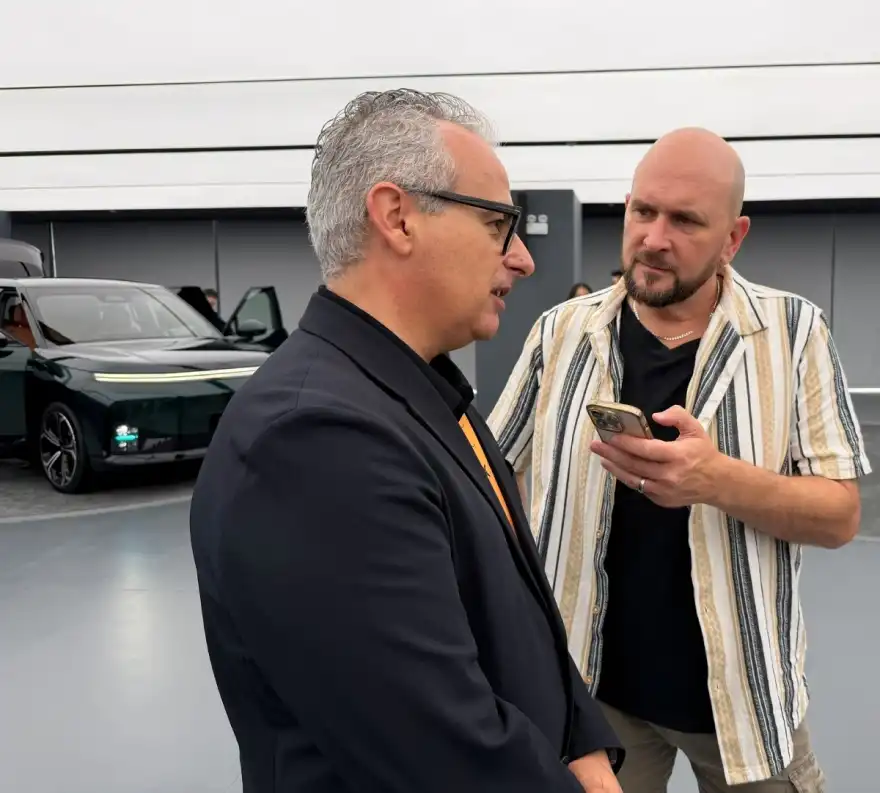
However, having seen the static Chinese-market version during our visit to Guangzhou and spoken at length with Joan Melenchon, Creative Design Director at Xpeng, we can reveal something about the thinking behind the car.
And one word keeps coming up: ‘timeless’.
Tim Barnes-Clay: Joan, tell me about your role and the thinking behind the G9L.
Joan Melenchon: I'm Creative Director of Xpeng's Shanghai Studio.
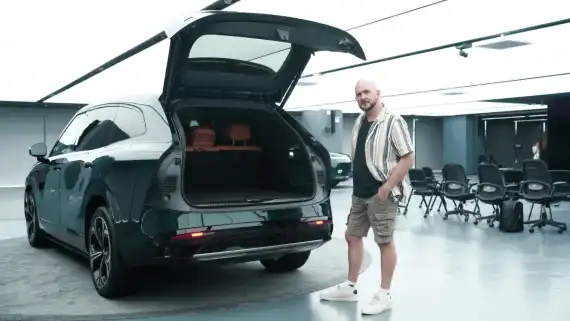
The G9L is designed to be a very good solution for families, while offering a premium and luxurious approach to space.
One of its biggest strengths is that it is timeless and refined without being over-designed.
We tried not to bring too many design features onto the car. We wanted the power of the design to come from its proportions, the quality of the finishes and the overall design language.
We tried to simplify as much as possible to enhance this sense of refined premium luxury.
Tim: Why should someone buy it?
Joan: The quality of the design and the fact that it’s easy to identify.
Graphically, it’s quite simple but also iconic. The light signature is part of our heritage and makes the car easy to recognise.
It is expressive and sporty while providing space and practicality.
That timelessness is important because when you buy a car, you want it to remain desirable for a long time.
Tim: I can imagine the G9L looking good in London, even though it’s a big SUV.
Joan: Yes. There is quite a European approach to it. You have robustness but also elegance without the design becoming overcharged.
I can see it in London, Barcelona and many other European cities.
But it’s designed for more than Europe. It can work very well in China and other regions, particularly the Middle East.
Tim: What is your actual input? Do you design the car from scratch?
Joan: When you start designing a car, there are always restrictions. The foundations are the space, comfort and driving position.
We analyse how comfortably we want the occupants to sit.
From there, it’s our job as designers to make it more emotional, functional or practical.
With the G9L, we wanted the proportions to be expressive and emotional, but still timeless and not overcharged.
Tim: Does having European designers help Xpeng?
Joan: There is still a perception that Chinese brands hire only European designers. That comes from the past.
There is an amazing amount of local Chinese talent now.
We are in a different era. People coming here often have a great deal of experience, and China offers enormous opportunities to execute ideas very quickly.
The combination of international experience and local talent can produce cars like this in a very short period.
Tim: China's cars seem to be maturing very quickly.
Joan: Absolutely. The acceptance of these cars in overseas markets, especially Europe, will be greater than many expected.
The brands are maturing a lot. It is not just the exterior design. The quality of the interiors and materials is now comparable with some European standards.
There is an amazing level of quality here.
Xpeng's bigger technology story
The G9L is only part of Xpeng's story.
During my visit, I also spoke to Yeqing Zheng, Vice President and General Counsel of Xpeng Group, about the company's approach to AI, assisted driving, robotics and flying cars.
Tim: What does Xpeng bring to the UK market?
Yeqing: We already have the G6 in the UK and are planning to introduce many more cars.
We believe our cars can offer a different experience, particularly in assisted driving.
We are bringing different technology and a different experience to the UK market.
Tim: AI still makes some people nervous. How do you make it acceptable?
Yeqing: Europeans are generally more conservative than Chinese consumers when it comes to accepting AI.
But once people experience the results, they become much more receptive.
We want AI to feel natural rather than intrusive.
Our assisted-driving technology works like a co-pilot. You can intervene at any time, but if you are tired and want the car to take over, you can allow it to do so.
Tim: And the robots and flying cars?
Yeqing: We started as an EV company, but at our core we see ourselves as a technology company.

We believe physical AI can be used across different products, including EVs, robots and flying cars.
We see ourselves as explorers of future mobility.
Anything that changes the way people move from A to B interests us.
First came electrification. Now AI is transforming how people move.
What we know so far
There is much more to discover about the G9L, but Xpeng has understandably asked us to keep some details under wraps until its official European debut in Paris.
What we can say after seeing the Chinese-market car statically and talking to its designer is that Xpeng is clearly targeting a more sophisticated, premium audience.
The design philosophy is deliberately restrained rather than flashy. Joan Melenchon repeatedly returned to the idea of timelessness, with the emphasis placed on proportions, quality and refinement rather than simply adding more visual features.
That could prove important when the G9L goes head-to-head with established European luxury SUVs.
For Regit, this is exactly why we visited China. We want our readers to understand the cars and the companies behind them before they arrive on UK roads, rather than simply reporting the headlines once they reach Britain.
The full G9L story will have to wait until Paris. But having flown to Guangzhou and seen the car at source, we already know Xpeng is taking the luxury SUV market seriously.
And in October, we'll find out just how serious.