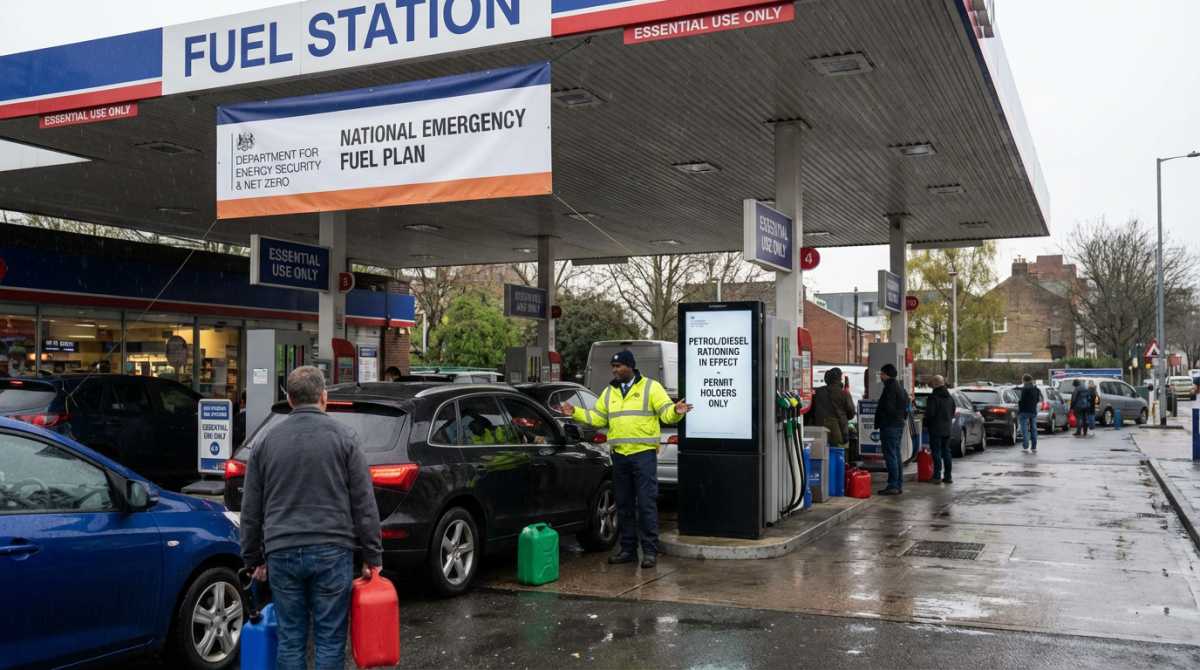
TL;DR: The UK government is reviewing emergency petrol and diesel rationing plans under the Energy Act 1976 to prepare for potential supply crises. If activated, these plans could include a £30 fuel purchase limit and priority access for essential services like the NHS and police. Officials stress the move is precautionary, not a sign of imminent shortages – but with diesel at 160.3p per litre and unleaded at 141.5p, it’s a timely review.
10/4/26 Update: UK petrol at £1.57/litre and diesel £1.89/litre is forcing 1 in 7 drivers (14%) to skip meals, per new survey, amid 2026 duty hikes and supply crunches. Drop motorway speeds from 80mph to 70mph for 25% fuel savings – or hit the UK's cheapest pumps listed below for instant relief.
1/4/26 Update: Ryanair CEO Michael O'Leary warns of 10-25% jet fuel supply disruptions across Europe, including the UK, from early May if the Iran conflict persists, as Iran's Strait of Hormuz blockade drives shortages and prices to $150+ per barrel for unhedged fuel. While Ryanair has 80% hedged, the aviation strain highlights interlinked transport vulnerabilities, bolstering government reviews of petrol/diesel rationing like £30 limits to curb panic buying and ensure equitable access. If supplies tighten further, everyday drivers could face stricter curbs alongside airlines.
30/3/26 Update: As fuel prices continue to surge following the ongoing conflict in Iran, the government has urged motorists to “fill up as normal”, reassuring the public that the UK is “well prepared” for any disruption.
Education Secretary Bridget Phillipson told Sunday Morning with Trevor Phillips that supply chains remain stable and that production hasn’t been affected, despite global pressures pushing the average cost of petrol above 150p per litre – an increase of more than 17p since late February.
Phillipson added that drivers should take advice from trade bodies such as the RAC and resist panic buying, saying: “They’ve been absolutely clear that if you go to the pump, just fill up as normal, continue as you are.”
The statement comes as ministers review contingency plans, including potential rationing measures, to respond proactively if supply lines tighten further.
For more context on how the global situation is developing, including how other nations are reacting to the Strait of Hormuz crisis, read our detailed breakdown here: Global fuel shortages 2026: How countries are reacting to the Strait of Hormuz crisis
25/3/26 Update: Shell’s chief executive has warned that Europe could face energy shortages and fuel rationing as early as next month if the Strait of Hormuz remains closed, saying: “South Asia was first to get that brunt. That’s moved to south-east Asia, north-east Asia and then more so into Europe as we get into April.”
24/3/26 Latest Update: Slovenia has become the first EU country to start rationing fuel after supply chains were disrupted by US and Israeli strikes on Iran, and Iran’s retaliatory attacks on their allies in the Gulf – some of the biggest players in the world’s energy market.
According to the BBC, "Under the new measures, private motorists in Slovenia will be restricted to a maximum purchase of 50 litres of fuel per day. Businesses and farmers have a more generous allowance of 200 litres."
20/3/26 Update: Dan Tomlinson said when asked whether the Government was considering implementing fuel rationing, "At the moment, it is too early to tell what the impact of this crisis will be in the coming months.
“What we have seen in the last two weeks is that there has been sharp increase in the cost of oil used to heat people’s homes, and the Government has stepped in and said we’re going to provide £50 million of support for people across the UK who are reliant on heating oil.”
“We will monitor the situation, and we’ll monitor it carefully.”
The UK government has confirmed it’s reviewing its national fuel emergency plans, designed to protect essential services if a major petrol or diesel shortage were ever to occur. While there’s no current crisis, the move helps ensure the country is ready to respond quickly if global supply chains are disrupted.
Key Facts
- Energy Act 1976: Gives the UK government the power to control fuel sales and distribution in a national emergency.
- £30 Purchase Limit: A possible ‘Maximum Purchase Scheme’ could cap fuel buys around £30 per driver to prevent panic buying.
- Current Prices: Diesel has reached 160.3p per litre and unleaded sits at 141.5p – the highest levels in roughly 18 months.
- DESNZ Oversight: The Department for Energy Security & Net Zero (DESNZ) manages the UK’s emergency fuel strategies.
- Contingency Only: The government says the UK fuel supply remains “diverse and resilient”, with no current shortage risk.
Why the Government is reviewing fuel rationing measures
Officials within Whitehall are updating the National Emergency Plan for Fuel, a long-standing safety net designed for severe fuel disruptions. The DESNZ says the review is routine and proactive – ensuring that if a crisis hits, the country can manage fuel fairly and efficiently.
With global tensions and volatile oil prices pushing up costs at the pump, it’s understandable that the government wants to keep these plans in good shape, even if they’re unlikely to be used.
What could trigger fuel rationing in the UK?
Fuel rationing would only be introduced in extreme circumstances, such as if global conflict or supply chain disruptions caused a severe fuel shortage. Although nothing like that is currently unfolding, planning ahead avoids panic and confusion if anything were to happen.
If needed, ministers could invoke powers from the Energy Act 1976, enabling them to dictate how fuel is sold and distributed across the UK.
How a £30 ‘Maximum Purchase Scheme’ would work
In practical terms, the ‘Maximum Purchase Scheme’ would limit fuel purchases to about £30 per visit. This isn’t about restricting travel; it’s about ensuring fair access.
By setting a reasonable cap, the government could spread available fuel more evenly and reduce panic buying, keeping the system moving smoothly until normal supply resumes.
Who would have priority access to fuel?
If emergency plans were activated, the ‘Designated Filling Station Scheme’ would give priority to essential services. These include:
- Ambulances, fire engines, and police vehicles
- Public transport operators
- Food distribution and delivery lorries
- Utility and infrastructure maintenance teams
Private motorists would still have access to other petrol stations, but only after critical and essential needs were met first.
Driver reactions
Some Regit users have pointed out their main concerns being fuel profiteering, stating, "It’s amazing, when the price drops it takes months to see the change. But as soon at the barrel price goes up the increase is instant."
One other Facebook user commented: "Considering 2 to 3 weeks supply is in stock, bought at the cheaper price, how come pump price goes up in 2/3 days?"
And it seems the government has taken notice too — the UK’s competition watchdog is now investigating fuel retailers for possible profiteering, while Chancellor Rachel Reeves has made it clear that the government won’t stand by as companies exploit a global crisis to inflate their profit margins.
Should drivers be concerned?
There’s no reason to panic. The government has emphasised that this is a contingency measure, not an alert of impending shortages. The UK’s fuel supply network is robust, and these plans are simply being reviewed as a sensible precaution.
For now, the best steps drivers can take are practical ones - focus on fuel-efficient driving habits, like smooth acceleration and route planning, to keep costs down and mileage up.
Above all, resist the temptation to panic buy. That’s the quickest way to create the very problem these emergency measures are meant to prevent.