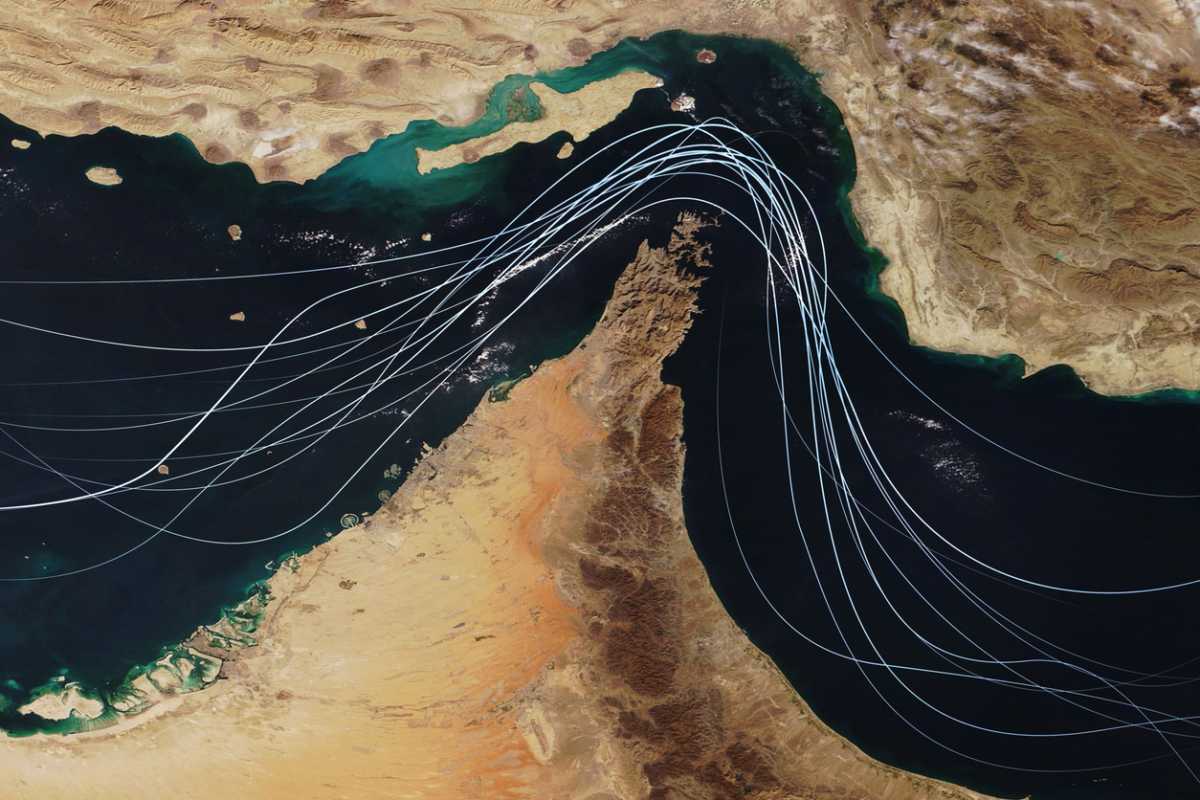
With the war in Iran causing major disruption at the Strait of Hormuz, the route for roughly 20% of global oil supply, fuel prices have spiked worldwide. As the shockwaves spread, governments are introducing emergency measures to limit the impact, from free public transport to full‑scale fuel rationing.
Key Facts
- Around one‑fifth of the world’s oil supply is now affected by the Strait of Hormuz closure.
- Governments are rolling out fuel‑saving, cost‑cutting, and rationing measures worldwide.
- Some nations are rationing petrol while others are incentivising public transport or limiting energy use.
- Global energy security is under renewed scrutiny following steep petrol price rises.
As the conflict in Iran continues and the Strait of Hormuz remains effectively closed, the world is grappling with a serious fuel shortage and steeply rising costs. This critical chokepoint, responsible for around 20% of global oil and natural gas shipments, has become the centre of a global economic ripple effect. With prices rising sharply and energy supplies tightening, countries across the world are taking action to protect consumers, manage demand, and maintain stability.
Here’s a look at how different governments have responded so far
United Kingdom
While the UK relies heavily on gas and renewables for electricity generation, the price of petrol has surged to an 18‑month high, according to the RAC. The government has promised to monitor pump prices for signs of profiteering, a claim denied by the Petrol Retailers Association.
To support households most affected, the prime minister announced a £53 million package to help low‑income families dependent on heating oil. The government says it’s ready to intervene further if the market worsens.
Australia
With fuel prices reaching record highs, averaging A$2.38 a litre in late March, several Australian states have taken the bold step of making public transport completely free.
Victoria: Free travel on trains, trams, and buses throughout April.
Tasmania: No-cost travel on buses, coaches, and ferries until the end of June.
The move also covers school buses, saving some families around A$20 (£10) per week. These measures aim to reduce driving, cut fuel demand, and ease household spending.
Egypt
In Egypt, which relies heavily on imported fuel, the government has rolled out temporary restrictions to conserve supplies and stabilise finances. Shops, restaurants, and cafés must now close by 9 pm, street lights are being dimmed, and non‑essential workers have shifted to one day of remote work each week.
The government also raised petrol prices and reduced fuel allocations for official vehicles by nearly a third, while delaying major state projects that consume large amounts of energy.
Philippines
The Philippines has declared a national emergency as fuel prices more than doubled. The government introduced subsidies for public transport drivers, cut ferry services, and moved civil servants to a four-day work week to reduce travel and fuel consumption.
With 98% of its oil imported from the Gulf, the country plans to stockpile a million additional barrels, while President Ferdinand Marcos has made it clear that “nothing is off the table.”
Sri Lanka
Still recovering from a recent financial crisis, Sri Lanka is among the hardest hit. The government declared Wednesdays public holidays for schools and state institutions to cut commuting and energy use.
Fuel rationing has also been reintroduced, with private motorists limited to 15 litres per week and motorcyclists to 5 litres.
Thailand
In Thailand, citizens are being encouraged to ditch their jackets to reduce reliance on air conditioning. Government offices have moved to remote work, and residents are asked to set thermostats between 26–27°C.
With Bangkok’s tropical humidity often above 70%, these small behavioural changes are part of a wider national push to save energy amid high oil import costs.
Ethiopia
The Ethiopian Oil and Energy Authority has ordered fuel suppliers to prioritise security forces and essential industries. Petrol stations are now required to serve public transport first, while other sectors face limits to preserve precious reserves.
In the Tigray region, where tensions remain high, fuel distribution has been fully suspended.
Myanmar
Myanmar has imposed a strict alternate‑day driving rule, restricting car use based on whether a licence plate ends in an odd or even number. Electric vehicles are exempt.
Authorities have also introduced a digitally‑monitored fuel rationing system, logging purchases via QR codes linked to vehicles to prevent hoarding and ensure compliance.
Vietnam
Vietnam’s government has urged citizens to cut unnecessary travel, carpool, and switch to bicycles or public transport. To soften the blow of higher costs, it has suspended environmental and VAT taxes on petrol and diesel.
This temporary relief aims to make essential travel more affordable while reducing nationwide fuel demand.
Bangladesh
In Bangladesh, the government responded swiftly by closing universities for an early holiday and rationing fuel for most vehicles. Power blackouts have become more frequent as authorities attempt to balance energy use and extend reserves.
Slovenia
Slovenia made history as the first EU country to impose fuel rationing, limiting private drivers to 50 litres per day, while businesses and farms can access up to 200 litres.
The move reflects Europe’s mounting concern about energy access and affordability if the Strait of Hormuz crisis continues into the summer.
South Sudan
Despite sitting on some of East Africa’s largest oil reserves, South Sudan imports refined fuel. To manage shortages, its main electricity supplier, Jedco, has begun rotational blackouts across the capital, Juba, conserving oil-fired power generation.
A world adjusting to energy reality
From rationing and price hikes to free public transport and shorter workweeks, each country’s response tells the same story: the world is adjusting to a new era of fragile energy security.
The Strait of Hormuz crisis is more than an oil disruption; it’s a reminder of how deeply interconnected global energy systems have become. Whether these measures are temporary fixes or the start of lasting change remains to be seen.