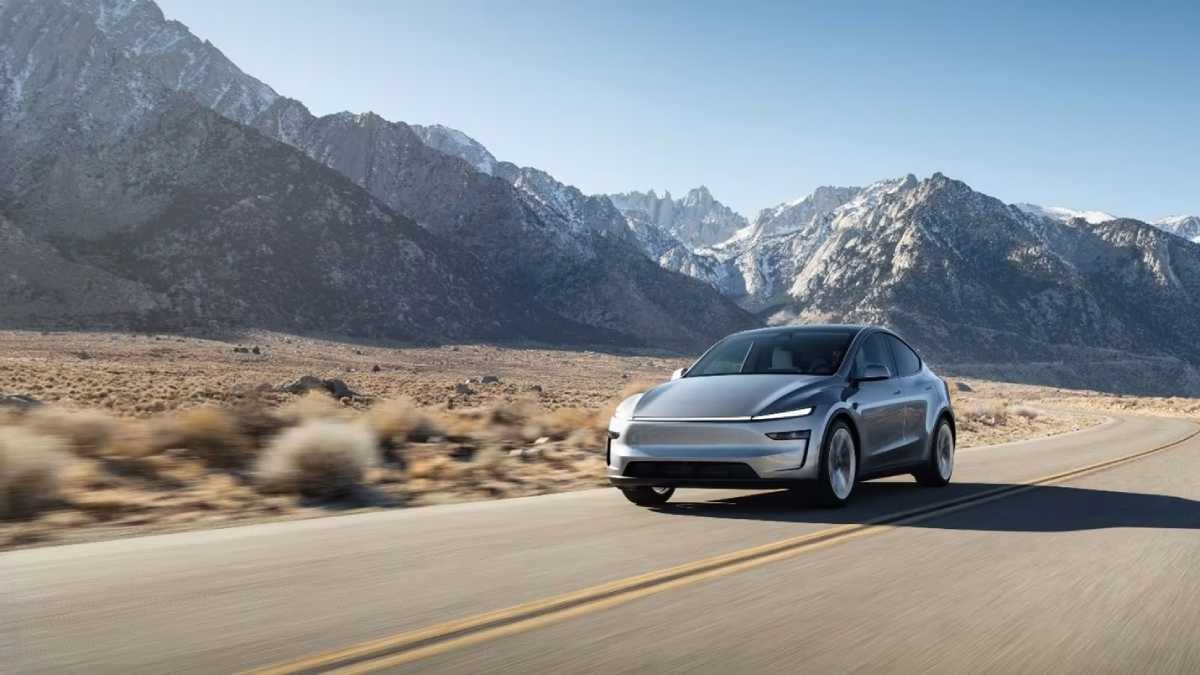
Why we love it:
- It’s roomy – especially the boot
- Decent driving experience
- Economical running costs
Where it could be better:
- Body lean could be improved
- A better view out of the rear windscreen would be great
- The looks could be less generic
Introduction
Since Tesla rolled out its Master Plan 20 years ago, the company has focused on making sustainable transportation more affordable, all while delivering an exciting driving experience for everyday use.
In 2023, the Model Y achieved a significant milestone by becoming the first electric vehicle to top global sales across all types of powertrains and energy sources. This accomplishment highlights the Model Y's versatility in meeting driver needs and performing well in various real-world conditions around the globe.
Today, Tesla continues to prioritise making electric vehicles more accessible and affordable to meet the needs of families, as seen with the introduction of the Model Y Standard. Keep on reading to see what our motoring journalist Tim Barnes-Clay thought of it at its UK media launch.
On The Road
Handling & Performance
Considering this is a reasonably substantial vehicle and we're piloting the base model, featuring 300PS and a 0-62mph time of 6.9 seconds, it's undoubtedly not underwhelming.
Acceleration is smooth, delivering a hearty amount of torque as you press the accelerator, making for an enjoyable drive, even if it doesn't quite match the thrilling speed of the top-tier Performance model, which boasts a lot more power.
Nevertheless, most individuals driving a practical family SUV aren't likely to feel disappointed by this performance.
For those who prefer to dial back the poke, there's a 'Chill' mode that softens the throttle response.
The regenerative braking feature offers two settings: Standard and Reduced. The new Model Y has seen improvements in this system, providing better predictability and functioning similarly to many other electric vehicles, with the Standard mode enabling one-pedal driving.
You will still encounter jolts on bumpy roads, as the suspension leans towards the firmer side. However, ride comfort has markedly improved compared with the previous model, even though our base Model Y comes with standard suspension.
The Premium and Performance versions take it a step further, equipped with enhanced suspension that includes adaptive dampers in the latter model.
Handling is sweet for a vehicle of this size, offering considerable grip and a well-balanced steering wheel around twisty tarmac.
That said, it is a heavy car, tipping the scales at nearly two tonnes, which is evident with noticeable body lean when cornering briskly.
Styling
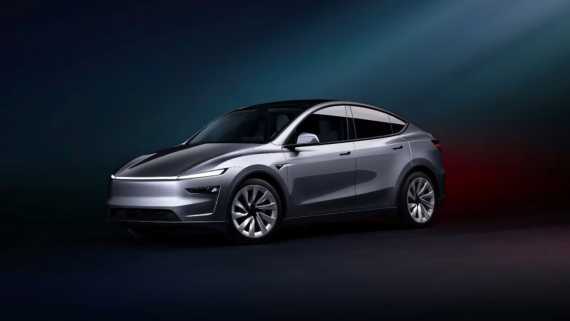
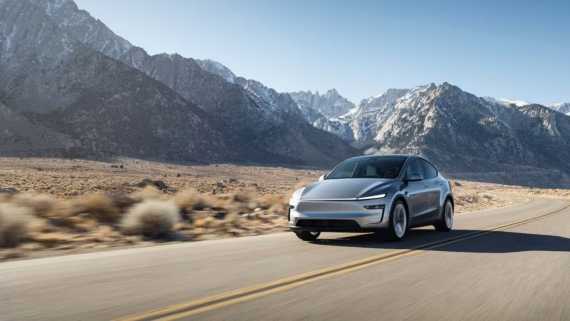
The car retains its recognisable shape, characterised by a relatively low nose despite its height, and a sweeping roofline that slopes significantly towards the back.
At the front, the new headlight design gives a more menacing and aggressive appearance. Sleek, narrow LED strips have replaced the previous triangular lights, and the front's curvature has been discarded in favour of a straighter design.
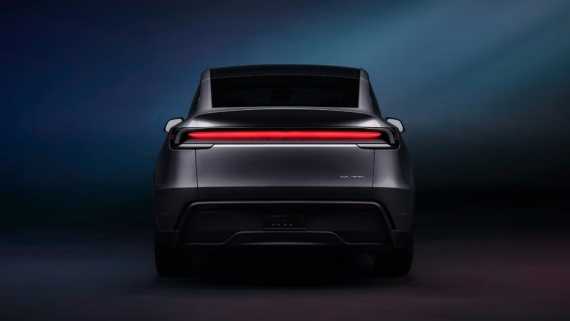
The new Model Y's rump has also seen significant updates, featuring a horizontal light bar that runs across the back, with the number plate relocated to the bottom, creating a lot of open space. However, on the Standard version, the light bar is replaced with LEDs and lacks the front light bar found on higher-end models.
While the overall look is more streamlined than before, it now carries a somewhat generic impression.
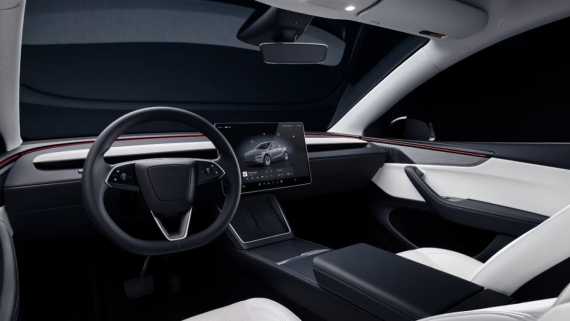
In typical fashion, the cabin closely resembles its predecessor, with only a couple of buttons visible, save for a few on the steering wheel.
All controls are via a central touchscreen that offers a sleek interface and a responsive display. While the layout is intuitive and essential features are easy to access, numerous sub-menus can make adjustments tricky while driving.
The lack of physical buttons means you'll rely on the touchscreen for everything. Tesla remains firm in its decision not to include Apple CarPlay or Android Auto, saying that its native system suffices.
What's more, regenerative braking requires using the touchscreen - a feature that could benefit from physical paddles. You even need to access the glovebox through the screen.
The Model Y does offer a touchscreen for rear passengers to control seat functions and entertainment, though our Standard version lacks these features and a rear screen. However, it shares the same infotainment functionality as higher variants, with the Performance model receiving only a slightly larger, sharper display.
Space & Practicality
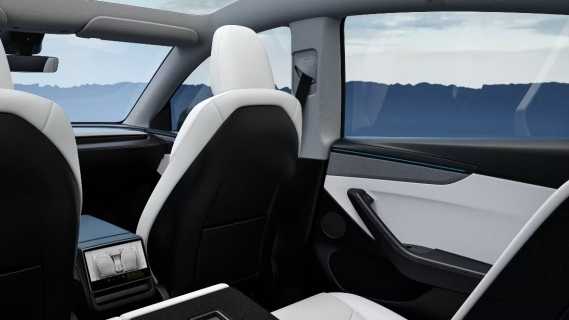
Tesla stirred considerable interest when it unveiled its inaugural SUV, primarily because of its remarkably minimalist interior. These days, such sparsely appointed interiors can be found in numerous vehicles, including the latest Model Y.
The seats offer a high level of comfort, and the steering wheel is pleasantly thick and feels lovely to hold. You’ll also find a pair of cup holders nestled in the front of the central armrest.
However, there isn’t much else to discuss, as the dashboard lacks any form of instrument display.
At least the dark-hued cabin that we’re in is visually appealing, enhanced by modest silver accents, particularly noticeable on the lower spoke of the steering wheel.
Visibility through the front is excellent, thanks to a relatively elevated driving position and a large windscreen. However, the steeply sloped roofline makes the rear window akin to looking through a letterbox.
Front legroom and headroom are ample, and the same applies to the rear, making it a fairly roomy car for five. What’s more, the seats are positioned relatively high, offering excellent support under the thighs.
The newly designed centre console features a generous cubby space, with sizeable door bins and a reasonably sized glove compartment.
The boot offers an impressive 854 litres of capacity with all five seats occupied. It's worth noting that this measurement extends to the roofline, unlike many other vehicles, which measure up to the window.
This figure takes into account underfloor storage as well and expands to a staggering 2,138 litres when the rear seats are folded over in a practical 40:20:40 configuration.
In this latest model, a magnetic load cover has replaced the previous parcel shelf in the Model Y. Additionally, you can now fold the seats back into position electronically, alongside the option to fold them down electronically. However, this feature is unavailable in the Standard model we're evaluating.
Additionally, there's a 117-litre frunk beneath the bonnet, though the frunk in the Standard variant we are testing lacks some of the plastic trimming and insulation seen in the higher-spec models.
Ownership
Running Costs
The Model Y Standard has a claimed range of 314 miles and is powered by a battery of around 64kWh.
When charging, the Tesla can charge at a peak rate of 175kW, allowing a 10-80% charge in approximately 25 minutes. For home charging, a 7.4kW wallbox will take just over 9.25 hours to reach the same 10-80% charge for the Standard variant, while other models may require up to 12 hours.
Owning a Tesla also gives you access to its Supercharger network, though charging at home is generally more cost-effective.
As for road tax, the first year is £10, after which it reverts to the £195 annual levy. However, because the Model Y Standard’s price exceeds £40,000, an additional £425 must be paid each year from years two to six due to the Government's 'luxury car tax'.
Tesla has built a solid reputation for reliability and provides a standard warranty of four years or 60,000 miles. In contrast, opting for an electric MG would grant you three extra years and an additional 20,000 miles on the warranty.
Verdict
With the ushering in of the Model Y Standard, Tesla has successfully lowered the entry price.
Furthermore, the anticipated retention of value for the Standard means that buyers can enjoy low car finance payments, making the Tesla Model Y more accessible than ever.
While it incorporates numerous updates, its outstanding safety rating - scoring an impressive five stars from Euro NCAP - adds to its appeal as a five-up electric family car.
So, the new Model Y Standard not only competes effectively with opponents such as the Audi Q4 e-Tron, BMW iX3, and Ford Mustang Mach-E, but it also cuts the mustard as a smart, more affordable choice for those entering Musk's EV brand.