
The future of motoring often revolves around electric drivetrains, software and automation. Yet everything about a car’s performance depends on a component that stays in constant contact with the road surface: the tyre.
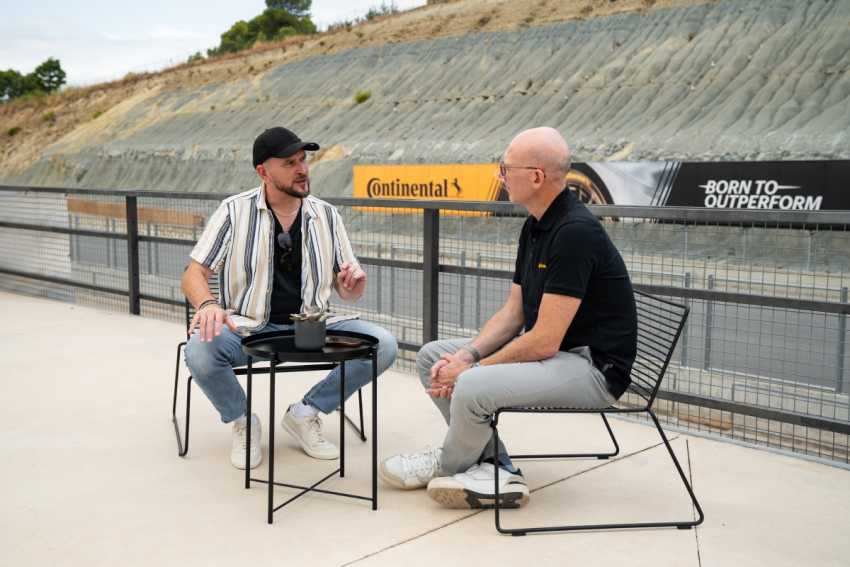
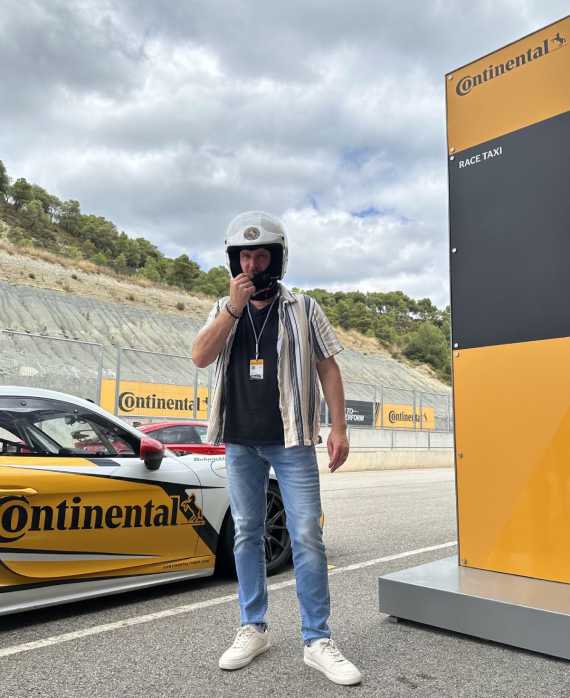
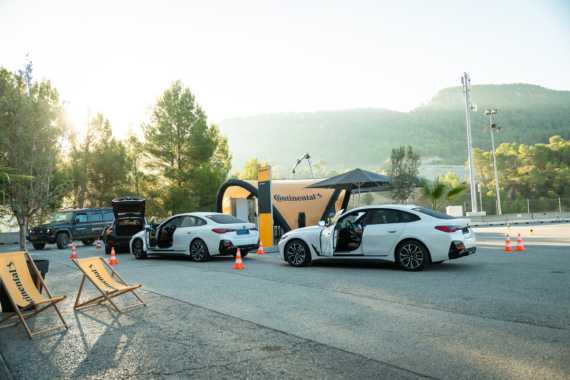
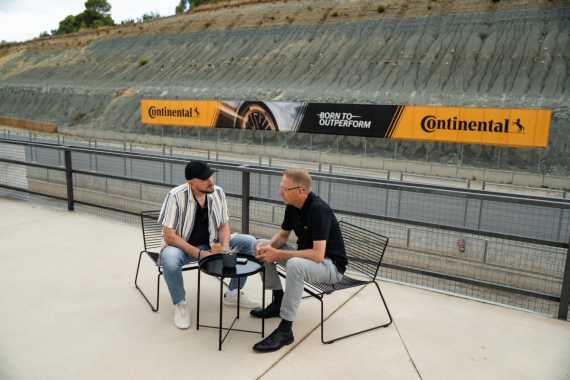
Continental invited our motoring journalist Tim Barnes-Clay to a media event in Spain focused on ultra-high-performance (UHP) tyre technology. Based in Sitges and at Parcmotor Castellolí, the experience put wet braking, handling comparisons, off-road driving, and track work front and centre.
After spending time at the wheel, the difference between a premium tyre and a cheaper one becomes impossible to overlook.
Tyres aren’t the most thrilling thing on a new whip. Nobody queues outside a tyre centre dribbling with excitement for the latest rubber to turn up. Yet they are one of - if not the most - important elements fitted to it.
As Edwin Goudswaard, Head of Global Research and Development for Continental, puts it, the physics are brutally simple.
"The only contact that a car has to the street is the tyres," he explains. "If you look at the contact patch, it's like a postcard size."
That small area of rubber has a massive responsibility. It has to transmit the engine or electric motor's clout to the road, provide steering response, generate braking performance and maintain traction when conditions deteriorate.
That last point is particularly vital. For a driver who never thinks of themselves as an enthusiastic or speedy motorist, the argument for premium tyres may seem less convincing at first. Why fork out more for a tyre made to cope with high-performance driving when you spend most of your time commuting, sitting in traffic or shopping?
Continental's answer is that you don't necessarily purchase performance because you intend to drive at the limit. You buy it because you might suddenly find yourself there.
Andreas Topp is Vice President of Platform Development and Industrialisation for Continental's passenger car tyre business - and leads Innovation and Applied Research across all tyre segments. He says predictable behaviour is particularly important for less experienced drivers.
"You want to have something where you know how the car behaves," he says. "In case something happens which is unusual, like an obstacle or a wet road, you want to stay in control."
That makes utter sense. A vehicle can have collision-avoidance systems, clever suspension and four-wheel drive. Still, none of those technologies can alter the fundamental fact that the tyres are the things touching the road.
This becomes even more relevant during an emergency manoeuvre. A child, animal or cyclist appears in the road – seemingly out of nowhere. Traffic stops without warning. You must brake hard or swerve. The road isn’t dry. Suddenly, the tyre that looked like a pricey black circle hidden under a wheel arch becomes vastly more important.
Goudswaard makes a similar point when discussing cheaper tyres.
"Most drivers don't go to the extremes," he says. "But there are situations. Something unexpectedly comes on the street, you need to go around it fast, or you need to get on your brakes. Those are the moments where, in the end, you probably will think, I should have bought the more expensive tyres."
That is something I could relate to during Continental's demonstrations in Spain. Being able to swap between tyres and experience the differences for yourself is very different from reading about a tyre test or looking at a label. Steering feel, braking response and the way a car behaves during a rapid change of direction become real rather than hypothetical.
Jan Oliver Götz, Continental's Head of Product Management and Technical Customer Service EMEA, explains that a modern premium tyre has to satisfy numerous competing requirements simultaneously.
It needs grip, braking performance, handling, durability, comfort and efficiency.
The temptation may be to focus on one characteristic. But Continental says the objective is to improve the overall balance rather than chase one headline figure.
Goudswaard describes the company's development process using the analogy of a spider diagram.
Engineers are continually trying to make the entire shape bigger, improving areas such as mileage, wet grip, and rolling resistance without sacrificing another characteristic.

"That's basically the life of an engineer and a chemist in Continental," he says. "We work on a daily basis to make this spider diagram bigger."
It is an increasingly complicated job. Modern cars are becoming heavier, more powerful and quieter. EVs have changed the demands put on tyres because of their weight, immediate torque and diminished drivetrain noise. Once the engine vanishes from the equation, tyre sound becomes more obvious inside the cabin.
"We regard electric vehicles more as an evolution of what we had before," says Goudswaard.
The requirements simply become more pronounced. Weight becomes more significant. Rolling resistance matters for range. Noise becomes more important for refinement. And grip still matters when that instant electric torque meets a damp road.
Then there is the elephant in the tyre shop: price. With household budgets under pressure, it’s utterly understandable that motorists are looking for ways to save cash. Tyres may seem like an obvious place to cut costs, especially when a cheaper option looks almost identical once fitted to a wheel.
The issue is that the difference is rarely obvious during normal driving. A budget tyre can feel perfectly acceptable when you're travelling along on a dry road. The real distinction may only become evident when you ask it to perform outside its comfort zone. And you don't get to choose when that occurs.
Götz says this is where the premium nature of a tyre becomes apparent.
"You only know that you need the tyres when you get in a severe situation," he says.
Continental believes independent testing is a way consumers can compare those differences. The company says it secured a podium finish in 54 of 66 independent tyre tests conducted across Europe in 2025
The figures are Continental's own, but the point is important: drivers shouldn't have to judge tyre performance merely by looking at a tread pattern.
Another issue many motorists may not think about until it becomes a problem is aquaplaning. The UK’s famously unpredictable weather makes it particularly relevant.
Aquaplaning happens when a tyre can't clear enough water from the road surface and essentially loses contact with the tarmac. The vehicle can then begin to ride on a film of water rather than properly gripping the road.
As Topp explains, if the front tyres lose that contact, you can turn the steering wheel, but the car may not respond as anticipated.
"You are not able to control your vehicle anymore," he says.
Premium tyre development aims to give the motorist more margin before that happens and maintain predictable behaviour as conditions change.
That is particularly relevant when road surfaces vary.
You can be travelling along a wet motorway quite happily before swiftly encountering standing water, a different surface or a section of road with poorer drainage. The conditions have altered, even though your speed hasn't.
That is where the engineering underneath the tread starts to count.
Continental's product range is designed around different priorities, from efficiency and mileage to handling and performance.
But beneath the chemistry, computer modelling, and increasingly sophisticated tread patterns, the tyre's fundamental job hasn't changed much since the earliest days of motoring.
Continental dates its origins to 1871. Interestingly, its first product wasn't a pneumatic tyre. The company began with rubber products including a hoof buffer designed to reduce noise from horses in cities.
The horse remains represented in Continental's famous logo.
More than 150 years later, the company is still working on the same basic problem: keeping vehicles connected to the surface beneath them.
And perhaps that is why tyres deserve a little more attention than they normally get.
We obsess over horsepower, battery capacity, acceleration figures, infotainment systems and big alloy wheels. Yet beneath all of that are four relatively small contact patches doing the work.
I was reminded of that at Parcmotor Castellolí.
On track, a tyre's performance characteristics are easy to appreciate. But you don't need to be behind the wheel of a sports car at the limit to benefit from them.
The most important tyre performance might be the bit you never notice.
It is the emergency stop you didn't have to think about. The evasive manoeuvre that avoided the obstacle. The wet corner where the vehicle stayed predictable. The standing water that didn't unsettle the car.
For a new driver, particularly, that margin can matter hugely.
Tyres might not be sexy. They probably never will be. But when the road stops behaving as you expect, those four black circles beneath your vehicle can become the most important things you've ever paid for.