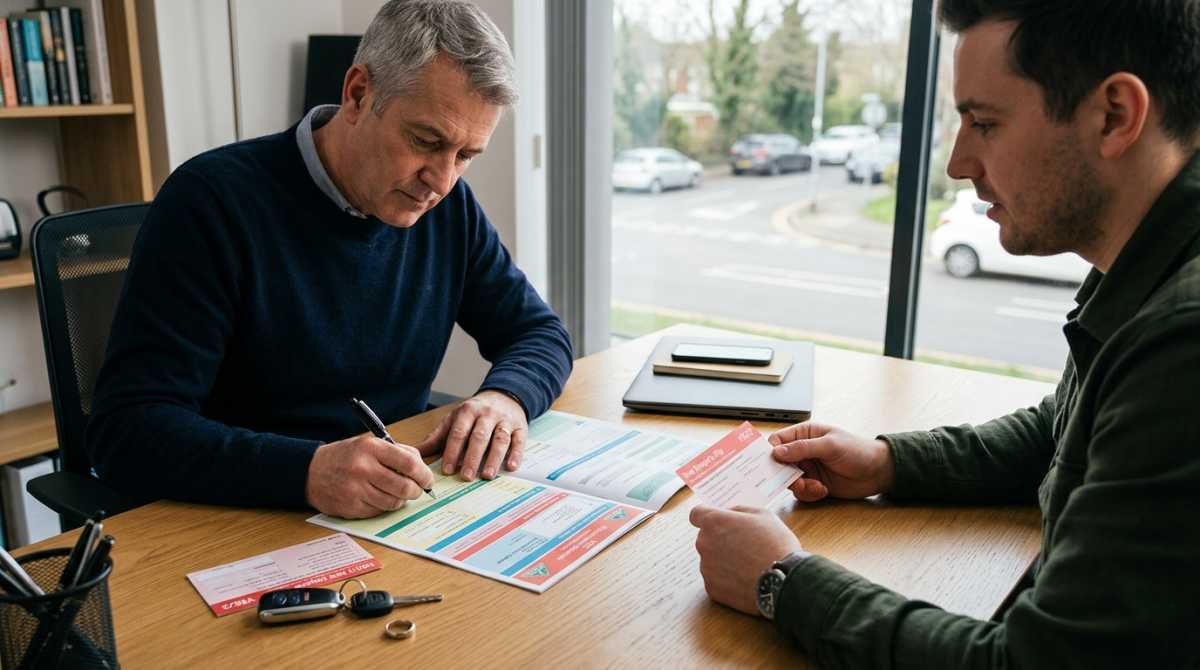
TL;DR: When you sell a car in the UK, you must tell the DVLA that you've transferred the vehicle to a new keeper. The quickest option is usually to complete the process online using your V5C logbook. Give the buyer the green new keeper slip, and make sure they tax the car before driving it away. Your vehicle tax will be cancelled when the DVLA processes the notification, and you can receive a refund for any full months remaining.
Transferring car ownership is an important part of buying or selling a used vehicle. Whether you're selling your current car or buying one from a private seller, it's essential to make sure the DVLA's records are updated correctly.
The process is usually straightforward, particularly when you have the vehicle's V5C registration certificate, commonly known as the logbook.
Here's how to transfer car ownership in the UK, what buyers and sellers need to do, and what happens if you don't have a V5C.
What Do You Need to Know Before Transferring Car Ownership?
Before starting the process, it's important to understand the difference between a vehicle's owner and its registered keeper.
The owner is the person who legally owns the vehicle. The registered keeper is the person recorded by the DVLA as responsible for keeping the vehicle registered in their name.
These aren't necessarily the same person. For example, a company might own a car while an employee is its registered keeper.
The V5C logbook records the registered keeper's details. It isn't proof of ownership.
What Is a V5C Logbook?
A V5C is the vehicle registration certificate issued by the DVLA. It contains information about the vehicle and its registered keeper.
You'll normally need the V5C to transfer a used car to a new keeper. If you're selling a car, keep the document available until you've completed the transfer.
The buyer should receive the green new keeper slip, known as the V5C/2, when the seller completes the transaction.
Step 1: Tell the DVLA You've Sold the Car
If you're selling a car, it's your responsibility to tell the DVLA that you're no longer the registered keeper.
You can do this online or by post. The online service is generally the quickest option.
Option 1: Transfer Car Ownership Online
You can use the official GOV.UK vehicle sale and transfer service to notify the DVLA. The service is available Monday to Friday, 7am to 9pm, and Saturday and Sunday, 7am to 8pm.
To complete the transfer:
1. Visit the GOV.UK service and select the appropriate option for selling or transferring your vehicle.
2. Enter the required details from your V5C logbook, including its 11-digit document reference number.
3. Provide the new keeper's details as requested.
4. Complete the notification and follow the instructions to confirm the transfer.
5. The DVLA updates its records immediately when the online notification is completed successfully.
6. Once you've completed the process, keep any confirmation you receive for your records.
Important: The online service cannot be used if you don't have your V5C logbook or have already sent it to the DVLA by post.
Option 2: Transfer Car Ownership by Post
If you can't use the online service, you can notify the DVLA by post using your V5C.
The process depends on which version of the logbook you have.
- Newer-style V5C: Complete section 2.
- Older-style V5C: Complete section 6, and both the seller and buyer must sign the declaration in section 8.
Give the green new keeper slip to the buyer and send the completed V5C to:
DVLA, Swansea, SA99 1BA
Make sure you use the correct postage.
It's sensible to keep a record of the vehicle's registration number, the sale date and any paperwork relating to the transaction.
Step 2: Give the Buyer the Green New Keeper Slip
When selling a car, you should give the buyer the green V5C/2 new keeper slip.
This is important because the buyer can use the slip to tax the vehicle while waiting for the replacement V5C logbook.
If you complete the transfer online, the seller should also follow the DVLA's instructions to destroy the old V5C.
If you use the postal process, the completed logbook is sent to the DVLA instead.
Step 3: The Buyer Must Tax the Vehicle
One of the most important things to remember when buying a used car is that vehicle tax does not transfer to the new keeper.
When the DVLA processes the sale notification, the previous keeper's vehicle tax is cancelled. The buyer must arrange their own tax before driving the car on public roads.
You can tax a vehicle online through GOV.UK.
You must also have valid insurance before using the vehicle on the road. Use Regit to check that the vehicle has a valid MOT where one is required.
Don't assume that the seller's existing tax, insurance or other arrangements cover you after the sale.
Step 4: Get Your Vehicle Tax Refund
If you're selling a car, you don't need to apply separately for a standard vehicle tax refund after notifying the DVLA of the sale.
The DVLA automatically cancels the tax and sends a refund for any full months of vehicle tax remaining.
The refund is sent by cheque to the name and address recorded on the V5C. If you pay vehicle tax by Direct Debit, the Direct Debit is cancelled automatically.
You won't receive a refund for partial months or certain payment surcharges.
If your refund cheque hasn't arrived after eight weeks, contact the DVLA.
You can find the full details in the official vehicle tax refund guidance.
Can You Transfer Car Ownership Without a V5C Logbook?
Yes, but the process is different if the logbook is missing.
The DVLA advises buyers not to purchase a vehicle without a V5C. If you've already bought one, you may need to apply for a vehicle registration certificate using form V62.
If You're the Seller
If you've sold a vehicle but no longer have the V5C, you must write to the DVLA rather than use the normal online service.
Include:
- Your full name and address.
- The vehicle's registration number.
- The vehicle's make and model.
- The exact date of sale.
- The new keeper's or motor trader's name and address.
Send the information to:
DVLA, Swansea, SA99 1BA
Keep a copy of the information you send.
If You're the Buyer
If you've bought a vehicle without a V5C, you can apply for a registration certificate using form V62.
The standard application fee is £25 when the fee applies. There are different procedures for some situations, including where a seller has given you the new keeper slip but the replacement logbook hasn't arrived.
The DVLA usually sends a new V5C within four weeks of registering a vehicle. If the seller registered a used vehicle online, the new keeper will usually receive the V5C within five to seven working days.
If your logbook hasn't arrived within the relevant period, follow the DVLA's instructions for contacting it.
Special Cases When Transferring Car Ownership
Some vehicle transactions require additional steps beyond a standard private sale.
Selling a Car Through a Motor Trader or Auction
If you're selling a vehicle through a motor trader or auction, like through our Motorway, check how the transfer will be handled.
You can notify the DVLA yourself using the appropriate option for selling to a motor trader, or follow the process agreed with the trader.
Make sure you know who is responsible for notifying the DVLA and keep any confirmation or paperwork.
Selling an Insurance Write-Off
If your insurer declares your car a write-off, the DVLA must be informed as part of the relevant process.
The correct procedure depends on what happens to the vehicle. Follow the insurer's instructions and the official GOV.UK guidance on vehicle tax refunds, which includes information about vehicles written off by insurers.
A stolen vehicle is a separate situation. If your car has been stolen, report it to the police and contact your insurer as appropriate. The DVLA's vehicle tax refund process for stolen vehicles is different from a normal sale.
Keeping a Private Number Plate
If you want to keep a personalised registration number when selling your car, you must apply to remove it before transferring the vehicle.
Follow the DVLA's process for retaining a registration number and make sure the vehicle has the appropriate registration details before completing the sale.
How Long Does It Take to Transfer Car Ownership?
The time it takes depends on how you notify the DVLA and whether anything needs checking or correcting.
| Process | Typical Timing |
| Online notification | DVLA records updated immediately after successful completion |
| New V5C after an online used-vehicle transfer | Usually 5–7 working days |
| New V5C after other registration methods | Usually within 4 weeks |
| Vehicle tax refund | Contact DVLA if the cheque hasn't arrived after 8 weeks |
These are the DVLA's published timings and guidance, not guarantees that every transaction will be completed within the stated period.
Car Ownership Transfer Checklist
Before completing a sale or purchase, use this checklist to make sure you've covered the essentials.
If you're selling:
Complete the DVLA notification online or by post.
- Give the buyer the green new keeper slip.
- Keep a record of the sale and any confirmation.
- Check that you've followed the correct process if you have a private registration to retain.
- Look out for your vehicle tax refund.
If you're buying:
- Check the vehicle and its V5C details before purchasing.
- Make sure the seller completes the registration transfer.
- Get the green new keeper slip.
- Tax the vehicle before driving it.
- Arrange insurance and check the MOT requirements.
- Check the details on your new V5C when it arrives.
Frequently Asked Questions
Do I need to tell the DVLA when I sell my car?
Yes. The seller must notify the DVLA when a vehicle is sold or transferred to a new keeper. You can usually do this online or by post.
Can I transfer car ownership online?
Yes. The DVLA provides an online service for notifying it that you've sold or transferred a vehicle. You'll need the relevant details from your V5C logbook.
Does car tax transfer to the new owner?
No. Vehicle tax is cancelled when the DVLA processes the sale notification. The buyer must tax the vehicle before driving it.
Can I sell a car without a V5C?
Yes, but you must follow the DVLA's alternative procedure. The seller needs to notify the DVLA in writing, while the buyer may need to apply for a V5C using form V62.
How much does it cost to transfer car ownership?
There is no standard fee for notifying the DVLA of a normal sale using its online service. A V62 application for a replacement or missing logbook can cost £25, depending on the circumstances.
How do I know if the DVLA has transferred the car?
If you notify the DVLA online, the records are updated immediately when the notification is completed successfully. Keep any confirmation you receive. If you use the postal route, allow time for the DVLA to process the paperwork.
Final Thoughts
Transferring car ownership in the UK is usually straightforward when you have the correct paperwork and follow the DVLA's instructions.
If you're selling, make sure you notify the DVLA and give the buyer the green new keeper slip. If you're buying, arrange your own vehicle tax and insurance before driving the car.
For the latest instructions and exceptions, always check the official GOV.UK vehicle sale and transfer service.