Chinese car brands are arriving in the UK at pace, but few come with the industrial pedigree of Aion. Backed by the GAC Group - a major player with established joint ventures alongside Toyota and Honda - Aion is positioning itself as a serious contender in the electric vehicle space.
Its first UK model, the all-electric Aion V, promises a range of up to 317 miles, fast charging and family-friendly practicality. But in an increasingly crowded market, can it really stand out?
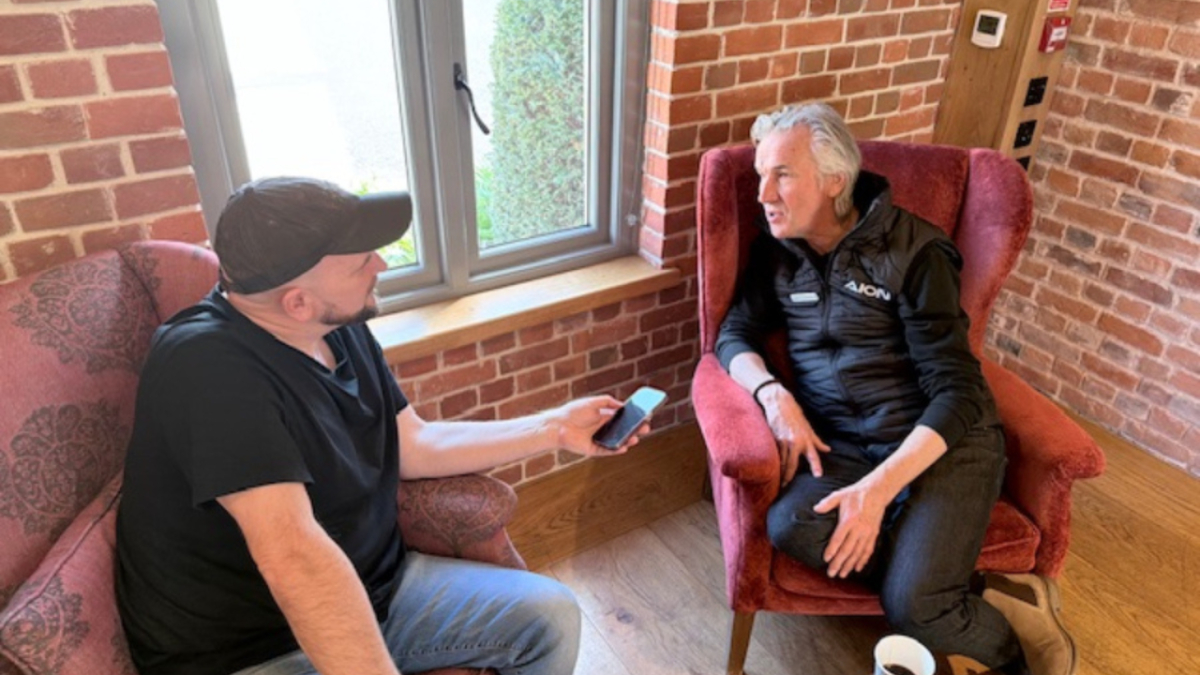
Our motoring journalist, Tim Barnes-Clay, caught up with Jon Wakefield, Managing Director of Aion Auto UK, to find out more.
Q: First things first – how do you actually pronounce the brand? Is it Ion, Aeon…?
Jon Wakefield: It's A-on - "Aeon". And honestly, we've had every possible variation so far, which is completely understandable. It's one of those names that's new to the UK market, so part of what we're doing right now is simply building familiarity. Once people hear it a couple of times in context, it tends to stick quite quickly.
Q: Let's talk about the Aion V - what is this car, and why does it stand out?
Jon Wakefield: The Aion V is our first introduction to the UK market, and we deliberately chose it because it represents what we believe the brand does best - which is delivering a genuinely complete package rather than focusing on just one headline feature.
It's already been on sale in China for a couple of years, so it's not a prototype or early-stage product. It's been refined through real-world use, and that shows in the way it drives, the quality of the materials, and the consistency of the build. A lot of that comes from the wider engineering strength of the GAC Group, particularly its experience working alongside Toyota and Honda in joint ventures.
What we've got is a car that isn't trying to shout about one or two standout stats - instead, it performs strongly across range, charging speed, refinement and everyday usability. That balance is what made it the right choice for the UK.
Q: You mentioned usability - what stood out for the UK market?
Jon Wakefield: Space in the rear was a major factor for us. When we looked at how UK customers actually use their cars, particularly families, rear-seat comfort and accessibility came up again and again.
The Aion V really delivers here - not just legroom, but also how easy it is to get in and out, the visibility, and the overall sense of space once you're inside. That's helped by the flat floor and the packaging of the EV platform.
Q: It's a battery electric vehicle (BEV) - but is that the whole story?
Jon Wakefield: It is fully electric, yes, but we're very aware that the UK market is still in transition. Not every customer is in the same place in terms of readiness for full BEV adoption, and we need to reflect that in our future line-up.
That's why we're also planning to introduce plug-in hybrid models, giving customers another step into electrification rather than forcing a single route.
On top of that, we're particularly interested in range extender technology, which effectively bridges the gap between EV confidence and petrol reassurance. I've driven some of the systems within the wider GAC Group portfolio, and I think there's a real opportunity there for the UK - especially for customers who want electric driving most of the time, but with added security for longer trips.
Q: Design-wise, there's a growing concern that many new cars look the same. Is that a risk?
Jon Wakefield: It's definitely a fair observation. As more manufacturers enter the EV space, there is a tendency for design language to converge - particularly when aerodynamics and efficiency start to drive a lot of decisions.
But I think the Aion V manages to avoid that "same-same" feel. It's been developed with a strong focus on aerodynamics, yes, but also with its own visual identity. The design teams have worked hard to make sure it doesn't fall into the trap of becoming just another smooth EV shape.
We were very conscious that if we're coming into a new market, we need to offer something that feels fresh and recognisable. I think this car will age well visually because it's not chasing trends - it's been designed with a bit more longevity in mind.
Q: The atmosphere at today's Aion V media event feels notably relaxed - almost wellness-focused. Is that intentional?
Jon Wakefield: Not in a staged or artificial way. What you're seeing is really just the culture of the team coming through. There's a huge amount of work happening behind the scenes - it's a fast-moving environment - but there's also a strong emphasis on collaboration and openness.
That culture also extends to our retail partners. We want them to feel fully supported and aligned with us, not just commercially but culturally as well.
Q: Final one - if you had to sum up the Aion brand in a sentence, what would it be?
Jon Wakefield: For me, it comes down to trust and confidence - and those aren't just marketing words.
We want customers to trust that the car will do its job every day without fuss, that it will be reliable and easy to live with, and that it will deliver on what it promises. But equally important is confidence in the organisation behind it - that we'll support customers properly, that our retailers will be there for them, and that we're building something long-term rather than short-term.
If we get that right, everything else follows.