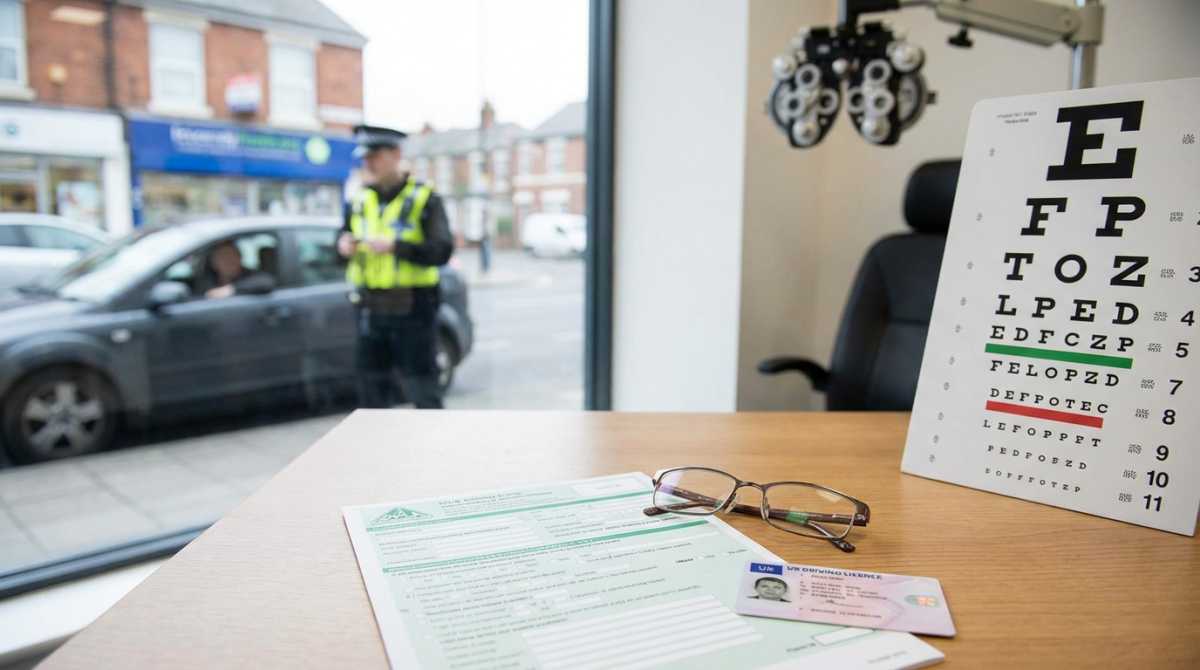
Over 37,000 UK drivers have lost or been refused a licence since 2022 for failing eyesight standards. Roadside test failures have surged by 180%, making it more likely than ever that poor vision will be spotted and penalised.
UK drivers warned as 37,000 licences revoked for poor vision
More than 37,000 motorists across the UK have had their licences revoked or refused since 2022, and the reason might surprise you. It’s not speeding or drink-driving, but something far more common: poor eyesight.
Fresh DVLA data shows a sharp rise in enforcement, with roadside eyesight test failures up by a staggering 180%. In simple terms, if your vision isn’t up to scratch, you’re now far more likely to get caught.
And it’s not just a technicality; it’s a serious road safety issue that could cost you your licence, your job, or worse.
Key facts
- 37,121 licences revoked or refused due to poor vision (2022–2025)
- 180% increase in roadside eyesight test failures
- 20 metres is the legal number plate reading distance
- £1,000 fine and 3 points for failing eyesight standards
- 10,794 drivers in their 70s affected – the largest group
DVLA eyesight failures: not just an older driver issue
While drivers in their 70s make up the biggest share of cases (over 10,000), this isn’t just an age-related problem.
Thousands of younger drivers are also failing to meet the minimum eyesight standard, often without even realising it. Vision tends to deteriorate gradually, which makes it easy to ignore until it becomes a legal issue.
For professional drivers, the consequences are even more severe. More than 4,000 HGV and bus drivers lost their licences over this period, as stricter Group 2 medical standards leave very little margin for error.
If you rely on driving for work, staying on top of your health checks is just as important as keeping your documents up to date.
What happens if you fail an eyesight test?
Police can stop you and check your eyesight at the roadside. And if you fail, they can take immediate action.
Under “Cassie’s Law”, officers have the power to fast-track licence revocation if you can’t read a number plate from 20 metres in good daylight.
The penalties can include:
- Up to £1,000 fine
- 3 penalty points
- Immediate licence revocation
But that’s just the starting point. If poor vision contributes to a crash, you could face much more serious charges, including dangerous driving.
UK eyesight rules: what drivers must know
The legal requirement is simple, but many drivers overlook it.
You must be able to read a standard UK number plate from 20 metres away in good daylight. If you need glasses or contact lenses to do that, you’re legally required to wear them every time you drive.
No exceptions.
It’s also your responsibility to tell the DVLA about any condition that affects your vision. Failing to do so could invalidate your licence and even your insurance.
Don’t wait until it’s too late
For most drivers, failing an eyesight test isn’t about sudden vision loss; it’s about small changes that build up over time. Blurry road signs, struggling with glare at night, or squinting more than usual are all warning signs.
If it’s been more than two years since your last eye test, now’s the time to act.
A quick visit to the optician is far easier and cheaper than dealing with fines, points, or losing your licence altogether. And more importantly, it helps keep you and everyone else on the road safe.