A new study has revealed just how distracting some of the touchscreens fitted to modern cars can be, with drivers taking more than 100 seconds to complete a series of simple tasks in some vehicles.
As manufacturers continue to replace traditional buttons and switches with increasingly sophisticated infotainment systems, concerns are growing over how much attention drivers need to take away from the road.
Automotive consumer platform What Car? put 21 new cars through a series of tests to find out which infotainment systems were the most distracting.
The results highlight a significant difference between the best and worst systems. While some cars allowed testers to complete tasks in around 12 seconds, others took more than a minute and a half.
The Honda HR-V and Suzuki e-Vitara performed particularly poorly, both receiving just one star from the testers.
The research also found that effective voice control can significantly reduce distraction, allowing drivers to perform basic tasks without repeatedly looking at the touchscreen.
And it seems drivers themselves are calling for a return to simpler controls, with 85% saying infotainment systems should have more physical buttons.
How distracting are modern car touchscreens?
There is currently no official UK limit defining exactly when an in-car system becomes too distracting.
However, car manufacturers generally follow guidance suggesting that a driver is not sufficiently focused on the road if they take their eyes away for more than 3.5 seconds at a time.
For its study, What Car? used the 12-second task limit set by the US National Highway Traffic Safety Administration (NHTSA).
The 21 vehicles were assessed on four everyday tasks:
- Changing the radio station from Kisstory to BBC Radio 4 on DAB
- Increasing the cabin temperature from 18°C to 24°C
- Turning on the driver's heated seat
- Setting the sat-nav to a specific destination
The testers used Tobii Glasses 3 to track where the driver's eyes were looking. Two small cameras built into each lens monitored eye movements, while Soma Reality software measured changes in pupil size to assess cognitive workload and attention in real time.
The researchers then assessed the level of distraction, how absorbed the driver became in the infotainment system, the mental effort required and the time taken to complete each task.
The five most distracting car infotainment systems
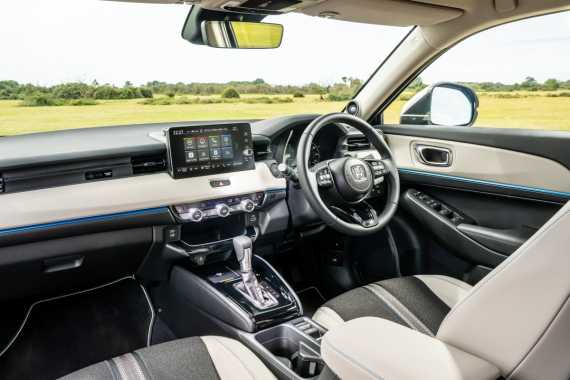
1. Honda HR-V – 21st place
The Honda HR-V had the most distracting infotainment system in the test, with its nine-inch touchscreen criticised for being unresponsive and difficult to use.
Completing all four tasks took 100.8 seconds. Both distraction levels and mental effort were rated as high, resulting in an overall score of just one star.
There is an important caveat, however. The HR-V was tested before Honda introduced a software update designed to improve its infotainment system.
2. Suzuki e-Vitara – 20th place
The Suzuki e-Vitara's 10.1-inch touchscreen was described as glitchy and slow, increasing the amount of mental effort needed to complete the tasks.
The tester took 44 seconds to complete everything. Distraction was rated as medium, while mental effort was high.
The system received just one star overall.
3. MG IM5 – 19th place
The MG IM5's iSmart Connected Suite was awarded two stars, with the tester taking a concerning 108.6 seconds to complete the four tasks.
Both distraction and mental effort were rated as medium.
The system's voice control was also limited, working with only certain commands. Meanwhile, having two screens meant the tester spent more time looking away from the road.
4. Ford Ranger – 18th place
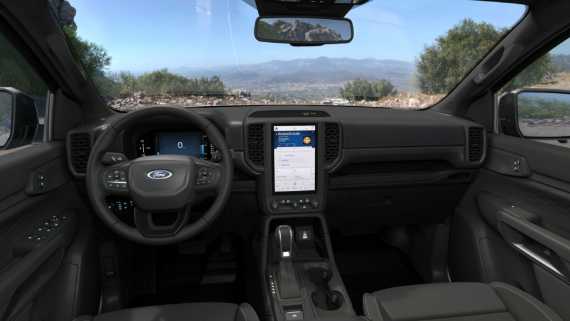
Ford's Ranger pick-up was next, with its Sync 4A system receiving two stars.
Its voice control struggled with a number of functions, while the tester also spent too much time looking at the on-screen transcript of voice commands.
Completing all four tasks took 110.6 seconds, with both distraction and mental effort rated as high.
5. BYD Sealion 5 – 17th place
Rounding out the five most distracting systems was the BYD Sealion 5 and its 12.8-inch touchscreen.
Its voice control performed reasonably well and was responsive, but using manual controls took considerably longer.
The four tasks took 90.5 seconds in total. Both distraction and mental effort were rated as medium, giving the system an overall score of two stars.
The five least distracting car infotainment systems
It wasn't all bad news. Several modern infotainment systems performed impressively well, particularly when using voice commands.
5. Volkswagen T-Roc
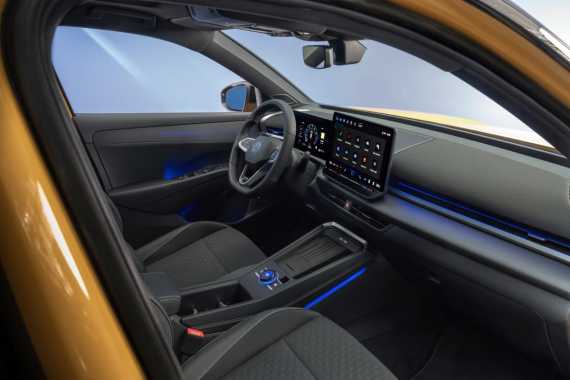
The Volkswagen T-Roc's MIB4 system took fifth place, helped by what testers described as excellent AI-backed voice control.
The system was able to change the temperature and heated seats quickly and correctly recognise the tester's home address.
Finding the right radio station took longer, but the overall task time was just 19.3 seconds.
Distraction was rated low and mental effort medium, earning the system four stars.
4. Mini Cooper Electric
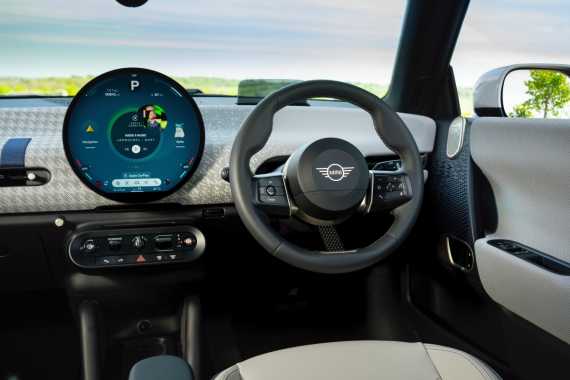
The Mini Cooper Electric came fourth with its Mini Operating System 9.
Its Google-based voice control was described as highly competent, although the tester needed to look at the screen more often than with some of the top-performing systems.
Even so, the four tasks took just 18.9 seconds.
Distraction was low, mental effort was medium and the system received four stars.
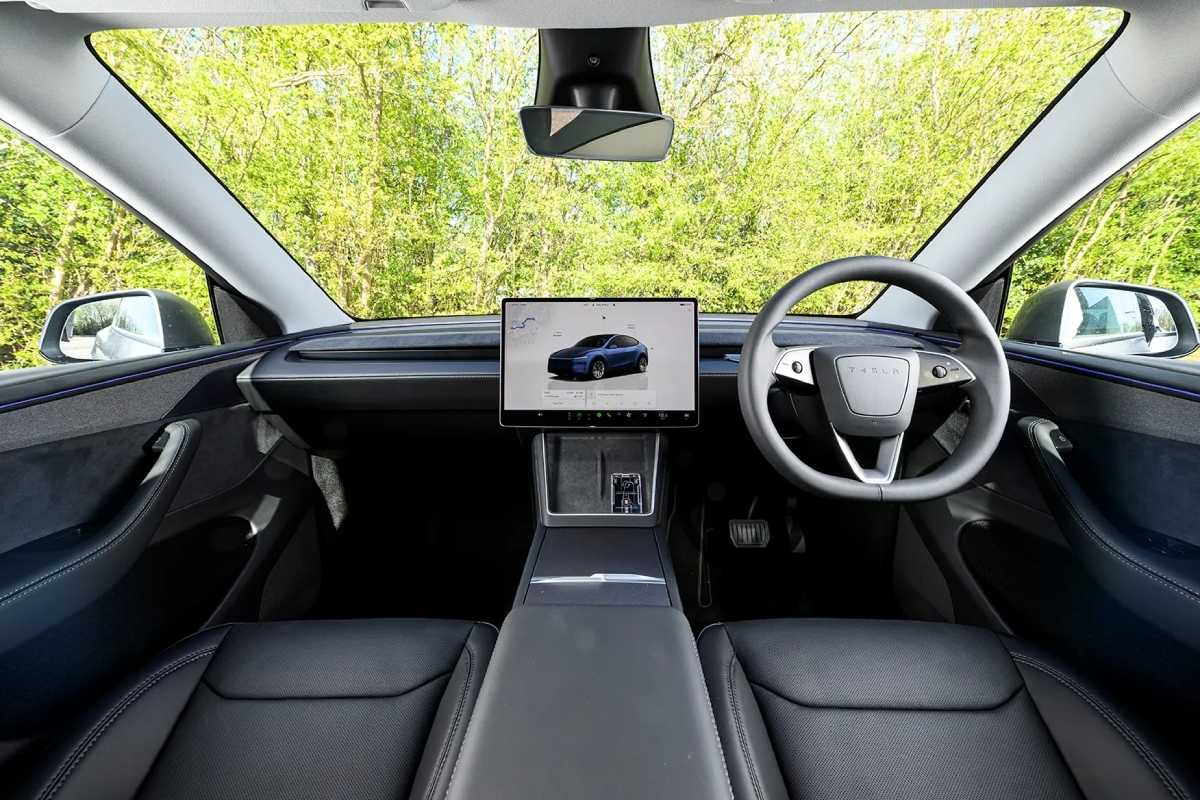
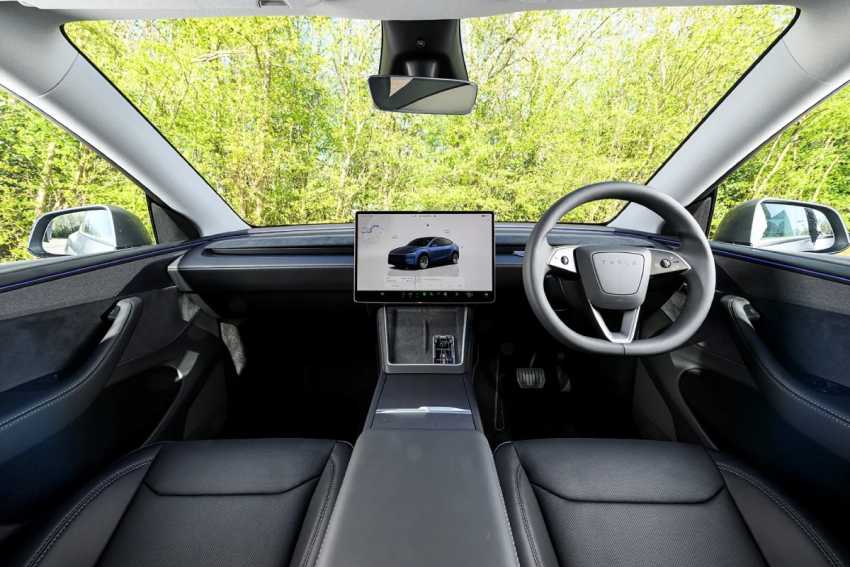
3. Tesla Model Y
The Tesla Model Y took the bronze medal, with its 15.4-inch touchscreen proving quick and responsive.
The Tesla AI Grok voice assistant generally responded after just one command. Although the tester looked at the screen repeatedly, it wasn't considered absorbing enough to become a significant distraction.
The total task time was just 18.3 seconds, with low distraction and medium mental effort.
The Model Y received an impressive five-star rating.
2. Mercedes-Benz GLB
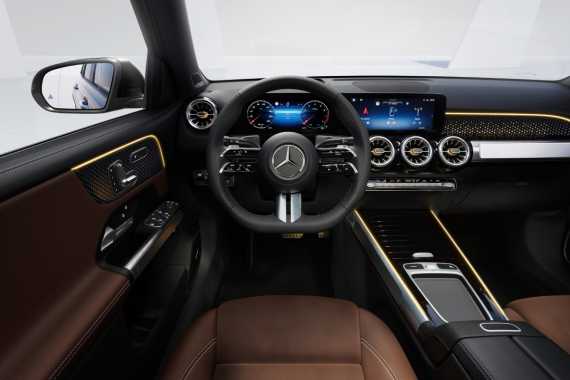
The Mercedes-Benz GLB secured second place with a five-star rating.
Its latest infotainment system uses AI technology from Google and Microsoft and performed extremely well across all four tasks.
Although the tester occasionally glanced at the screen to check voice commands, they were never absorbed by the display.
The total time was just 12.2 seconds, with distraction rated low and mental effort rated medium.
1. Renault 4
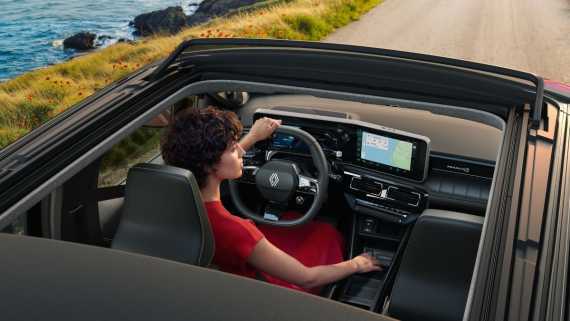
Taking first place as the least distracting infotainment system was the Renault 4.
The new retro-inspired EV uses Renault's OpenR Link system, which testers found simple, responsive and easy to use. It also features Google built in, providing effective voice control.
The driver was able to remain focused on the road while completing the required tasks and spent relatively little time looking at the screen.
The total task time was just 12.2 seconds, while both distraction and mental effort were rated low.
That earned the Renault 4 a full five-star rating.
Voice control could be the answer
The study also demonstrated just how much difference effective voice control can make.
According to What Car?, completing simple tasks using good-quality voice control was 96% faster and significantly less distracting than using a poor touchscreen system.
However, many drivers remain reluctant to use voice controls because previous systems have often struggled to understand commands or respond accurately.
What Car?'s survey of 1,157 drivers found that the radio and sat-nav were the two most frequently used infotainment functions, used by 71% and 70% of respondents respectively.
Despite this, only 27% said they regularly relied on their car's voice control system.
The latest testing suggests that the technology can work well, but drivers will need to trust it before it becomes a genuine alternative to touchscreen controls.
What Car? consumer editor Claire Evans said car manufacturers should prioritise voice control systems that are efficient and easy to use, encouraging drivers to use them instead of more distracting touchscreen controls.
Honda also responded to the findings, stressing that customer usability and safety are priorities. The company pointed out that the HR-V tested by What Car? was assessed before a software update designed to improve its Honda CONNECT infotainment system.
Honda added that it continues to develop its in-car technology based on real-world use and customer feedback, with the aim of creating systems that are intuitive, reliable and supportive of safe driving.
Are car touchscreens becoming too distracting?
Modern infotainment systems can offer everything from navigation and music streaming to climate controls and vehicle settings. But the more functions manufacturers move onto a touchscreen, the more important it becomes to make those systems quick and intuitive to use.
The difference between the best and worst performers in this test is striking.
The Renault 4 and Mercedes-Benz GLB allowed testers to complete all four tasks in just 12.2 seconds, while the Ford Ranger took more than 110 seconds.
For drivers, those extra seconds can matter.
While touchscreens are unlikely to disappear from new cars, the findings suggest that manufacturers need to strike a better balance between digital technology and straightforward physical controls.
For now, it appears that the safest infotainment systems are those that let drivers complete common tasks quickly, with minimal visual and mental effort.
And if manufacturers can make voice control reliable enough for drivers to trust, it could provide a much less distracting way to interact with the technology already built into our cars.