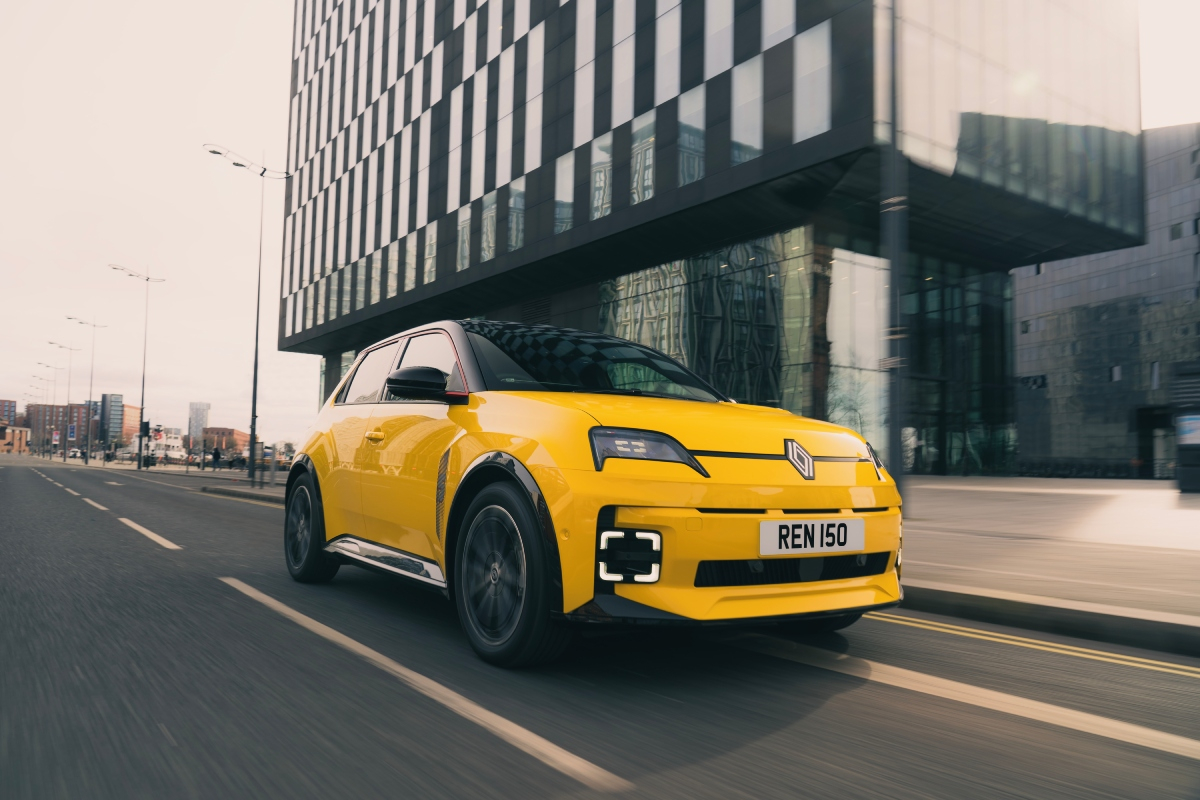
Ford has announced a major partnership with Renault that will underpin at least two new affordable electric cars for Europe, including a replacement for the Fiesta due in 2028. Both models will use Renault’s Ampr EV platform, the same architecture behind the new Renault 5.
The first Ford model will arrive in early 2028 and will serve as the brand’s return to the supermini segment, which it left when the Fiesta was discontinued in 2023. This new hatchback will be closely related to the Renault 5 and built alongside it at Renault’s ElectriCity plant in Douai, France.
A second model, based on the Renault 4, will be a small electric crossover. It could effectively replace the Puma Gen-E, although Ford hasn’t confirmed launch timings or further details.
Ford says these new EVs won’t be simple rebadges. Instead, they will be designed in-house to deliver “authentic Ford-brand DNA” and “distinctive driving dynamics”. Even so, they will share much of Renault’s hardware, including front-mounted motors ranging from 121bhp to 215bhp and either a 40kWh or 52kWh battery, which is expected to switch to more affordable LFP chemistry by 2028.
Reintroducing a Fiesta-sized car is an important step for Ford in Europe. The brand’s market share has fallen from a high of around 12% to under 4% as its line-up has shifted towards larger, more expensive SUVs and MPVs. Sales of the new Capri and Explorer EVs have also been slower than expected, prompting job cuts and reduced production at its Cologne plant.
With the end of Focus production, Ford’s European range now leans heavily on van-based models, most starting above £26,000. A small EV priced closer to the Renault 5’s expected £22,000 starting point could help Ford regain mainstream appeal and cut development costs.
This deal marks Ford’s second major platform-sharing move in Europe, following its use of Volkswagen’s MEB architecture for the Explorer and Capri. VW’s smaller MEB Entry platform had been considered for a new Fiesta, but Renault’s Ampr platform ultimately offered better cost efficiency.
Ford and Renault will also explore partnerships on vans, potentially leading to shared commercial vehicle platforms and rebadged models for both brands.
Ford CEO Jim Farley called the agreement “an important step” in building a leaner, more competitive European business, combining Renault’s EV manufacturing strength with Ford’s design and driving characteristics.
The announcement comes as EU lawmakers consider delaying the ban on new petrol and diesel cars from 2035 to 2040 due to slower-than-expected EV adoption. Farley has publicly argued that Europe needs more realistic targets, saying current policies are “out of step with market reality” and risk undermining the region’s car industry.
He also criticised the UK’s new pay-per-mile tax for EVs as counterproductive, comparing it to having “one foot on the gas, one on the brake”. Farley urged policymakers to reset the regulatory landscape to prevent Europe becoming “a museum of 20th-century manufacturing”, noting that EVs currently account for just 16% of European sales far short of the EU’s 25% target for this year.