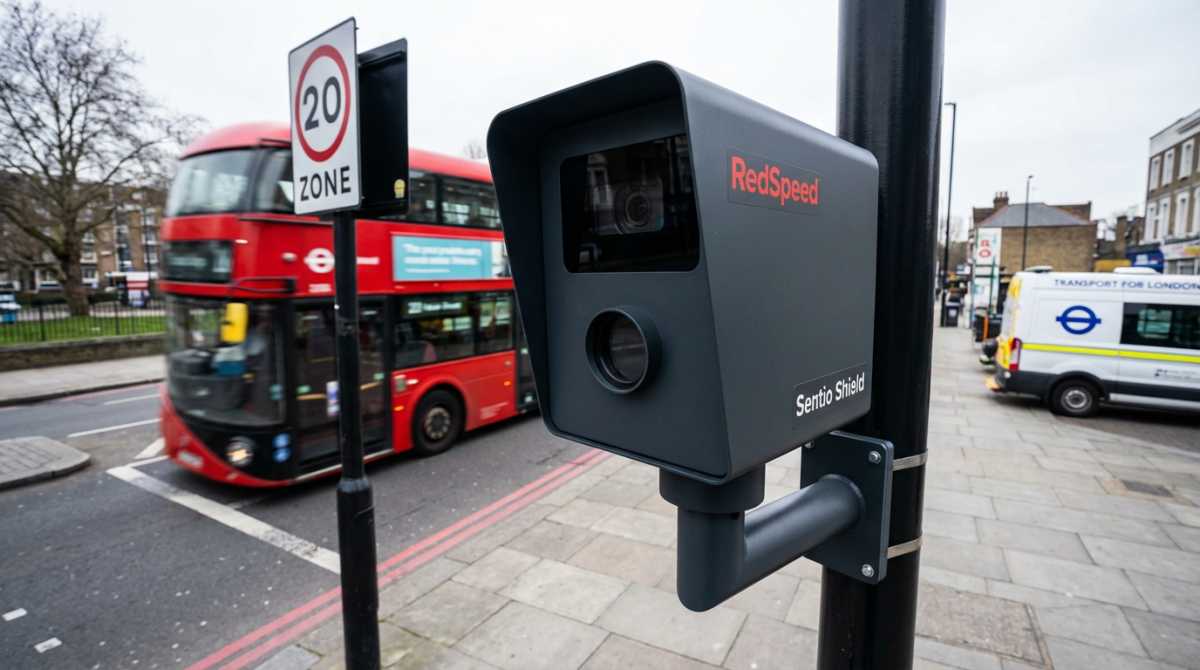
Transport for London (TfL) is trialling a new generation of ‘stealth’ speed cameras across 10 London boroughs – and they’re unlike anything drivers have seen before. The RedSpeed Sentio Shield system uses 4D radar and 4K sensors to catch speeding vehicles without road markings, bright flashes, or obvious signs of enforcement.
Key points
- The trial covers 10 boroughs, including Croydon, Ealing, and Haringey.
- 4D radar can track vehicles across up to five lanes, day or night.
- 4K sensors are built to read number plates even through reflective coatings.
- The project supports the Vision Zero goal to eliminate road deaths and serious injuries by 2041.
A new era of silent speed enforcement
Driving in London just got a little trickier for anyone heavy-footed. TfL’s latest camera trial marks a huge leap from the old yellow Gatso boxes. These new devices are discreet, high up on lamp posts, and almost impossible to spot at a glance. There’s no flash, no white lines on the road – and no warning until that penalty notice arrives through the post.
How the technology works
The RedSpeed Sentio Shield system uses 4D radar to measure a vehicle’s speed and position in real time, across several lanes at once. It doesn’t need painted lines to verify movement, and it can operate flawlessly in the dark without external lighting. The result is a system that’s always watching, quietly and accurately, in all conditions.
Cracking down on ‘ghost plates’
The cameras also take direct aim at drivers using ‘ghost plates’ (number plates coated or covered to reflect light and confuse older cameras). The new 4K sensors ignore those tricks entirely, capturing crisp images of plates and even drivers themselves. That means anyone trying to avoid detection will likely find it’s game over.
Why TfL is doing this
TfL says the trial supports the Vision Zero strategy to make London’s roads completely free from fatal and serious collisions by 2041. According to Siwan Hayward, TfL’s Director of Compliance, Policing, Operations and Security, upgrading London’s speed camera network is “essential for consistent and effective enforcement.”
For now, the system is being tested in ten boroughs, but another twenty locations are already being considered for rollout.
What drivers should take away
These new cameras are slimmer, smarter, and much harder to spot than the traditional boxes. Mounted high on lampposts, they blend into the urban landscape. So if you’re driving through London (and/or ULEZ area), especially in a 20mph zone, it’s best to assume you’re being watched and stick to the limit.
The message is clear: vigilance and compliance are your best options in this new age of silent enforcement.