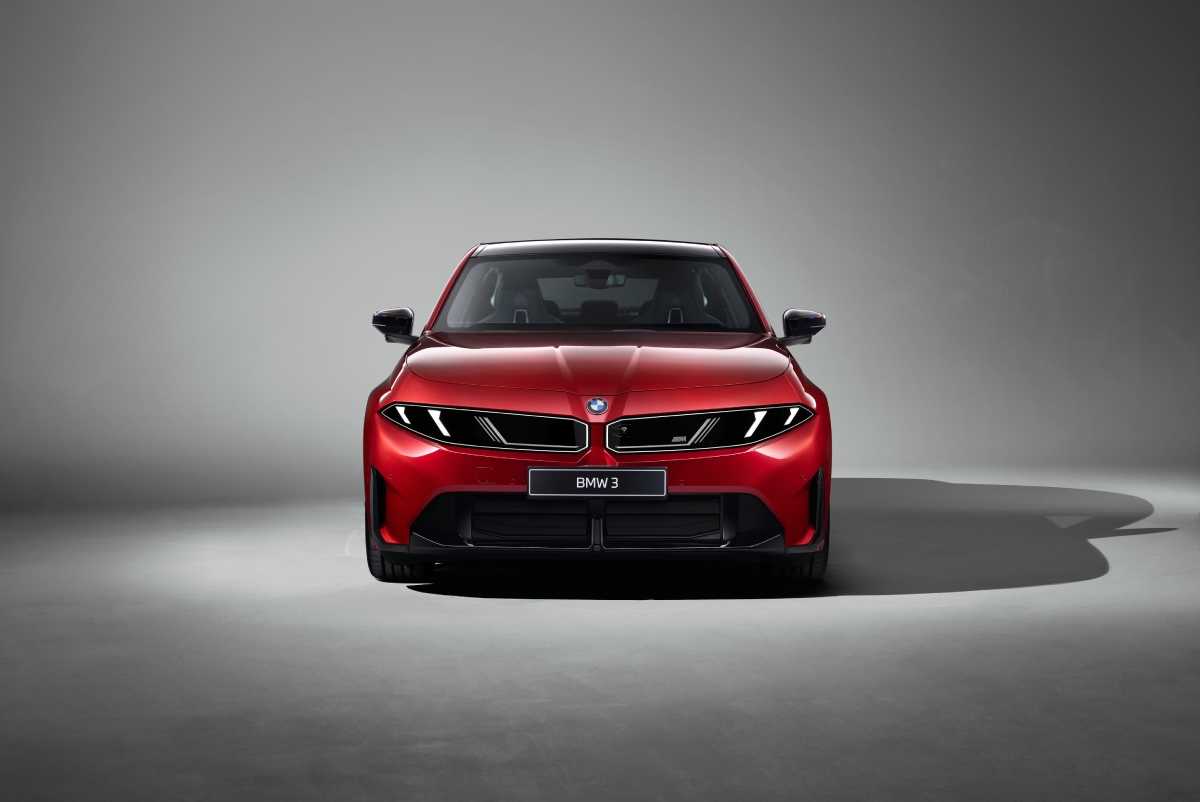
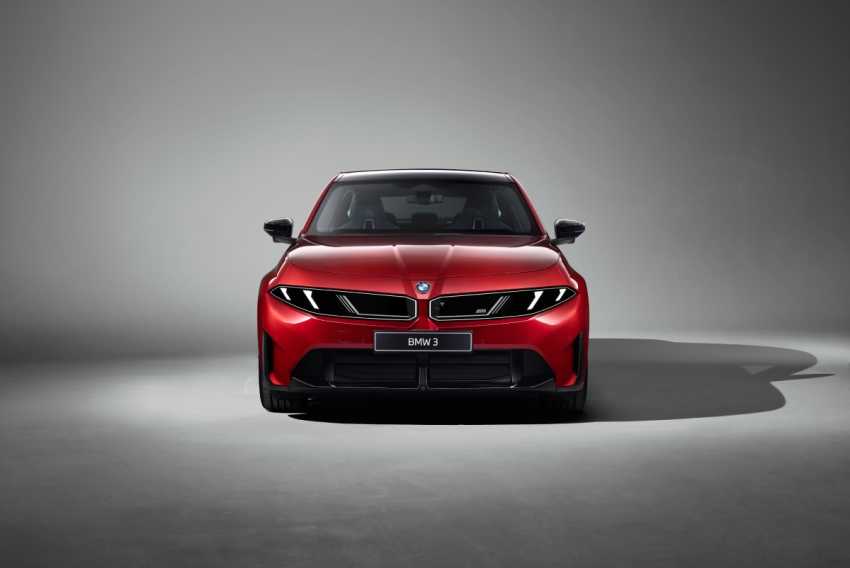
BMW has revealed its new eighth-generation 3 Series, bringing petrol power into the same design family as the new electric i3.
The UK range will initially centre on the rear-wheel-drive 320, priced from £44,975, while the performance-focused M350 xDrive will sit at the top of the launch line-up at £66,785.
Production is due to begin in November, with UK deliveries expected from early 2027. A Touring estate will join the range later in the year, while plug-in hybrid versions are also expected to arrive during 2027.
New BMW 3 Series price and engines
The 320 looks set to be the mainstream choice for UK buyers. It uses a turbocharged 2.0-litre four-cylinder petrol engine with mild-hybrid assistance, producing 208bhp and 243lb ft.
Power goes through an eight-speed automatic gearbox, with BMW claiming 0-62mph in 7.4 seconds and a top speed of 149mph.
At the other end of the range, the M350 xDrive brings a turbocharged 3.0-litre straight-six petrol engine and four-wheel drive. Combined output is 437bhp and 428lb ft, giving it a claimed 0-62mph time of just 4.1 seconds.
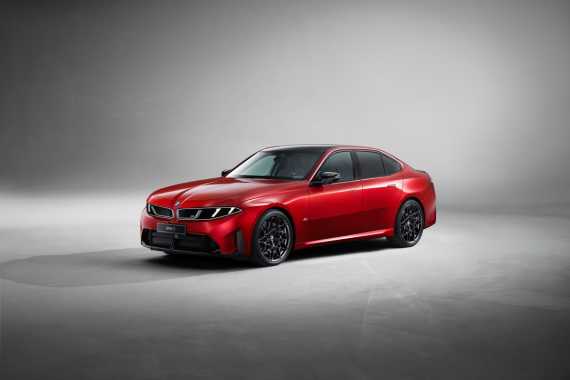
The petrol engine itself develops 420bhp and 388lb ft, with a 17bhp electric motor integrated into the automatic gearbox providing additional assistance.
That makes the M350 considerably more powerful than the outgoing M340i xDrive, which produced 369bhp. It also puts the new car surprisingly close to the previous-generation M3 for outright performance.
BMW has electronically limited the M350's top speed to 155mph.
A 318 with 154bhp is offered elsewhere in Europe, along with diesel versions, although neither is expected to return to the UK. BMW dropped diesel engines from the UK 3 Series range in 2024.
Plug-in hybrid models are expected to broaden the UK line-up next year.
BMW 3 Series M350 xDrive performance
The M350 is the car that grabs the headlines, particularly because BMW has given it more than just a bigger engine.
Its xDrive four-wheel-drive system gains a new Drift Moment function, which BMW says will be available during 2027. This will allow the system to send the engine's power entirely to the rear wheels.
That feature should give the M350 a broader performance remit than the usual fast executive saloon, although the full-fat M3 is still due to arrive next year for buyers who want the serious performance option.
There is an interesting comparison with BMW's new electric i3, too.
The four-wheel-drive i3 50 xDrive produces 463bhp and 476lb ft, giving it a useful advantage over the M350 on headline output. Yet BMW claims the petrol car is quicker from 0-62mph, taking 4.1 seconds compared with 4.7 seconds for the i3.
The difference comes partly from weight, with the petrol car carrying less mass.
New BMW 3 Series design
The new 3 Series shares BMW's latest design language with the i3, giving the two cars a much closer visual relationship than their different platforms might suggest.
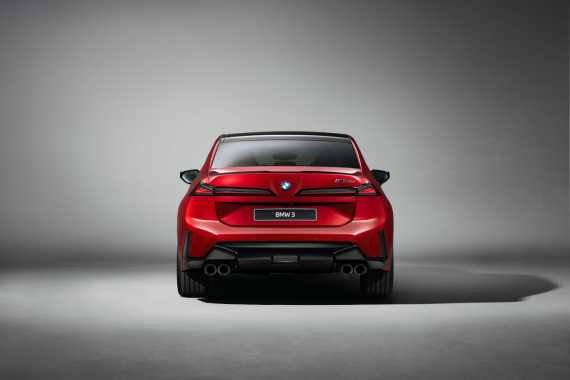
The familiar kidney grille has been incorporated into a wide horizontal front graphic, while the headlights sit within the same visual treatment. Flush door handles, a long bonnet and pronounced rear haunches retain the classic proportions expected of a 3 Series.
The petrol car measures 4765mm long, 1850mm wide and 1455mm tall. Its 2880mm wheelbase is 9mm longer than that of the outgoing G20-generation 3 Series.
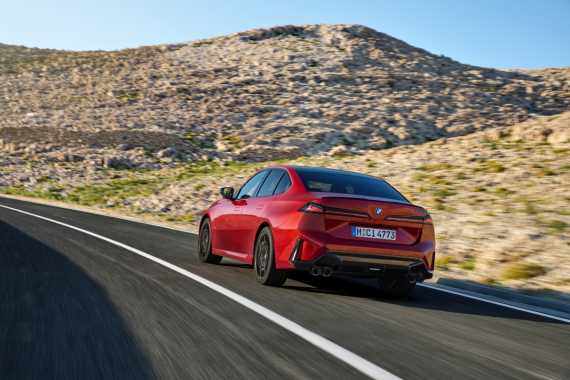
The M350 gets a few visual clues of its own, including yellow daytime running lights, a boot spoiler and four exhaust outlets.
M Sport versions of the less powerful models can be specified with sportier bumpers, side skirts and a rear diffuser, while M Sport Pro adds black exterior details and upgraded brakes.
BMW 3 Series interior and technology
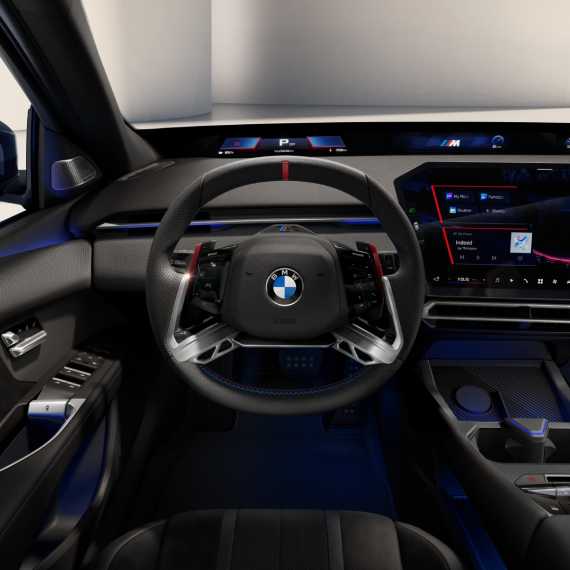
Inside, BMW has brought the petrol 3 Series much closer to the electric i3.
The two cars use the same broad electronic architecture and Neue Klasse-inspired cabin design, despite the petrol model continuing with the older CLAR platform underneath.
That should give the new 3 Series a much more obvious connection with BMW's next generation of cars than the outgoing model had.
The important point for buyers is that BMW isn't treating the combustion-engined 3 Series as a completely separate product. The company is using a shared design and technology strategy across its petrol and electric ranges.
That could make the choice between a 3 Series and i3 feel more like an engine decision than a choice between two completely different cars.
New BMW 3 Series chassis and suspension
BMW has also made substantial changes beneath the skin.
The petrol 3 Series gets its own front suspension geometry, while the five-link rear suspension has been retuned. BMW has increased rear-wheel camber and stiffened the chassis mounting points, while the anti-roll bar mounting arrangement has also been revised.
Adaptive suspension will be available as an option, with adaptive M suspension offered for buyers looking for a sportier setup. Both systems use electronically controlled dampers that can continuously adjust their response at each wheel.
We will have to wait for UK road tests before judging how successful those changes are in practice. For now, the technical overhaul suggests BMW is taking the dynamics of the petrol car seriously instead of simply carrying the outgoing chassis into a new body.
BMW 3 Series verdict
The new 3 Series has a clear job to do. The 320 should appeal to buyers who still want a traditional petrol executive saloon, while the M350 gives BMW an entertaining-looking bridge between the regular range and the next M3.
At £44,975, the 320 also lands in a part of the market where BMW will face plenty of competition, so its success will depend on how well the new interior, technology and chassis changes translate to everyday use.
The M350 is more interesting. With 437bhp, four-wheel drive and a claimed 4.1-second 0-62mph time, it has the numbers to make the outgoing M340i look distinctly tame.
For me, the 320 is the car that will matter most to the UK market, but the M350 is the one that makes this new 3 Series genuinely exciting. BMW has kept a serious petrol performance option alive just as the electric i3 arrives, and that gives buyers a meaningful choice when the new range reaches UK showrooms in 2027.