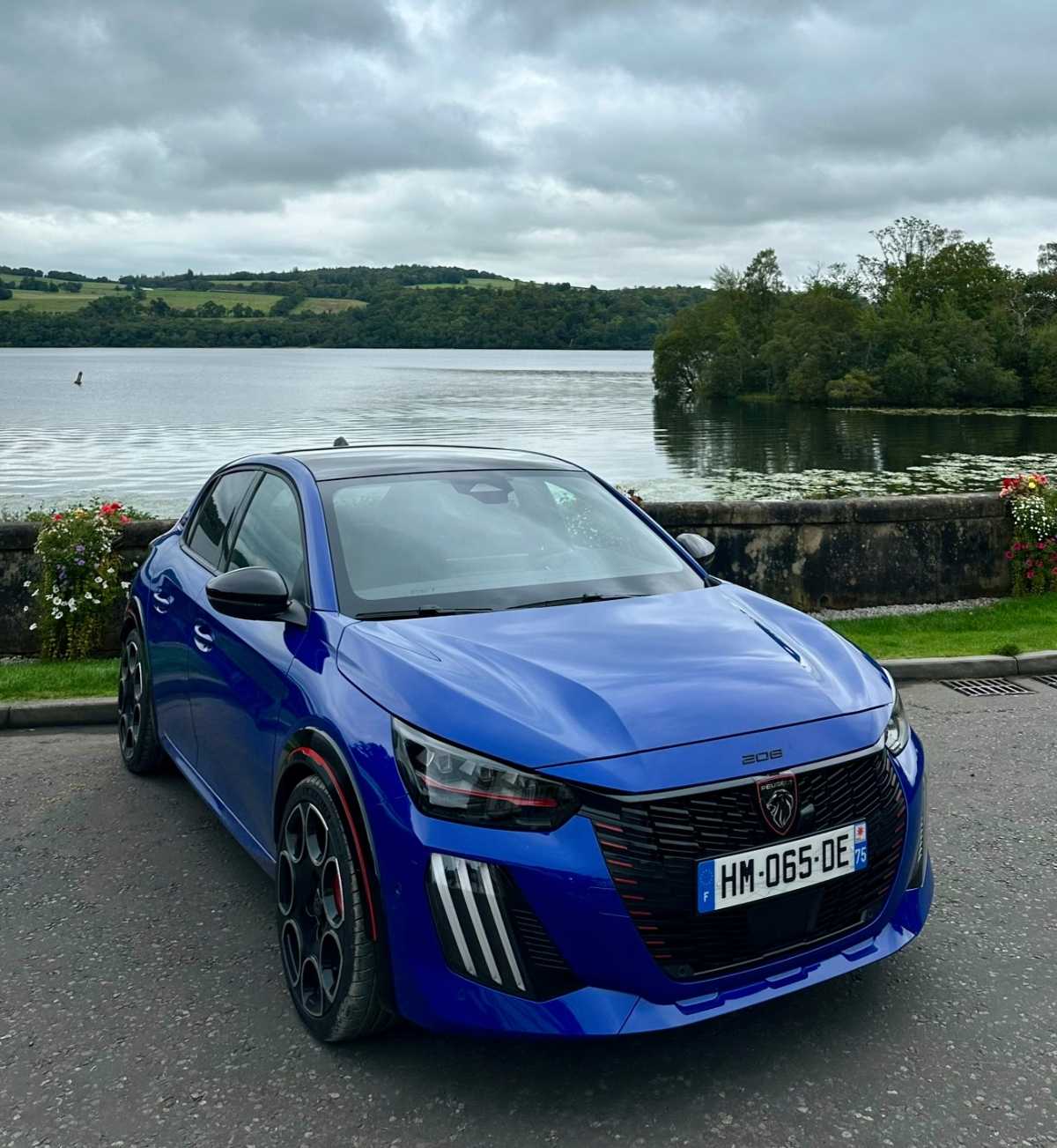
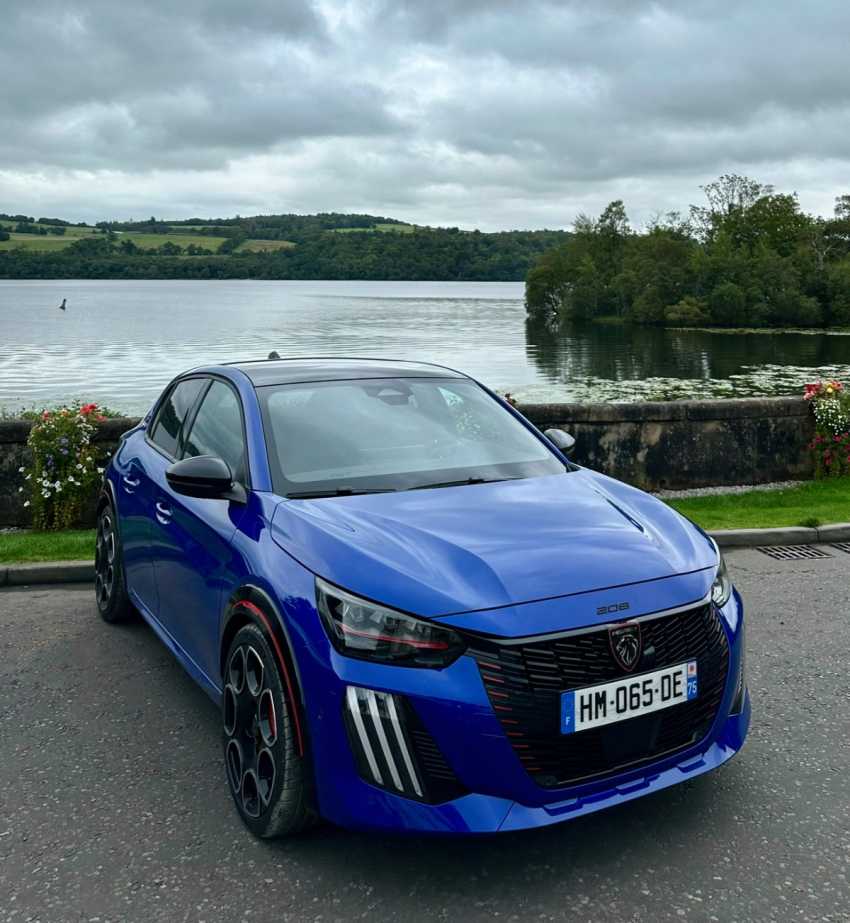
Building on the commercial success of the Peugeot 208 range, the heir to one of the brand's most celebrated model lines is continuing the GTi story that began four decades ago with the legendary 205 GTi.
The new Peugeot e-208 GTi is the first fully electric GTi ever produced. Conceived and designed in France by Peugeot Sport and Peugeot Design, it aims to prove the marque takes driving pleasure just as seriously in the electric era as it did during the heyday of the 205 GTi.
Peugeot says the e-208 GTi blends unique driving enjoyment with best-in-class performance, a sporty yet elegant design and the everyday versatility that has always been central to the GTi formula. On paper, it is certainly quick. A 281hp electric motor fires the hot hatch from 0-62mph in just 5.5 seconds, while a WLTP range of up to 233 miles keeps it practical enough for daily use.
Our motoring journalist Tim Barnes-Clay drove the car in Scotland after making the seven-hour journey north - and it was certainly worth the trip. But how do you reinvent one of Peugeot's most recognisable badges for the electric era without losing its soul?
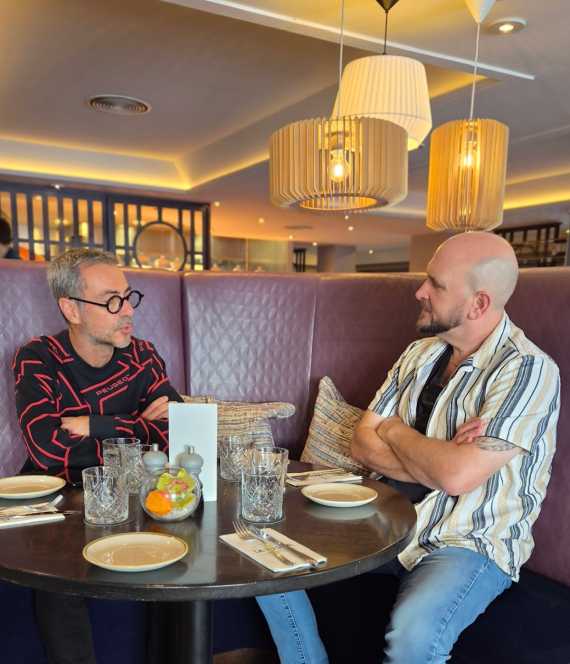
Tim caught up with Peugeot Design Project Manager Michael Trouve to find out.
"Assertive, charismatic and friendly"
Tim: I've always loved Peugeot GTis. When I was a child, the 205 GTi really stood out to me. So, if you owned an e-208 GTi, what do you think it would say about you as a person?
Michael Trouve: I would say it's assertive, yet charismatic and friendly. It's energetic, but perhaps quite understated. It's sober, but very determined and sporty. Very dynamic and also very fresh.
Carrying the weight of GTi history
Tim: Tell me about the design. Was it easy to design a new GTi given the heritage behind that badge?
Michael: First of all, it was a real source of pride for the whole team, and for me personally, because the 205 GTi was one of the cars that made me want to join the Peugeot design team when I was a child.
It was also a real source of pride for the young designers working on the project because they are very fond of the GTi DNA and those iconic Peugeot graphic cues.
On one hand, that was intimidating because we needed to be worthy of such an icon. But on the other hand, it was quite natural because we are so familiar with the DNA and the codes of Peugeot GTi.
We wanted to find simple, iconic and memorable design cues.
If you ask someone about the 205 GTi, they will probably remember the red carpet, the red edging around the black exterior elements or the wheels with their circular holes. They are simple details, but they are incredibly memorable.
We wanted to be inspired by that heritage without simply creating a revival. We wanted to bring those ideas into a much more modern vision of Peugeot.
There are nods to the historic icon, but no direct quotations. Everything has been reinvented in a more contemporary way.
Can the e-208 GTi become an icon?
Tim: You've used the word 'iconic', and the 205 GTi certainly is. Do you think that 20 or 30 years from now, people could talk about the e-208 GTi the same way?
Michael: I hope so. We created the car with that ambition.
We wanted it to be fun to drive and to have that double personality. It can be a distinctive daily car, but also an engaging and rewarding sporty car.
I think that was an important part of the success and legend of the 205 GTi.
The e-208 GTi is really efficient and fast, with fantastic handling, but it is also something you can easily live with every day.
Does an electric GTi still feel like a GTi?
Tim: Was designing the 208 GTi as an electric car particularly different or challenging?
Michael: Honestly, no. The GTi DNA isn't only about the engine. Of course, the powertrain is important, but the character of the car comes from much more than that.
That's why we have sound enhancement and sound design inside the car. It reinforces the interaction between the driver and the car, creating a more obvious dialogue between the two, so you feel really connected to the machine even though it doesn't have an internal combustion engine.
The car needed to be fun to drive and, thanks to the work of our colleagues at Peugeot Sport, it is really agile and really enjoyable.
The front axle is fantastic, the brakes are impressive, and the whole car feels like a toy, just as the 205 GTi did.
From a design perspective, we were able to reinvent some of those classic GTi codes.
Inside, there's an immersive atmosphere with the red carpet, specific seats with reinforced bolsters, integrated headrests and the central red stripe, which is very memorable.
We also have the red ambient lighting.
So, for us as a design team, the fact that it is electric wasn't really a difficulty.
Seven hours well spent
Tim: I've driven it, and I absolutely love it. It was worth the seven-hour drive to Scotland to get behind the wheel.
Michael: I'm very pleased to hear that. This is the best feedback we can have.
We want the car to be joyful, and we had a fantastic basis with the current 208. The small steering wheel is, for me, really addictive. It's an invitation to drive and have fun.
That made it a marvellous basis for a GTi version.