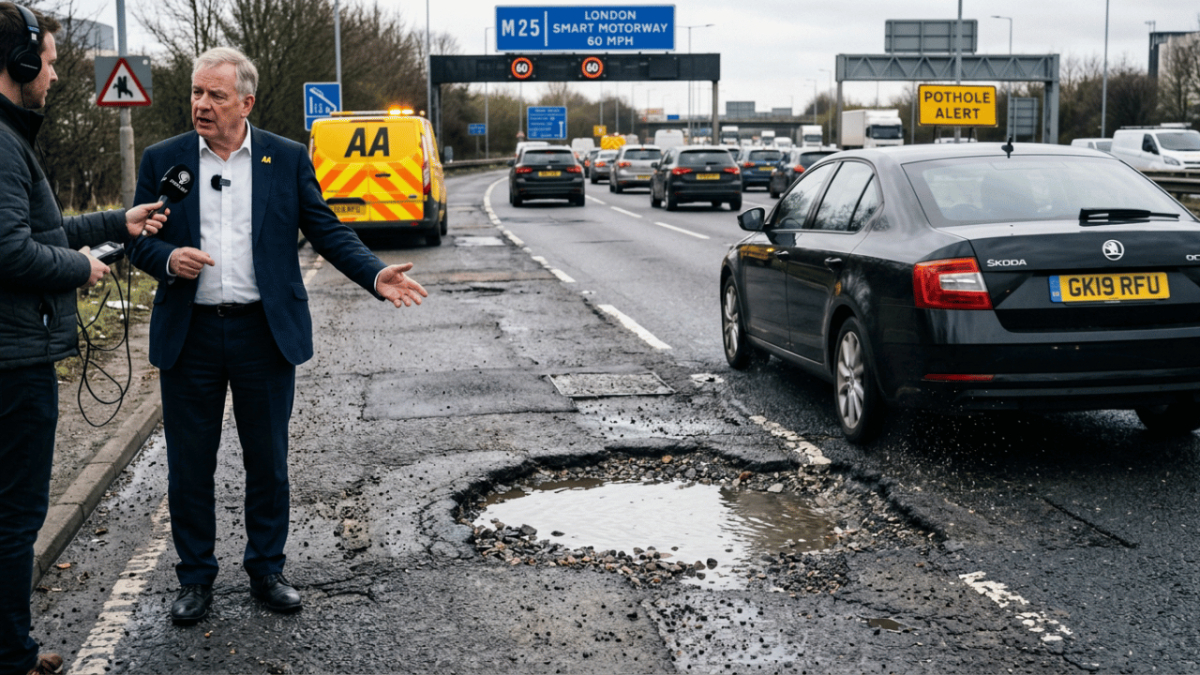
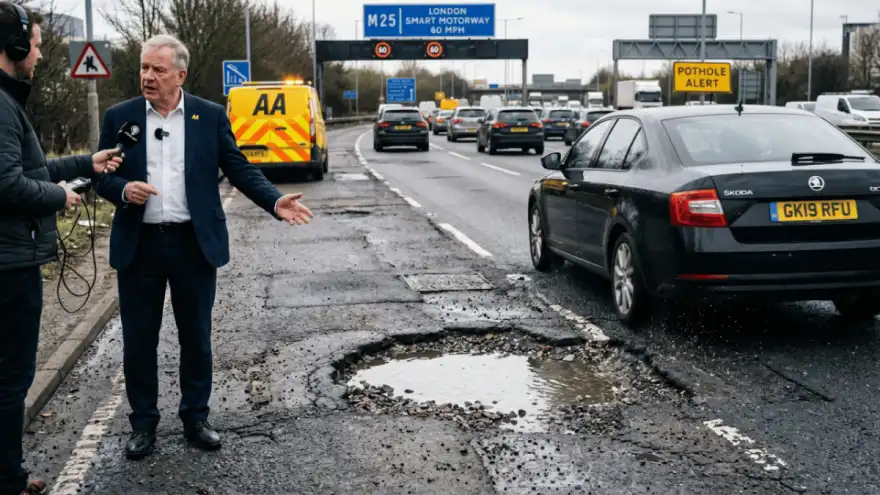
TL;DR: UK roads are in a 'national scandal' state, according to AA President Edmund King, with a record £18.6 billion maintenance backlog despite billions in motoring taxes. Pothole damage costs drivers an average of £3,863 per insurance claim, highlighting the urgent need for better road repairs and funding.
Key Facts:
1. £24.3 billion: The amount collected in fuel duty alone last year by the Treasury.
2. £18.6 billion: The current maintenance backlog for roads in England and Wales.
3. 617,000: Pothole-related callouts dealt with by AA patrols last year.
4. £3,863: The average insurance claim for pothole damage, according to Aviva data.
5. One in four: The proportion of pothole damage claims resulting in a written-off vehicle.
Drivers Pay Billions While Roads Continue to Crumble
Recently, AA President Edmund King didn't mince words, labelling the deteriorating state of Britain's roads a UK pothole national scandal. This sentiment likely resonates with countless UK drivers who have experienced the jarring impact of hitting a deep crater. It's a frustrating paradox: drivers contribute billions through various taxes, yet the infrastructure beneath their wheels continues to crumble.
The question many drivers are asking is, where exactly is all this money going? Last year alone, fuel duty generated a staggering £24.3 billion for the Treasury. When you add vehicle excise duty (car tax) and VAT from motoring, the total revenue is truly astronomical. Despite this massive influx of cash, the road maintenance backlog across England and Wales has now swelled to a record £18.6 billion. It feels like drivers are being short-changed, while their vehicles bear the brunt of neglected roads.
The True Cost of Pothole Damage
The damage isn't just an inconvenience; it's a significant financial burden for drivers. AA patrols responded to 617,000 pothole-related callouts last year. These weren't just minor bumps; we're talking about serious vehicle damage, including snapped springs, ruined suspension systems, and bent alloy wheels. The financial implications are genuinely alarming. Data from Aviva reveals that the average insurance claim for such damage currently stands at £3,863. Even more concerning, one in four of these claims ends with the car being written off entirely. This UK pothole national scandal is clearly costing drivers far more than just a few pounds for a new tyre.
King was particularly critical of the "patch-and-run" approach adopted by many local councils. Drivers are all too familiar with this scenario: a quick fix involving some cold bitumen thrown into a hole, only for the next frost to dislodge it.
Calls for Better Repairs and Safer Roads
This is a temporary solution to a problem that demands comprehensive repair. Thankfully, the Department for Transport is finally applying more pressure. Councils must now demonstrate that they are properly resurfacing roads, or they risk losing a third of their funding. This move signals a welcome shift away from ineffective, short-term fixes.
However, the UK pothole national scandal isn't the only concern for motorists. King also raised the safety issues surrounding smart motorways, describing their rollout as a scandal in its own right. By reducing the number of emergency refuge areas to cut costs, these motorways have left broken-down drivers in vulnerable positions. While the government has paused new smart motorway schemes, the AA continues to advocate for more safety bays on existing smart motorways. For now, drivers must remain vigilant, keep their tyres correctly inflated, and hope that the journey to improving Britain's roads isn't too long.
At Regit, we're in the process of conducting our own investigation and recommending some alternate ways of working. Keep your eyes peeled for that over the coming weeks.