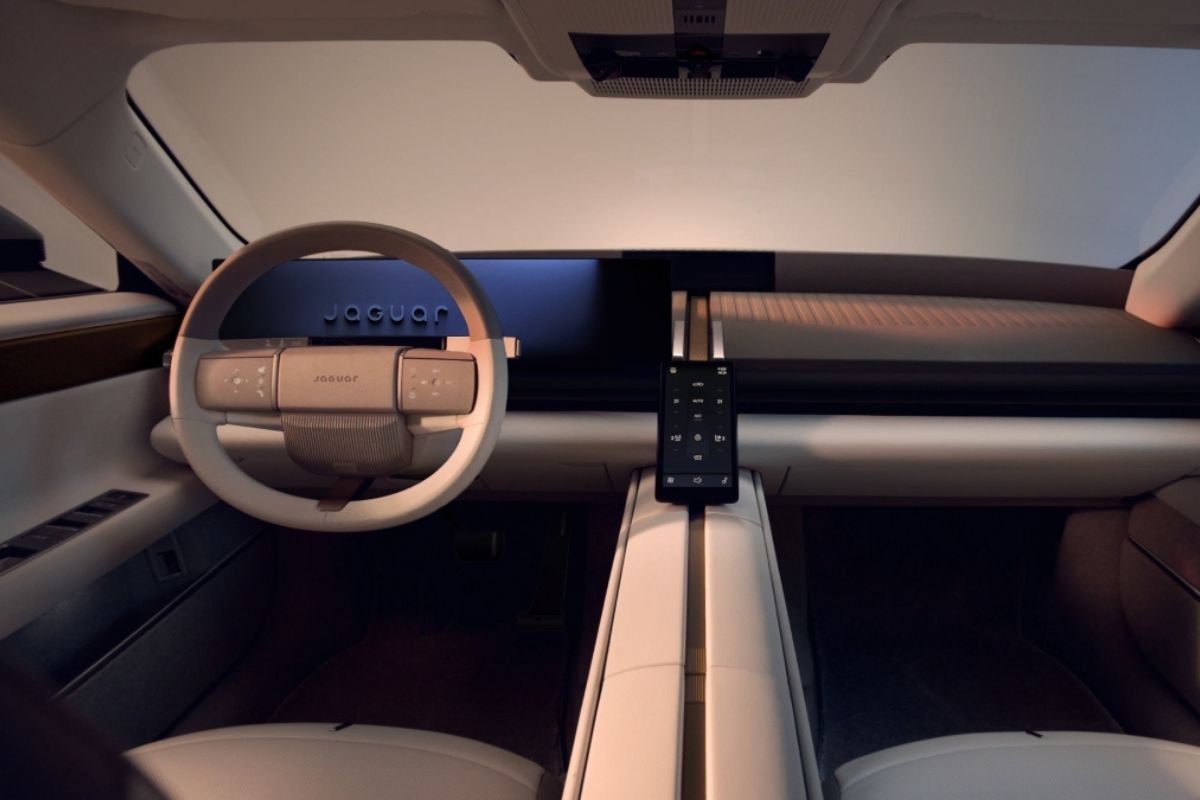
Jaguar has revealed the interior of its new £120,000 Type 01 Grand Tourer, giving the public its first detailed look inside the electric flagship that will spearhead the British marque's transformation into an ultra-premium EV brand.
The Type 01 is intended to take Jaguar into direct competition with luxury manufacturers such as Aston Martin and Bentley. Its world debut is scheduled for New York on October 6, but Jaguar has now released images of the cabin ahead of the unveiling.
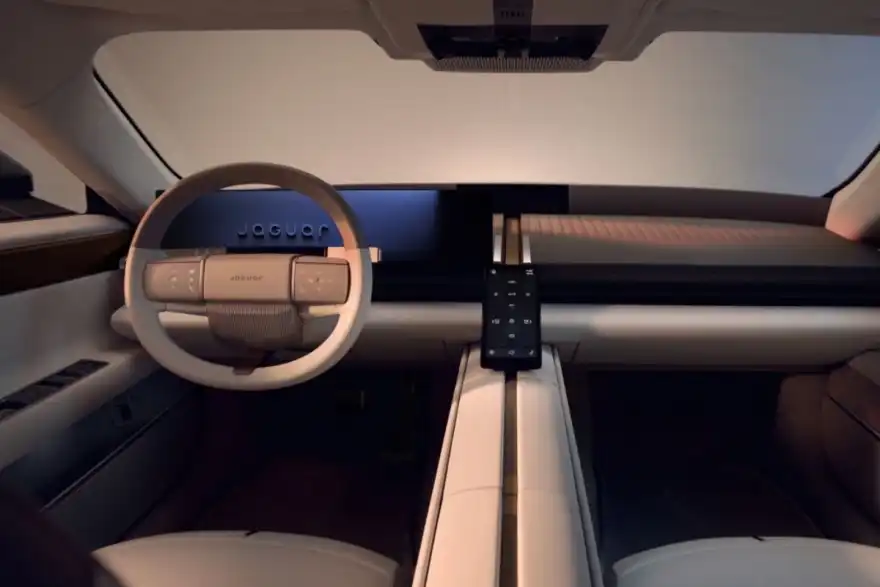
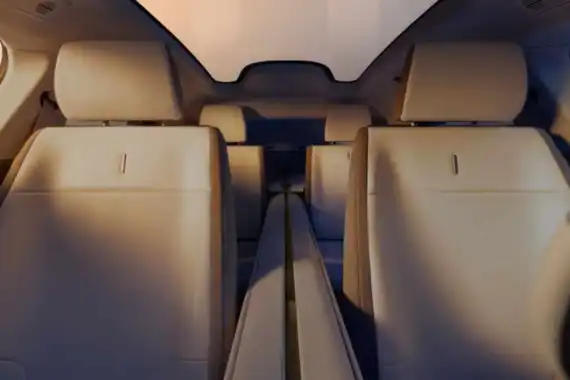
The interior follows the same dramatic design language as the exterior, with a minimalist layout built around a central spine that runs through the full length of the cabin.
Jaguar says the feature creates four distinct seating areas while reinforcing what it calls the car's 'longitudinal' design philosophy.
The Type 01 will be a crucial model for Jaguar as it attempts to establish a new identity as an ultra-luxury electric car manufacturer.
The company will also be hoping its new flagship generates headlines for the right reasons after its controversial 2024 rebrand attracted intense criticism.
The campaign was branded 'woke' by some critics, including US President Donald Trump, and sparked a fierce debate over Jaguar's decision to move away from its traditional brand identity.
The Type 01 is the first production model designed to fully express the company's new direction.
Jaguar says the interior has been designed to make 'every journey an occasion', with particular attention paid to the relationship between the driver and the cabin.
One of the most unusual aspects is the driving position.
The Type 01 has been engineered with a significantly lower seating position than is typical of most electric vehicles. Jaguar says this is intended to make the driver feel as though the cabin closes in around them.
That has been made possible by the design of the car's 120kWh battery pack.
Rather than placing the seats directly above a single large battery structure, Jaguar has split the battery beneath the floor. This allows the seats to be positioned lower while retaining the required battery capacity.
The result is a lower-slung driving position and a roofline measuring around 1.4 metres in height.
The approach is particularly notable because many electric cars have relatively high seating positions as a result of the large battery pack beneath the cabin.
Jaguar's latest images also reveal the technology that will form the basis of its future interior design.
There is no conventional central touchscreen. Instead, the Type 01 uses a wide, high-definition display that serves as the instrument cluster before extending towards the centre of the dashboard.
A much smaller digital display, roughly the size of a palm, is integrated into the central spine.
This screen controls functions including the cabin temperature, air recirculation and heated seats.
Jaguar has also taken a minimalist approach to physical controls.
Traditional buttons have largely been removed, with illuminated flush-mounted controls integrated into the twin-spoke steering wheel.
The wheel itself draws inspiration from Art Deco design and is used to navigate the car's displays and activate voice controls.
Jaguar says its digital interfaces have been 'intelligently applied for control on demand', meaning technology is intended to be available when needed without overwhelming the cabin.
Another major feature is the Digital ClearSight Rear View Display.
Mounted centrally at the base of the windscreen, the system displays footage from a roof-mounted camera instead of relying on a conventional rear window.
The concept is similar to the system used by the Polestar 4, which also replaces a traditional rear window with a camera-based display.
Jaguar has incorporated the display into the car's front soundbar. This removes the need for conventional door-mounted speakers and is intended to position sound more effectively within the cabin.
Storage has also been kept largely out of sight.
Jaguar says the interior contains concealed storage areas and hidden technologies, alongside flashes of colour that are intended to reinforce its 'exuberant modernist' design philosophy.
The materials used throughout the cabin are equally important to the overall effect.
Brass-inspired finishes feature along the central spine and the tops of the doors, while Jaguar's redesigned leaper emblem is presented as what the company describes as 'signature art pieces'.
Above the occupants is a large panoramic roof that extends across almost the entire ceiling.
Jaguar says the expansive glass area creates a 'glasshouse' effect, helping to make the cabin feel more open despite the car's low roofline.
The images show four individual seats with broad backrests and no stitching across the main panels.
According to Jaguar, this approach is intended to deliver high levels of comfort while maintaining the clean, uncluttered appearance of the interior.
The doors continue the minimalist theme, with no obvious conventional interior handles.
Instead, electronic buttons are used to release the doors.
The use of electronic door releases has become an increasingly debated feature in modern cars, with concerns raised across the industry about how occupants would exit if a vehicle suffered a serious electrical failure.
Thomas Holden, Jaguar's chief interior designer, said the cabin was designed to carry the character of the exterior into the interior.
He said: 'Our holistic design philosophy translates the vehicle's exterior presence into a distinctive interior architecture.'
Holden added that, unlike the predominantly horizontal layouts found in many modern cars, the Type 01 uses its central spine to emphasise the car's longitudinal character and create four individual spaces.
He said the combination of authentic materials, technology on demand and flowing surfaces would help establish the design language of Jaguar's future luxury interiors.
Rawdon Glover, Jaguar's managing director, said the Type 01 is the first production model to embody the company's new creative philosophy.
He said Jaguar wanted every journey to feel like an occasion, from the way the car drives to its appearance and the way it makes occupants feel.
The interior is only one part of the Type 01's transformation.
Jaguar says the electric GT will produce more than 1,000bhp from a three-motor powertrain.
There is one electric motor at the front and two at the rear, with an advanced torque-vectoring system distributing power between the individual wheels.
The system monitors grip and wheel slip up to 1,000 times every second, allowing the car to adjust the delivery of power between the wheels.
Jaguar has yet to reveal the official range figure for the Type 01.
However, the 120kWh battery is expected to provide a real-world range of around 430 miles on a single charge.
The figures underline Jaguar's ambition for the Type 01 to combine long-distance grand touring ability with the performance expected from a flagship electric car.
The car's success will ultimately depend on more than its power, technology and striking interior.
Jaguar is attempting to reposition itself at the very top end of the luxury market at a time when established manufacturers and newer electric brands are competing aggressively for wealthy customers.
The Type 01 will be the first major test of whether Jaguar's radical new design philosophy can translate into a production car that customers want to buy.
The answer will begin to emerge when the Type 01 makes its global debut in New York on October 6.