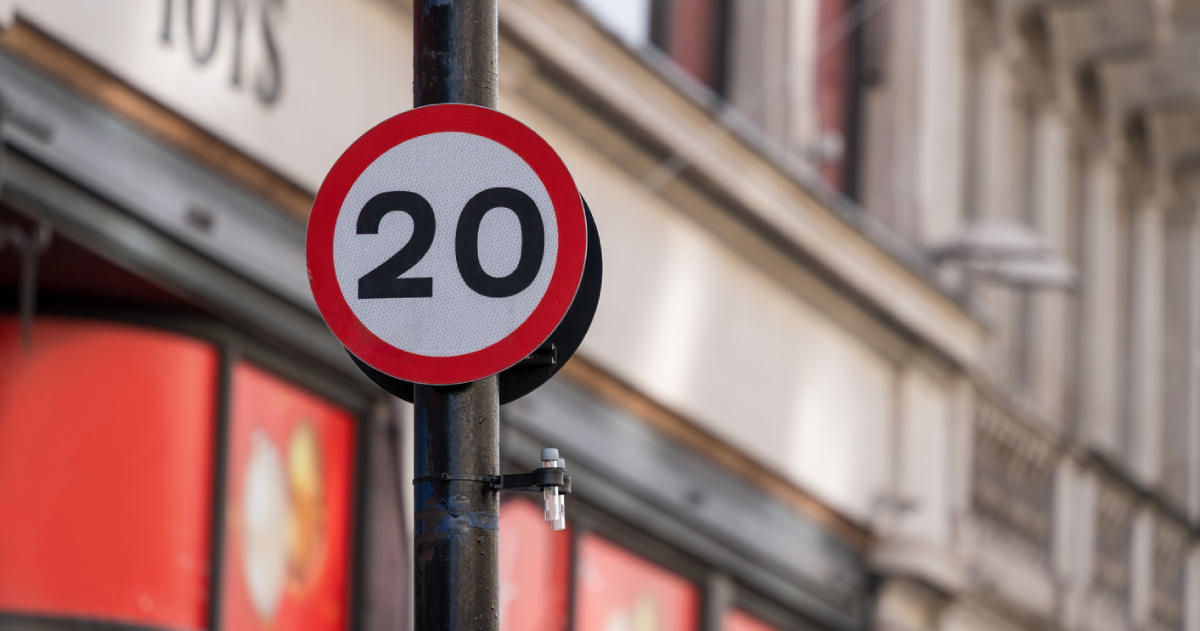
The expansion of 20mph speed limits could be closer than ever, as MPs prepare to examine the potential benefits of replacing more 30mph restrictions in built-up areas.
The cross-party Transport Select Committee will meet on Wednesday to hear evidence from road safety experts as part of the Government’s wider Road Safety Strategy, announced in January.
The session will focus on whether reducing speed limits by 10mph in urban areas could help achieve ambitious casualty reduction targets, with a five-person panel of experts expected to answer questions from MPs.
Those giving evidence include Transport for London’s chief safety officer and the former chair of the Welsh Government’s 20mph Task Force Group, who will discuss the impact of introducing lower speed limits.
The Government is expected to publish updated guidance on setting local speed limits, potentially paving the way for a wider rollout of 20mph zones and a move away from traditional 30mph limits in built-up areas.
Growing use of 20mph limits across Britain
A growing number of local authorities have already introduced lower speed restrictions. In England, 62 of the country’s 153 councils have reduced some 30mph limits, while Wales has adopted 20mph as the default speed limit on many built-up roads.
Scotland also applies 20mph limits where authorities consider them appropriate.
As a result, around one-third of roads in Britain’s towns and cities are now covered by 20mph restrictions.
Among those supporting wider adoption is Adrian Berendt, director of the road safety campaign group ‘20’s Plenty for Us’. Lilli Matson, TfL’s chief safety, health and environment officer, will also outline the potential benefits of lower speeds.
Matson previously played a key role in Wales’ move towards standardised 20mph roads.
Government targets major improvements in road safety
The Government’s Road Safety Strategy includes ambitious targets to reduce the number of people killed or seriously injured (KSI) on Britain’s roads.
Ministers aim to achieve a 65 per cent reduction in overall KSIs and a 70 per cent reduction in child KSIs by 2035.
Currently, local authorities and National Highways are responsible for setting speed limits on England’s roads. However, proposed changes could introduce clearer national rules governing how speed restrictions are decided.
The strategy also includes consideration of Sweden’s ‘Safe System’ approach, which aims to ensure road design and speed limits reflect the ability of the human body to withstand crashes.
MPs to question impact of lower speed limits
The Transport Select Committee said the evidence session will explore whether current speed policies are strong enough to support the Government’s casualty reduction ambitions.
MPs are expected to examine lessons from Wales and London, as well as consider whether England should follow Wales by adopting 20mph as the default speed limit in built-up areas.
The committee will also investigate public attitudes towards speeding, driver behaviour, education campaigns and the role of technology in preventing collisions.
It will consider whether the current balance of responsibility between national and local government gives councils enough support and guidance when introducing speed changes.
Last month, the Parliamentary Advisory Council for Transport Safety called for a blanket 20mph limit in built-up areas, arguing that a national approach could reduce the financial and administrative burden on councils introducing individual restrictions.
Speeding offences highlight road safety concerns
The debate comes shortly after RAC research revealed thousands of drivers had been caught travelling at dangerous speeds in lower-limit areas.
More than 30,000 motorists were recorded travelling at 30mph or faster on 20mph roads during 2025, while more than 275,000 drivers were caught exceeding 30mph limits by at least 10mph.
The most extreme examples included a driver travelling at 89mph on a 20mph road in Deeside, North Wales, and another motorist caught at 114mph in a 30mph zone near a primary school in Aylestone, Leicestershire.
The RAC said the figures demonstrated that some motorists continued to underestimate the dangers of excessive speed.
Data from 22 police forces across England and Wales also showed a sharp increase in speeding detections as more 20mph zones were introduced.
The number of motorists caught exceeding 20mph limits by roadside cameras rose from 21,125 in 2023 to 127,915 last year — a rise of more than 500 per cent.
Road casualties remain a major challenge
Provisional Department for Transport figures suggest the number of people killed or seriously injured on Britain’s roads increased by four per cent in 2025 compared with the previous year.
However, the number of road deaths alone fell by three per cent.
The latest estimates show that 29,911 people were killed or seriously injured on Britain’s roads in 2025, underlining the scale of the challenge facing policymakers as they consider further changes to speed limits.