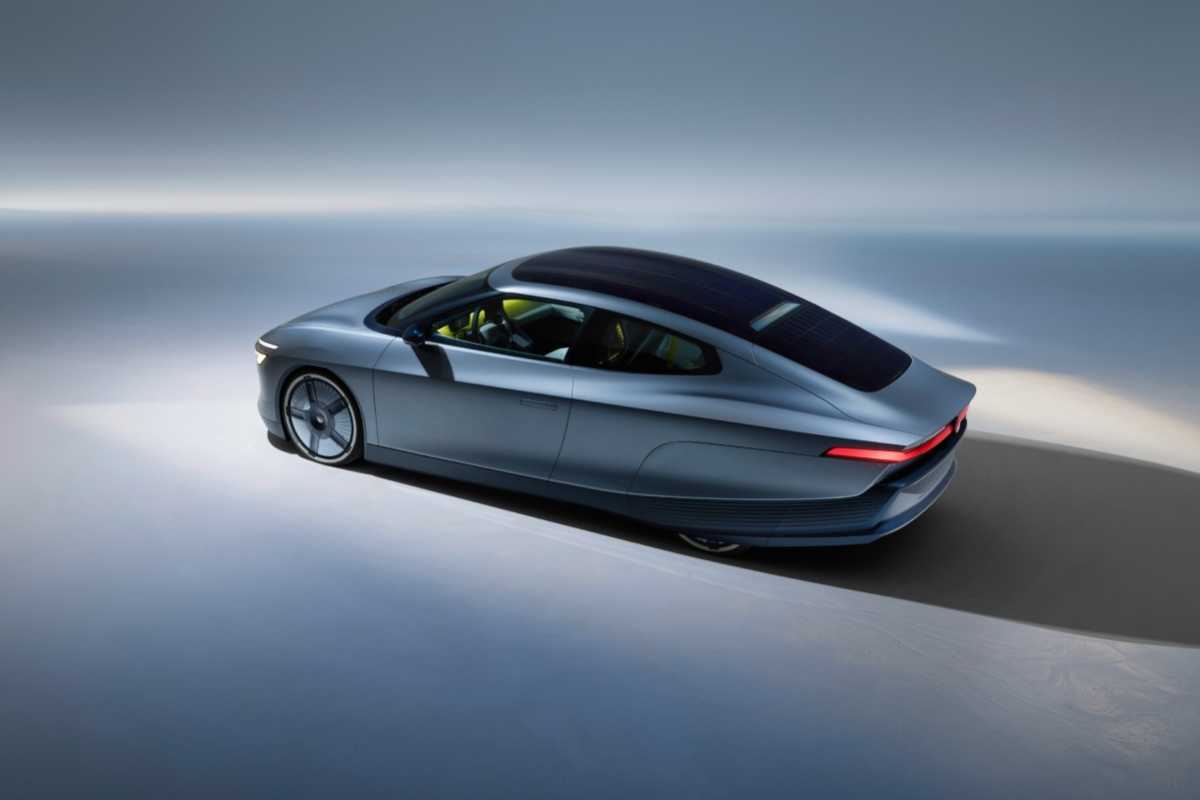
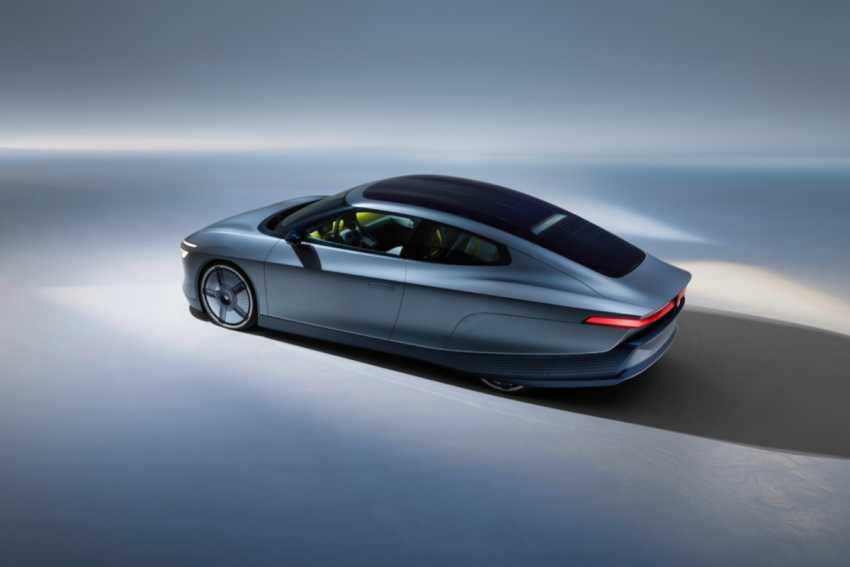
Volkswagen has unveiled an electric concept car designed to demonstrate just how far efficiency can be pushed. Called Mission Efficiency, the experimental model has already set records for both aerodynamic efficiency and energy consumption, making it the most efficient road-registered car ever measured.
The concept is designed to showcase the technology behind Volkswagen’s next generation of small electric cars, including the ID. Polo. While it shares much of its underlying technology with the production hatchback, the Mission Efficiency has been wrapped in a dramatically more aerodynamic body.
It is unlikely to enter full-scale production, but the concept demonstrates that Volkswagen is still serious about reducing energy consumption. It also continues a long-standing tradition that includes the economical Lupo 3L and the famously efficient XL1.
What records has the Volkswagen Mission Efficiency set?
Volkswagen says the Mission Efficiency has achieved three major efficiency records during its development.
These include:
- A drag coefficient of just 0.158, making it the most aerodynamic car approved for road use.
- 9.59 miles per kWh in ideal testing conditions, including a constant speed, no gradients and the climate control switched off.
- 8.27 miles per kWh, including charging losses, over a real-world journey from Germany to Austria.
For context, the Lucid Air currently holds the title for the lowest drag coefficient among production cars, at 0.197. The ID. Polo, meanwhile, has an official claimed efficiency of around 4.67 miles per kWh.
The Mission Efficiency's most impressive result came during a 794-mile journey from Volkswagen’s research and development centre in Wolfsburg to Vienna.
The car needed just one charging stop during the trip and still arrived in Vienna with more than 100 miles of range remaining. The journey was completed at an average speed of 42mph, with a maximum speed of 86mph.
A modern take on the Volkswagen XL1
The Mission Efficiency's appearance makes its purpose clear. Every element of the design has been developed to minimise aerodynamic drag and reduce the amount of energy needed to move the car through the air.
There are obvious echoes of the Volkswagen XL1, particularly in its long, low and streamlined silhouette. However, the Mission Efficiency is considerably larger, measuring almost 4.8 metres in length.
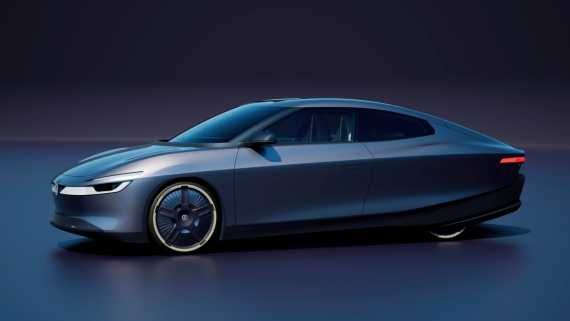
Its distinctive teardrop-shaped body uses a combination of carbon-fibre-reinforced plastic and aluminium. The rear wheels are completely enclosed, while carefully designed surfaces underneath the car help guide airflow and reduce turbulence.
The front also features three active cooling flaps. These automatically adjust their openings to provide the cooling required while keeping aerodynamic resistance to a minimum.
Volkswagen has even incorporated solar panels into the design. One panel runs along the roof, while another is integrated into the rear window. Together, they provide electricity for the car's auxiliary systems, reducing the demand placed on the high-voltage battery.
Volkswagen says the solar panels can add around 18 miles of range.
How much does it share with the ID. Polo?
One of the most interesting aspects of the Mission Efficiency is that it isn't simply a technology demonstrator built around completely unique mechanical components.
Volkswagen has used the same basic powertrain as the ID. Polo, helping demonstrate what could be achieved using technology that is already destined for production cars.
The Mission Efficiency uses a 133bhp electric motor mounted at the front, along with the basic MEB+ platform architecture.
Its battery has a usable capacity of 54.9kWh, slightly larger than the 52kWh battery used by the ID. Polo. Volkswagen has been able to make this change because the concept isn't subject to the same long-term durability requirements as a mass-produced model.
However, the similarities between the two cars largely disappear towards the rear.
The Mission Efficiency has a narrower rear track to improve airflow, while several suspension components have been repositioned to make the underside of the car more aerodynamic.
This approach allows Volkswagen to use familiar production technology while surrounding it with a body designed specifically to minimise energy consumption.
What is the Mission Efficiency's interior like?
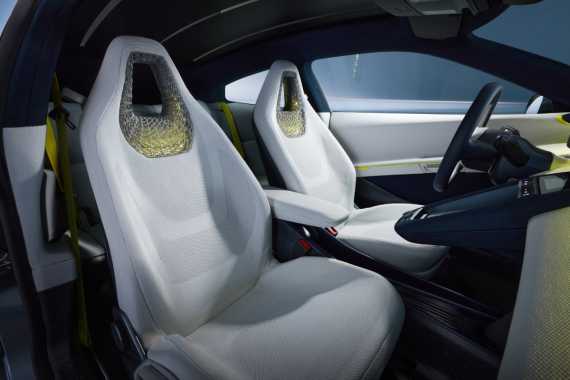
The interior follows the same minimalist philosophy as the exterior.
The instrument cluster, steering wheel and gear selector are carried over from the ID. Polo, but much of the remaining cabin has been designed specifically for the concept.
Weight reduction has been a major priority, with woven fabric used extensively across the seats, dashboard and door panels.
Unlike the two-seat XL1, the Mission Efficiency is technically a four-seater. Volkswagen describes it as a 2+2, however, because the rear seats are better suited to smaller passengers.
There is still a surprisingly practical amount of luggage space, with a 487-litre boot. The panels above the rear wheels can also be opened to provide additional storage for items such as charging cables.
Volkswagen has taken a deliberately simple approach to technology, too.
There is no conventional infotainment screen. Instead, occupants can attach their own smartphone or tablet to a dedicated mount.
The car doesn't even have a built-in speaker system. During the efficiency run to Vienna, a portable Bluetooth speaker was used instead.
While this might seem unusual for a modern concept car, some of these ideas could eventually influence Volkswagen's more affordable electric models, including the forthcoming ID.1.
Will Volkswagen put the Mission Efficiency into production?
For now, production looks unlikely.
Volkswagen built 250 examples of the XL1 between 2013 and 2015, but the Mission Efficiency appears to have been developed primarily as a technology demonstrator.
That makes sense given Volkswagen Group's plans to reduce the number of models it offers, rather than introduce another highly specialised vehicle with limited sales potential.
However, Volkswagen hasn't completely ruled out production. The company says series production is a possibility that can “never be completely ruled out”.
For now, the Mission Efficiency is best viewed as a rolling laboratory for future electric Volkswagen models.
More importantly, it demonstrates that improving EV efficiency isn't simply about fitting a larger battery. By reducing aerodynamic drag, cutting weight and using energy more intelligently, Volkswagen has shown that significant gains can be made without dramatically increasing battery capacity.
And in that respect, the Mission Efficiency may prove to be just as important for Volkswagen's future as the XL1 was for its past.