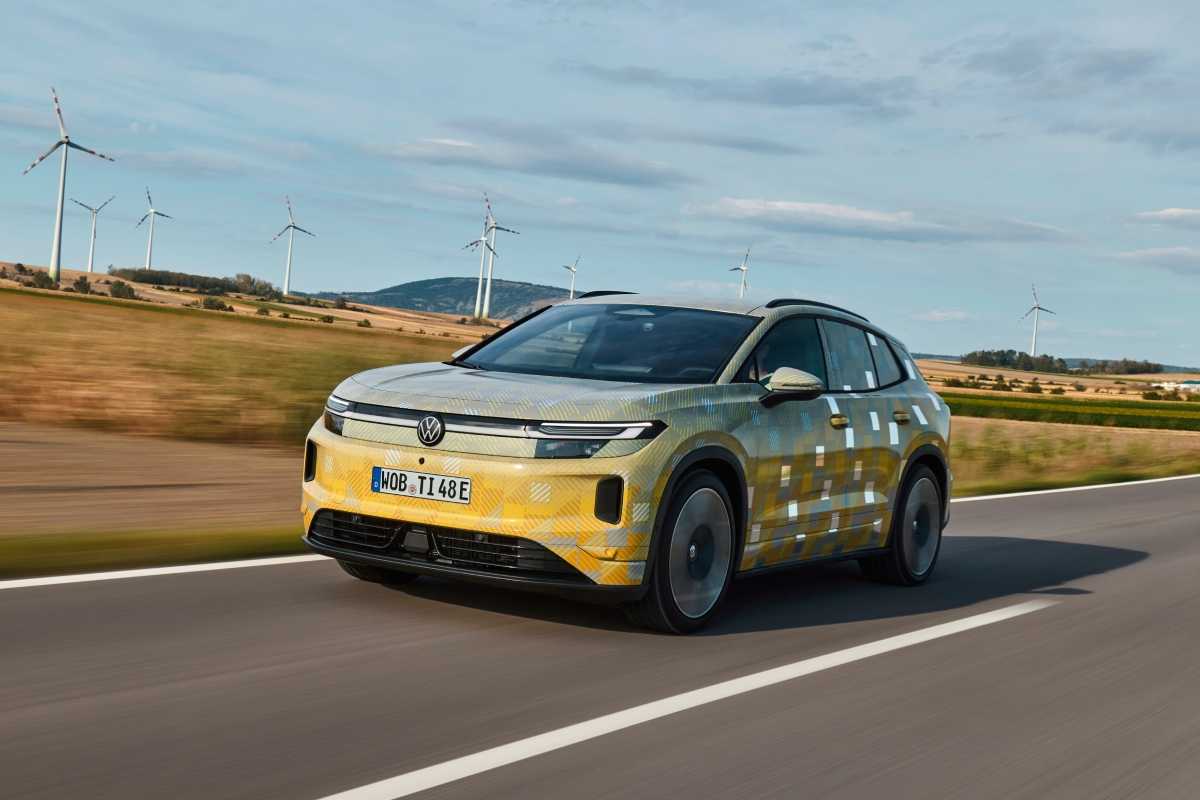
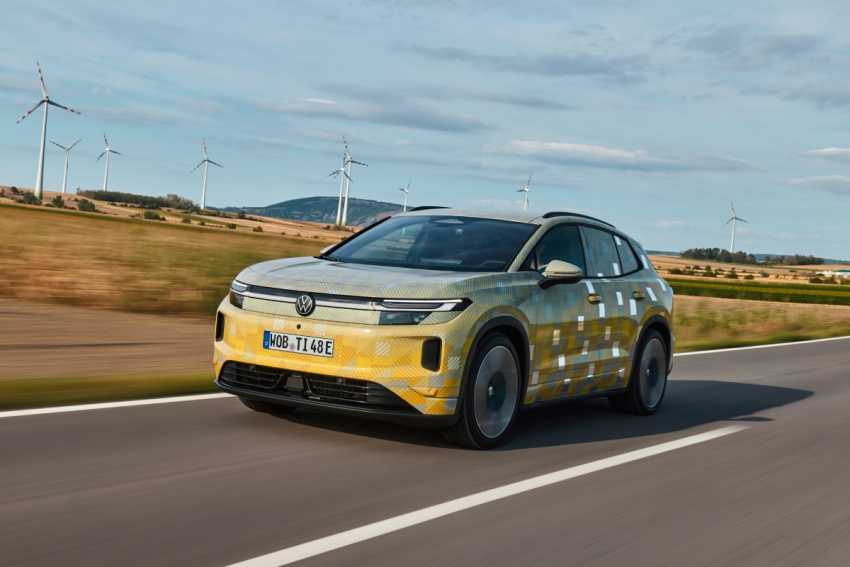
Volkswagen’s electric SUV naming game is finally getting a little easier to follow. The ID.4 is being replaced by a new model called the ID. Tiguan, bringing the familiar Tiguan name into Volkswagen’s electric range.
The recipe is fairly straightforward. You get a mid-sized electric SUV based on Volkswagen’s MEB+ platform, two battery options and rear or four-wheel drive depending on the version.
It also gets a clear brief from Volkswagen. Make it comfortable, quiet, practical and easy to live with.
We’ve already had an early drive in a late-stage prototype, so there’s more to say about how the new ID. Tiguan behaves on the road.
Volkswagen ID. Tiguan driving experience
The biggest impression from the prototype was just how much Volkswagen has prioritised refinement.
Compared with the outgoing ID.4, the ID. Tiguan feels more settled and more sophisticated. Even on 21-inch wheels, the ride dealt well with rougher sections of road, while the steering stayed composed over potholes and broken surfaces.
There is little sense that Volkswagen is chasing a sporty character here. The ID. Tiguan feels happiest cruising along, with a quiet cabin and smooth responses that should suit family use.
The test car also had plenty of performance, although the power delivery was deliberately easy-going. The throttle responded cleanly without the sudden shove you can get from some electric SUVs, while the brakes felt predictable and the regenerative braking system was useful in everyday driving.
It adds up to a car that feels substantially more polished than the ID.4 it replaces.
Volkswagen ID. Tiguan battery and range
Two battery options are planned for the new ID. Tiguan.
The entry battery has a 58kWh capacity and uses LFP chemistry, with Volkswagen quoting up to 280 miles of WLTP range.
Move up to the 77kWh NMC battery and the rear-wheel-drive Pro version can cover up to 373 miles according to Volkswagen. The larger battery will also be available with dual-motor four-wheel drive.
Those figures are manufacturer claims and will depend on the final UK specification, wheel size and equipment.
A maximum range of 373 miles would put the ID. Tiguan comfortably into long-distance family SUV territory on paper, although real-world range will inevitably be lower.
Volkswagen ID. Tiguan power and performance
Power outputs are broadly familiar from Volkswagen’s existing electric SUV line-up.
The 58kWh rear-wheel-drive model produces 188bhp, while the 77kWh Pro gets 282bhp. The four-wheel-drive Pro 4Motion increases that to 295bhp.
That makes the ID. Tiguan quick enough for everyday driving without turning it into a performance SUV.
The rear-drive Pro we tried felt as though it would comfortably manage the 0-62mph sprint in roughly seven seconds, although that is an impression from the prototype drive rather than an official performance measurement.
The 4Motion model should make more sense for buyers who regularly encounter slippery roads or need additional traction. It also increases the car’s towing capability, with Volkswagen saying the ID. Tiguan can tow up to 2,000kg.
Volkswagen ID. Tiguan interior and practicality
The prototype interior was still heavily disguised, so there are limits to what we could assess.
Even so, Volkswagen’s direction is clear. There appears to be a physical control bar beneath the main display, along with physical steering-wheel controls and a large central touchscreen.
That matters because Volkswagen has taken plenty of criticism for relying heavily on touch-sensitive controls in its recent electric models.
The cabin also feels suitably quiet and upmarket. That fits the character of the car, which is clearly being developed around relaxed family motoring.
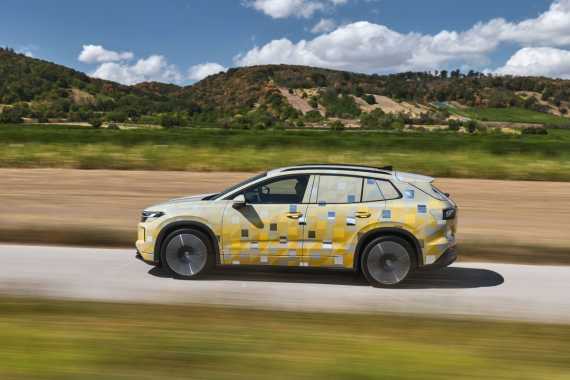
There should be more room in the rear than in the outgoing ID.4, too. The new model is 44mm taller, and the additional space is noticeable from the early prototype.
There’s a sizeable boot and a front storage compartment, although Volkswagen wouldn’t let us measure the luggage area during the prototype event. Official UK boot figures will therefore be worth checking once the production car is fully revealed.
Volkswagen ID. Tiguan equipment
UK buyers should get a reasonably generous level of standard equipment.
The very lowest European Trend specification is not expected to come to Britain, meaning the UK range should start with a stronger equipment package.
Expect features such as heated seats and steering wheel, wireless smartphone charging, dual-zone climate control and a sizeable infotainment display to feature prominently in the range.
Volkswagen’s Dynamic Chassis Control will also be available as an option.
For most family buyers, though, it may be difficult to justify paying extra for a system designed to sharpen the handling. The standard car already feels composed, comfortable and predictable.
Volkswagen ID. Tiguan price and UK launch
This is where things get more interesting.
Volkswagen has yet to confirm the UK pricing for the ID. Tiguan, so any figures at this stage should be treated as estimates.
The outgoing ID.4 has provided a useful reference point, with prices previously starting at around £37,000, but the new car looks and feels more expensive.
Its larger dimensions, upgraded interior and increased equipment suggest there could be a premium when UK prices are announced.
Volkswagen is expected to reveal more about the production car and its UK range in October.
Volkswagen ID. Tiguan verdict
The ID. Tiguan makes sense because Volkswagen has concentrated on the things that matter most in a family SUV.
It is quiet, comfortable, spacious and easy-going, while the bigger battery gives the range-topping version plenty of theoretical range. The extra towing capacity and available four-wheel drive also broaden its appeal.
The big question is price.
If Volkswagen keeps the ID. Tiguan reasonably close to the outgoing ID.4, it could make a compelling electric family SUV. If the new model arrives with a substantial premium, buyers will have plenty of alternatives to consider.
For now, though, the early signs are encouraging. The ID. Tiguan feels like a significant step forward for Volkswagen’s electric SUV range, and the decision to give it the familiar Tiguan name could make it much easier for mainstream buyers to understand where it fits.
Pros
- Comfortable and quiet driving experience
- More interior space than the ID.4
- Up to 373 miles of claimed WLTP range
- Four-wheel drive available
- Up to 2,000kg towing capacity
Cons
- UK pricing has yet to be confirmed
- The interior was still disguised on the prototype
- Real-world range will be below the headline WLTP figure
- A higher price could make it harder to justify against established rivals