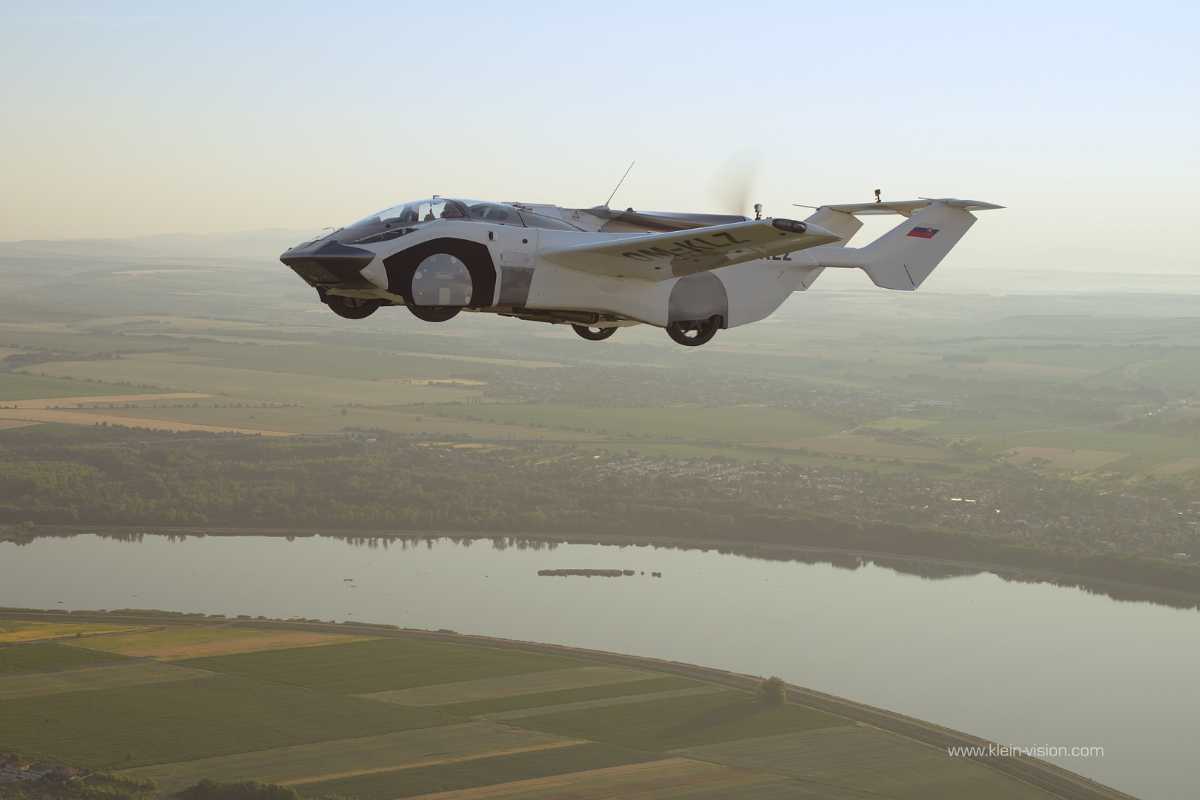
A cutting-edge flying car, initially developed and tested in Europe, has been acquired by a Chinese company. This vehicle, known as AirCar, runs on a BMW engine and regular fuel.
In 2021, it completed a 35-minute flight between two Slovakian airports, utilising conventional runways for take-off and landing. Impressively, it only took a little over two minutes to transition from a car to an aircraft.
The technology has now been acquired by Hebei Jianxin Flying Car Technology Company, based in Cangzhou, China. They've secured exclusive rights to manufacture and operate AirCar within a specified area.
This move follows the company's establishment of its own airport and flight school, facilitated by a previous acquisition from a Slovak aircraft manufacturer.
China, having already been a leader in electric vehicle development, is now actively exploring flying transport solutions. Just recently, Autoflight conducted a successful test flight of a passenger-carrying drone, significantly reducing travel time between Shenzhen and Zhuhai. Similarly, eHang, a Chinese firm, received a safety certificate for its electric flying taxi in 2023, with the UK government anticipating the integration of flying taxis into regular airspace by 2028.
However, unlike vertical takeoff and landing drones, AirCar operates with traditional runways. While KleinVision, the company behind AirCar, hasn't disclosed the sale amount, it's worth noting that AirCar received airworthiness certification from the Slovak Transport Authority in 2022 and gained attention after being featured in a video by YouTuber Mr Beast.
Despite these advancements, challenges remain in terms of infrastructure, regulation, and public acceptance. Aviation consultant Steve Wright states "This brave new world of personal transport is acting as a great leveller,"
Efforts worldwide to regulate the industry resulted in "everyone scrambling to come up with a whole new set of questions that need to be asked".
"In this respect the West's history can sometimes slow things down, as there is a bit of a temptation to try and squeeze these new machines into the old categories," Mr Wright added. "China could well see this as an opportunity to get ahead."
While prototypes like AirCar generate excitement, the reality of everyday use may involve mundane logistics such as queues and baggage checks. Nonetheless, the sale of AirCar raises intriguing questions about China's potential dominance in the flying car industry, echoing its success in the electric vehicle market.