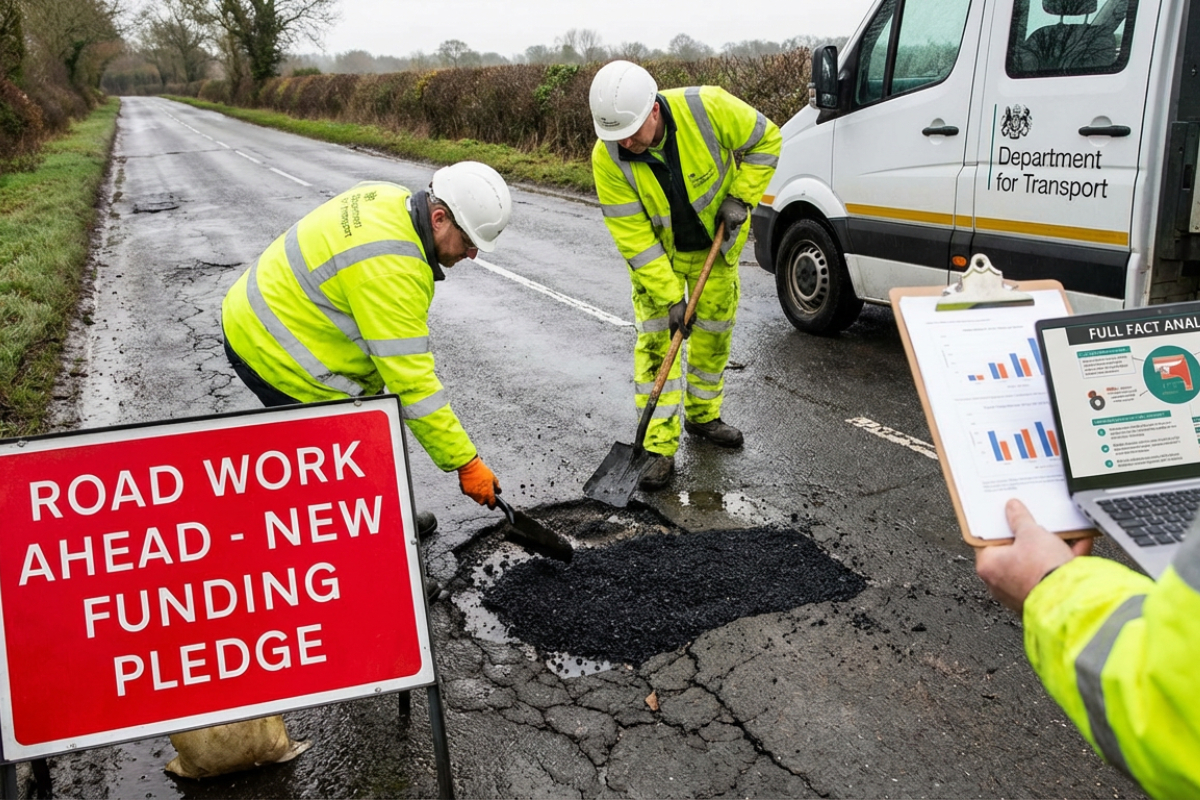
TL;DR: The Labour pothole repair pledge to fix one million extra potholes annually faces significant hurdles. While the government aims for 2.85 million repairs this year, a 54% increase, projections suggest a 2.6% decline instead. Despite £2 billion in Autumn Budget funding and a new traffic light rating system for local councils, regional disparities remain stark, with 29% of Derbyshire's A-roads requiring urgent maintenance compared to a 5% national average.
The Labour pothole repair pledge was a cornerstone of Keir Starmer’s 2024 manifesto, promising to fix an additional one million potholes across England every year. It’s a bold claim that resonated with every driver who’s ever winced after hitting a crater. However, new data suggests the government might be hitting a significant roadblock before the first year is even out.
Is the UK government on track to fix one million extra potholes?
In short: it doesn't look like it. According to a deep-dive by Full Fact pothole analysis, the numbers just don't add up yet. In the 2024/25 period, 149 councils across England repaired roughly 1.85 million potholes. To hit the new target, that figure needs to soar to 2.85 million, a massive 54% increase. Instead, early local council road repair statistics from 85 authorities suggest we’re actually looking at a 2.6% drop in repairs this year.
The Funding Gap vs. The Reality on the Ground
During the Autumn Budget road funding 2024 announcement, Chancellor Rachel Reeves committed over £2 billion a year by 2029/30 to help councils "repair, renew and fix potholes." Transport Secretary Heidi Alexander was blunt about the investment, stating, “We've put our money where our mouth is, increasing the funding for local highway authorities with £7.3billion to fix roads and given them the long-term certainty they have been asking for.
"Now it's over to them to spend the money wisely."
But money isn't the only factor. We've seen councils like South Gloucestershire predicting an 18% drop in repairs simply because a drier summer meant fewer potholes formed. Meanwhile, the Asphalt Industry Alliance road repair cost estimate sits at a staggering £16.3 billion to clear the entire maintenance backlog.
Understanding the Pothole Traffic Light Rating System
To keep local authorities accountable, the government has introduced a pothole traffic light rating system. This entity serves as a performance tracker for all 159 local highway authorities.
Red: Urgent maintenance required.
Amber: Maintenance planned/needed soon.
Green: Road in good condition.
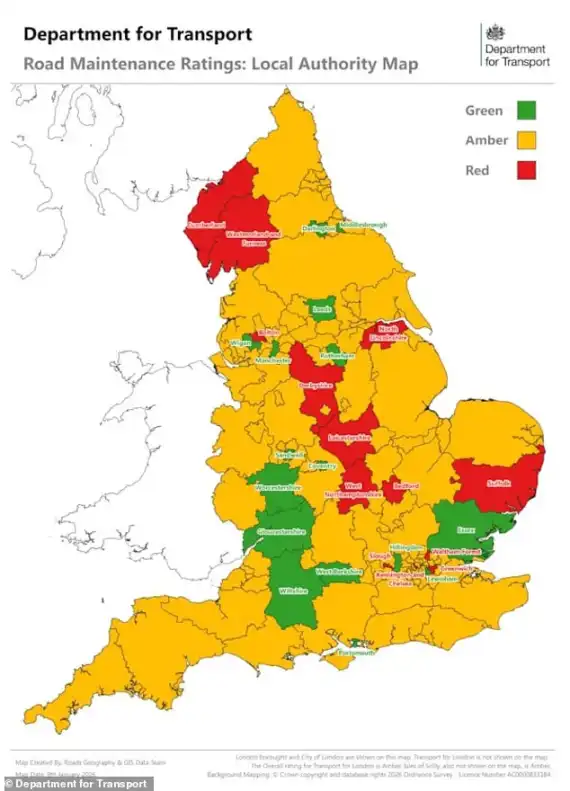
While the national average for A-roads in the 'red' zone is 5%, the Department for Transport road condition data reveals shocking regional disparities.
| Region | A-Roads Needing Urgent Repair (Red Rating) | |
| National Average | 5% | |
| Derbyshire | 29% | |
| B & C Roads (National) | 7% |
Expert Sentiment: A Balanced View
There’s a clear divide between government optimism and the experience of road users. Jack Cousens, the AA’s head of roads policy, notes that drivers are still "running the gauntlet" on residential streets. While the funding is a start, the impact of poor road conditions on vehicle reliability is a growing concern for many. Potholes don't just ruin your day; they ruin your suspension and tyres, adding to the already high financial burden on drivers.
It’s not just about the number of holes filled, either. Some councils, like Nottingham City, have intentionally reduced repair numbers to focus on long-term resurfacing. This might be better for overall road safety in the long run, but it makes hitting that "one million extra" headline target much harder for Keir Starmer’s team.
Ultimately, the Labour pothole repair pledge is a marathon, not a sprint. But with the current trajectory showing a decline rather than a surge, the government will need to do more than just name and shame councils if they want to smooth out the UK's crumbling infrastructure.