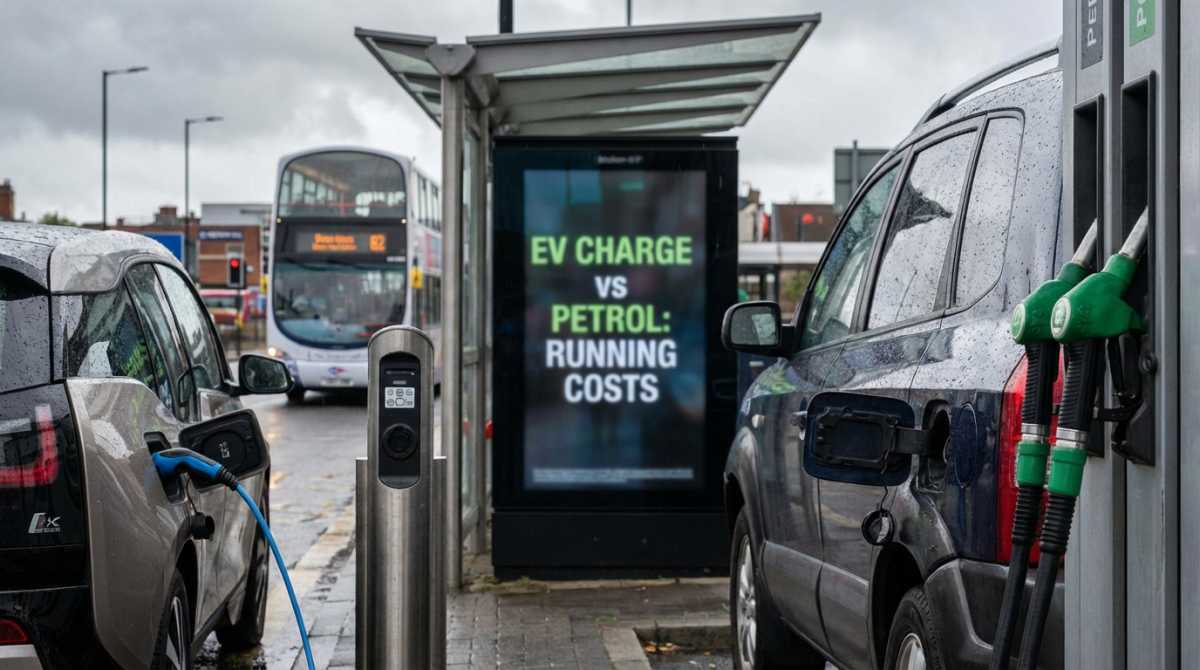
TL;DR: Public EV charging in the UK is now officially cheaper per mile than petrol. New data shows electric cars cost around 15p per mile on public chargers, compared to 17p for petrol, a key tipping point for drivers without home charging.
Key Facts
- 15p per mile: Average cost to run an EV using public chargers.
- 17p per mile: Typical petrol cost, with diesel at 17.5p.
- ChargeUK: Industry body behind the latest analysis.
- 20% VAT: Applied to public charging vs 5% for home charging.
EV vs Petrol costs UK: A real turning point
For years, one of the biggest sticking points for going electric has been public charging costs. Now, that argument is starting to fall apart.
Fresh data from ChargeUK confirms that running an electric car using the UK’s public charging network is now cheaper per mile than filling up a petrol car. It’s a genuine shift and one that could finally convince drivers without driveways to make the switch.
What drivers are actually paying
Let’s cut through the noise and look at real-world numbers.
Right now, the average cost of running an EV on public chargers sits at around 15p per mile. Compare that to:
- Petrol: 17p per mile
- Diesel: 17.5p per mile
That means even without home charging, EV drivers are starting to come out on top.
These figures are based on an average public charging price of 54p per kWh, spread across a mix of slow, fast, and rapid chargers. In everyday driving – commuting, errands, and weekend trips – EVs are now consistently cheaper to run.
The only exception? If you rely only on ultra-rapid chargers, where prices can spike. But for most drivers, that’s not the reality.
Why EVs are pulling ahead
Petrol prices are still doing drivers no favours. According to RAC Fuel Watch, petrol is hovering around 157.34p per litre, lower than peak highs, but still far from cheap.
Meanwhile, EV charging costs have been far more stable. That predictability is becoming a big selling point, especially for anyone budgeting monthly motoring expenses.
The ‘pavement tax’ problem
There’s still one major issue holding EV costs back — and it’s a frustrating one.
- Home charging VAT: 5%
- Public charging VAT: 20%
That gap disproportionately affects drivers without off-street parking, essentially penalising those who rely on public infrastructure.
Campaigners and industry leaders are pushing hard for change. If VAT on public charging drops to 5%, the cost per mile for EVs could fall even further, widening the gap with petrol and diesel cars.
What this means for drivers
This isn’t just a small pricing shift; it’s a psychological one.
For a long time, EV ownership only made clear financial sense if you could charge at home. Now, that barrier is starting to disappear.
Yes, upfront costs can still be higher, but with savings on fuel (and fewer moving parts to maintain), the overall ownership picture is changing quickly. Whether you're browsing new electric cars or considering a used option, the day-to-day savings are becoming harder to ignore.