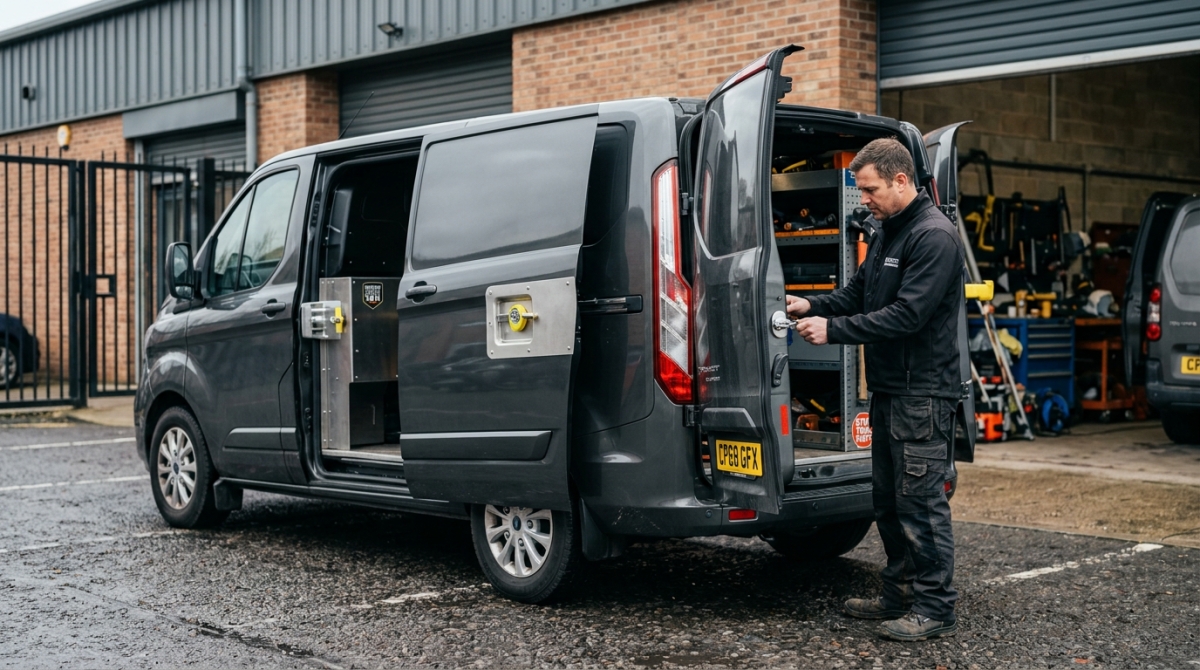
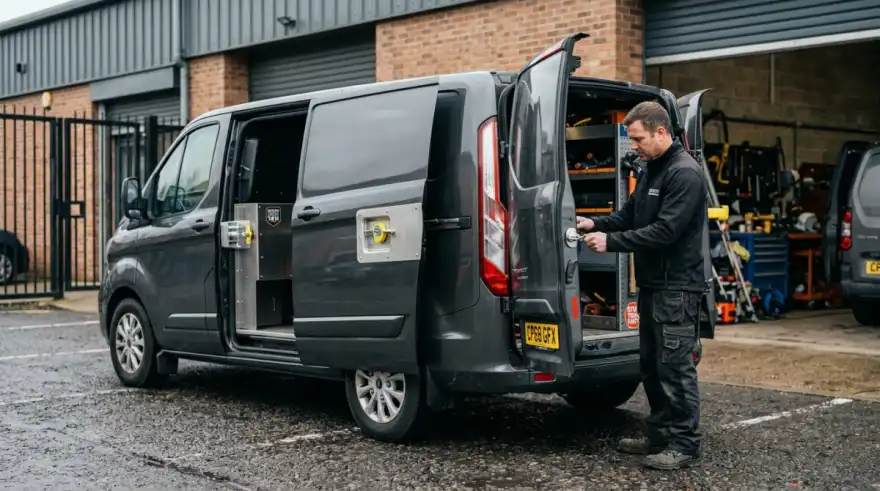
TL;DR: Van theft remains a serious risk for UK tradespeople in 2026, but the nature of the threat is changing. Latest data shows whole-van theft is down significantly, while thieves continue to target tools and equipment through forced-entry methods such as "peel and steal". The best defence is a layered approach: remove tools overnight where possible, use additional mechanical security such as deadlocks or anti-peel protection, protect keyless keys with a signal-blocking pouch and consider an alarm, immobiliser or tracker where appropriate.
Key facts
- Whole-van theft is falling: Simply Business says its claims data shows whole-van theft is down 98% since 2023, with improved immobilisers and tracking making complete vehicle theft harder.
- Van theft is still significant: 9,522 vans were recorded as stolen in the UK during 2025, according to figures based on DVLA data compiled by Direct Line Business. That's approximately one van every 55 minutes.
- Tool theft remains a major concern: Direct Line recorded 12,414 tool thefts from vehicles in 2024, representing almost half of all tool theft cases in its research.
- Removing tools is one of the simplest ways to reduce the potential loss: Police and insurer guidance recommends taking valuable tools and equipment out of the van whenever possible.
- Keyless vans can be vulnerable to relay attacks: A properly functioning Faraday pouch or other signal-blocking device can help protect keyless vehicle keys from relay theft.
- A layered approach is best: Mechanical locks, alarms, immobilisers, trackers, secure parking and good everyday habits can each address different aspects of the theft risk.
For many UK tradespeople, a van is much more than transport; it's a mobile workshop, an office and an essential part of running a business. Losing the vehicle itself can cause major disruption, while having tools stolen can leave a tradesperson unable to work.
The good news is that whole-van theft has become significantly harder in recent years. According to Simply Business, whole-van theft in its claims data is down 98% since 2023, with improvements in immobilisers and vehicle tracking helping to make stealing an entire vehicle more difficult.
That doesn't mean van security can be taken for granted. Criminals can adapt when one method becomes harder, and thieves continue to target tools and equipment inside vans. Direct Line's research found 12,414 tool thefts from vehicles in 2024, accounting for 49% of the tool theft cases it recorded.
The answer is not necessarily one expensive security product. Instead, combining sensible habits with physical and electronic security can make your van a much harder target.
Why removing your tools is still your best defence
It might feel like a significant chore after a long day, but removing valuable tools from your van whenever possible remains one of the simplest ways to limit the impact of a break-in.
Hendy's tradesman's van-security guidance recommends removing tools from the vehicle and storing them somewhere secure, such as a business storage facility or secure garage.
The reason is straightforward: even the strongest van security cannot guarantee that a determined thief won't eventually gain access. If there are no valuable tools inside, the potential reward is considerably lower.
If you can't remove everything every night, consider using a securely installed internal tool vault or safe. A properly secured secondary storage box can provide another barrier between thieves and your equipment.
However, an internal vault shouldn't be treated as a replacement for good van security. Think of it as another layer in your overall approach.
Understanding the 'peel and steal' threat to your van doors
While whole-van theft has fallen, thieves have adapted to modern vehicle security and continue to target what's inside vans.
One example is the "peel and steal" attack. This involves using force and leverage against a van door to deform or pull it away from the body, creating access to the load area.
Simply Business says its latest claims data indicates that property damage has become a significant part of tool theft, with thieves adapting their tactics as whole-van theft becomes harder.
The damage caused by a peel-and-steal attack can be substantial, even if the thief is only interested in the tools inside.
How can you protect against peel and steal?
Vehicle-specific anti-peel kits and additional locks are available for many popular UK van models. These systems are designed to reinforce vulnerable areas around the doors and provide an additional locking point.
An anti-peel kit should be considered alongside, rather than instead of, the van's existing security. Before purchasing one, check that the product is compatible with your specific make, model and year.
Physical security: Van deadlocks vs slam locks – Which is right for you?
Additional mechanical locks can provide another layer of protection beyond the manufacturer's standard locking system.
Two common options are slam locks and deadlocks.
Slam locks
Slam locks automatically secure the door when it is closed. This can make them particularly useful for people who repeatedly enter and leave their van throughout the day, such as couriers and multi-drop drivers.
The main advantage is convenience: you don't have to remember to manually lock the additional mechanism every time you close the door.
Deadlocks
Deadlocks provide a separate locking point that is operated manually, usually with a key.
They can be useful for tradespeople who leave a van unattended for longer periods and want an additional mechanical barrier between the vehicle's contents and a potential thief.
Neither option is automatically "best" for every van. Your choice should depend on how the van is used, how frequently you access the load area and the level of security you need.
For some drivers, a combination of different security measures may make sense. For example, a slam lock can provide convenience on a frequently used side door, while additional deadlocking and anti-peel protection can be considered for rear doors.
Always make sure aftermarket locks are professionally fitted and suitable for your specific vehicle.
The rise of keyless theft: Protecting your digital entry points
Modern vans equipped with keyless entry systems can be vulnerable to relay attacks.
In a relay attack, criminals use specialist equipment to extend or relay the signal between a vehicle and its key, potentially making the vehicle believe that the genuine key is nearby.
This means that protecting the key itself is an important part of your van-security routine.
Faraday pouches
If your van uses keyless entry, storing the key fob inside a properly functioning signal-blocking pouch when it isn't being used can help prevent relay attacks.
Police guidance recommends using a Faraday pouch or other signal blocker for keyless vehicles and advises owners to check that the pouch continues to work correctly.
There is no need to spend a particular amount to achieve this. Prices vary, but inexpensive signal-blocking pouches are available. The important point is whether the product actually blocks the relevant signal.
Don't rely on a pouch indefinitely without checking it. A damaged or ineffective pouch won't provide the protection you expect.
Additional immobilisers
An aftermarket immobiliser can provide another layer of protection by preventing the vehicle from being driven away without the correct authentication or sequence.
Systems such as Ghost immobilisers use a driver-entered sequence rather than relying solely on the vehicle's original key. However, security products vary, so check exactly what a system offers and whether it is suitable for your vehicle before having one installed.
No aftermarket security product should be described as making a vehicle impossible to steal. The aim is to add additional barriers and make the van a less attractive or more difficult target.
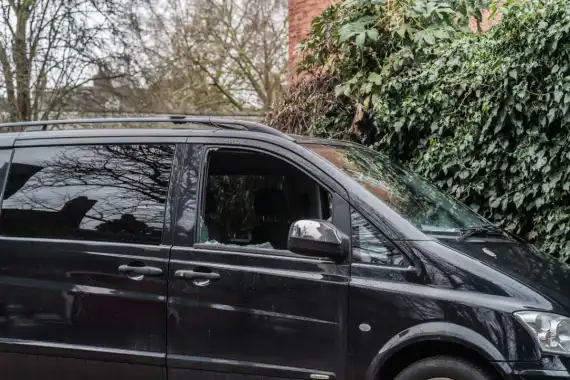
Parking for prevention: Smart habits to deter thieves
Where and how you park can also influence the risk of theft.
The Metropolitan Police advises vehicle owners to use practical measures such as secure parking, checking that the vehicle is properly locked and using additional security devices where appropriate. It also recommends height-restricted car parks as a way of helping prevent illegal tow trucks and removal vehicles from accessing vehicles.
Rear-to-wall parking
Where practical, park with the rear doors as close as possible to a wall or sturdy barrier. This can make it much harder for someone to access the rear doors.
It isn't a guarantee against theft, but it removes one potential route of entry.
Well-lit and visible locations
If you need to leave your van somewhere overnight, choose a secure, well-lit and visible location where possible.
Parking near CCTV or in a busy, overlooked area can make a vehicle less attractive to opportunistic thieves.
Check your mirrors
The Metropolitan Police recommends checking that automatically folding wing mirrors have folded when you lock your vehicle. Extended mirrors can potentially indicate that a vehicle hasn't been locked.
This is a simple habit that takes only a few seconds.
Consider height-restricted parking
Where appropriate, a car park with a height-restricted entrance can make it more difficult for a vehicle to be removed using certain tow or recovery equipment. The Metropolitan Police specifically includes height-restricted car parks among its vehicle-theft prevention advice.
Insurance and legal obligations: What every van driver needs to know
Good physical security is important, but your insurance policy matters too.
Don't leave your van running unattended
The Metropolitan Police warns against leaving a vehicle running unattended while it is being warmed up or de-iced.
Leaving the keys in an unattended vehicle can make it much easier for a thief to drive away, and the circumstances of a theft can affect whether an insurance claim is covered. Always check your individual policy wording rather than assuming you will automatically be covered.
Check your tools are insured
Don't assume that your standard van insurance automatically covers every tool or piece of equipment you carry.
Depending on the policy, you may need specific cover for tools, equipment or goods in transit. There may also be limits, exclusions or security requirements.
Before relying on your insurance, check:
- Whether tools are covered while inside your van.
- Whether there is a maximum claim value.
- Whether cover applies overnight.
- Whether the policy requires specific security devices.
- Whether there are conditions about where the van is parked.
- Whether tools need to be removed from the vehicle at certain times.
If you're unsure, speak to your insurer or broker.
Expert recommended security checklist for UK vans
| Security Feature | Benefit |
|---|---|
| Thatcham Category 1 alarm | Combines an alarm with an immobiliser and can provide additional detection and protection. |
| Anti-peel kit | Reinforces vulnerable door areas against forced-entry attacks. |
| Deadlocks | Adds an additional manually operated locking point. |
| Slam locks | Automatically locks the relevant door when it is closed, useful for frequent access. |
| Steering wheel lock | Provides a highly visible physical deterrent and an additional barrier to vehicle theft. |
| GPS tracker | Helps with locating and recovering a vehicle after theft; it does not prevent theft by itself. |
| Window grilles | Can provide an additional physical barrier against access through load-area windows. |
| Faraday pouch | Helps protect keyless vehicle keys against relay attacks when functioning correctly. |
| Internal tool vault | Creates another physical barrier around valuable equipment that cannot be removed from the van. |
What is a Thatcham Category 1 alarm?
A Thatcham Category 1 system combines an alarm and immobiliser. Category 1 systems incorporate features such as perimeter and ignition detection alongside additional sensors and an immobilisation function.
The exact specification of an aftermarket system should always be checked before purchase, particularly if you are buying it to satisfy an insurance requirement.
There isn't one reliable nationwide price for a Category 1 system. Installation costs vary according to the vehicle, system and installer, so obtain a quote for your specific van.
How to build a layered van security system
There isn't a single product that can guarantee your van or its contents will never be stolen.
Instead, consider combining different types of security:
Layer 1 – Good habits
Lock the van every time you leave it, remove tools whenever possible and keep your keys secure.
Layer 2 – Physical security
Consider deadlocks, slam locks, anti-peel protection, window grilles and an internal tool vault depending on how your van is used.
Layer 3 – Electronic security
An alarm, immobiliser or tracker can provide additional protection or improve the chances of recovery.
Layer 4 – Key security
If your van has keyless entry, use a properly functioning signal-blocking pouch and keep keys away from doors and windows.
Layer 5 – Parking
Choose secure, well-lit and visible locations and consider parking with rear doors against a wall or barrier where practical.
The more layers a thief has to overcome, the less attractive your van may become compared with an easier target.
Conclusion: Make your van a harder target in 2026
Van theft in the UK hasn't disappeared, but the threat is changing.
The latest data suggests that stealing an entire van has become considerably harder, with whole-van theft down 98% since 2023 in Simply Business' claims data. However, thieves continue to target valuable tools and equipment, meaning tradespeople shouldn't focus solely on preventing the vehicle itself from being stolen.
The best approach is a layered one.
Remove expensive tools from the van whenever possible. Consider additional mechanical protection such as deadlocks or anti-peel security. If you have keyless entry, protect your keys with a properly functioning Faraday pouch. Depending on your vehicle and circumstances, an alarm, immobiliser or tracker could provide another layer of protection.
And don't overlook the basics: lock the van every time, check that it has actually locked, park somewhere secure and make sure your insurance covers the tools and equipment you rely on for work.
You don't need to turn your van into an impenetrable vault. The goal is to make it a harder, less attractive target while reducing the financial impact if a thief does manage to break in.
That combination of sensible habits, physical security and appropriate technology can help keep your van — and your livelihood — moving forward.