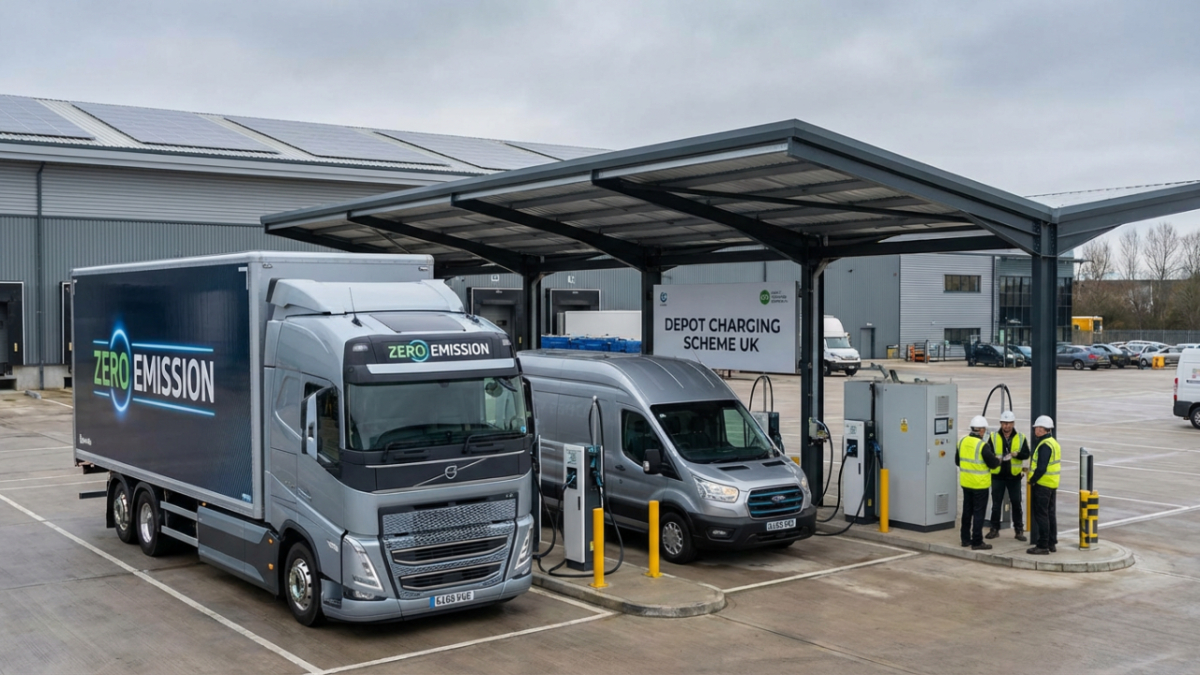
TL;DR: The UK government has unveiled a £1 billion investment package for fleet operators. Businesses can now claim up to £81,000 off the price of a new electric HGV through the Zero Emissions Truck and Van Grant, while the Depot Charging Scheme offers up to £1 million to install private charging infrastructure.
Key Facts
- £81,000: Max saving on heavy electric trucks under the new grant.
- £1 billion: Total government funding to support fleet decarbonisation.
- 70%: Proportion of depot charging costs covered by the government.
- 2026 Target: 24% of new van sales must be zero-emission by year-end.
- £5,000: SME grant for each new electric van purchased.
UK scraps £81,000 off electric trucks with new grant
Fleet operators have just been handed a serious financial boost. The UK government has announced a £1 billion investment package designed to speed up the shift to electric commercial vehicles, and the headline news is hard to ignore.
Under the Zero Emissions Truck and Van Grant, businesses can now slice up to £81,000 off the cost of a new electric HGV. For most hauliers, that’s roughly 40% of the vehicle’s purchase price, removing one of the biggest barriers to going electric.
It’s a bold move that shows the government’s commitment to decarbonising the UK’s logistics sector, and it finally gives fleet operators a solid reason to start planning their electric transition.
What this means for fleet operators
For logistics firms, this isn’t just another policy announcement – it's a real financial game-changer. A discount of £81,000 per truck could transform the economics of switching from diesel to electric overnight.
And it’s not just large fleets that benefit. Smaller businesses and local couriers can still get help through electric van grants, which offer £5,000 off each new electric van. With the Zero Emission Vehicle (ZEV) mandate pressing in, these savings couldn’t come at a better time.
Tackling the charging challenge
Of course, buying the vehicles is only part of the story; charging them is another. Anyone who’s tried to rely on public EV chargers for a fleet knows how unpredictable that can be.
That’s where the new Depot Charging Scheme comes in. Backed by £170 million in funding, it covers up to 70% of installation costs, capped at an impressive £1 million per business site.
This means companies can build their own private charging hubs and keep their vehicles topped up overnight – no queues, no downtime, no stress.
Looking ahead, this infrastructure could become even smarter. As vehicle-to-grid (V2G) technology develops, fleets might be able to sell stored energy back to the grid, turning parked trucks into an extra revenue stream.
The ZEV Mandate: Why action can’t wait
The government isn’t handing out this funding for nothing, there’s growing pressure to meet climate goals. Under the ZEV mandate, 24% of all new vans sold by the end of 2026 must be electric, rising to 70% by 2030.
As Transport Minister Keir Mather MP explained, going electric isn’t just about hitting sustainability targets, it’s about protecting UK businesses from volatile diesel prices and future fuel uncertainty.
Industry voices have cautiously welcomed the move. ChargeUK’s Jarrod Birch praised the grant for easing upfront costs but stressed that fair electricity pricing must follow. After all, cost per mile matters more than ever in logistics.
The road ahead for UK fleets
Some big names are already leading the charge. Retail giant M&S has rolled out 24 electric HGVs and plans to expand further this year. Others are sure to follow – from national hauliers to local delivery services.
The message from the government is clear: the EV transition is no longer a future goal, it’s happening right now. And with substantial funding and infrastructure support finally in place, the financial argument for staying with diesel is getting weaker by the day.