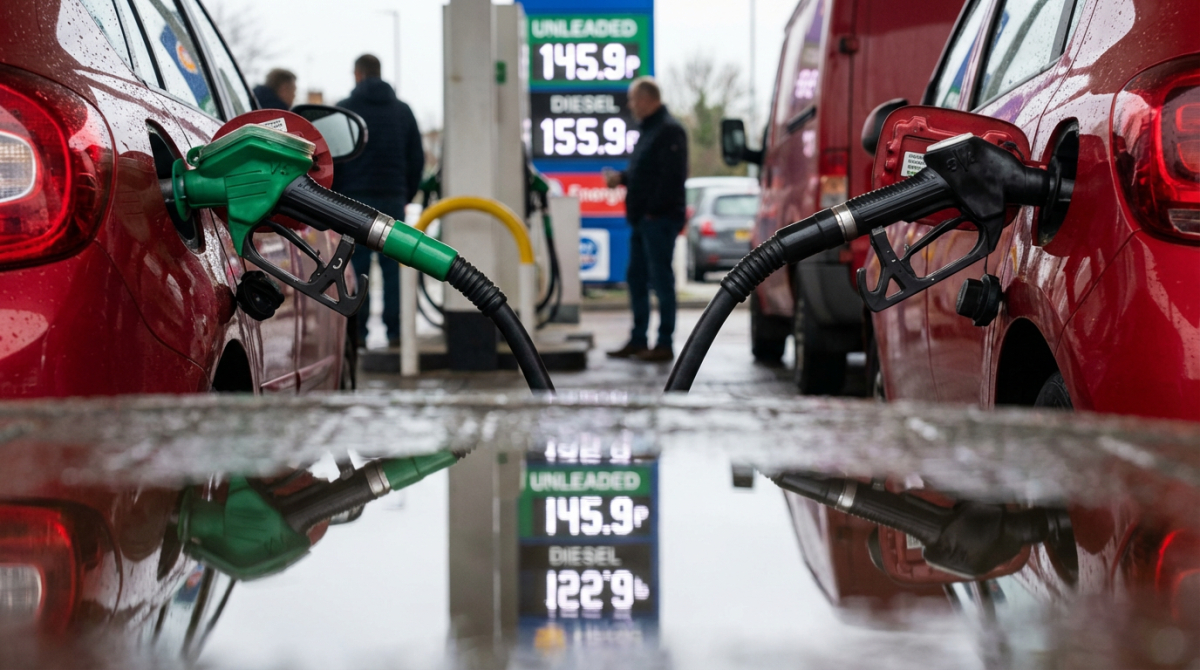
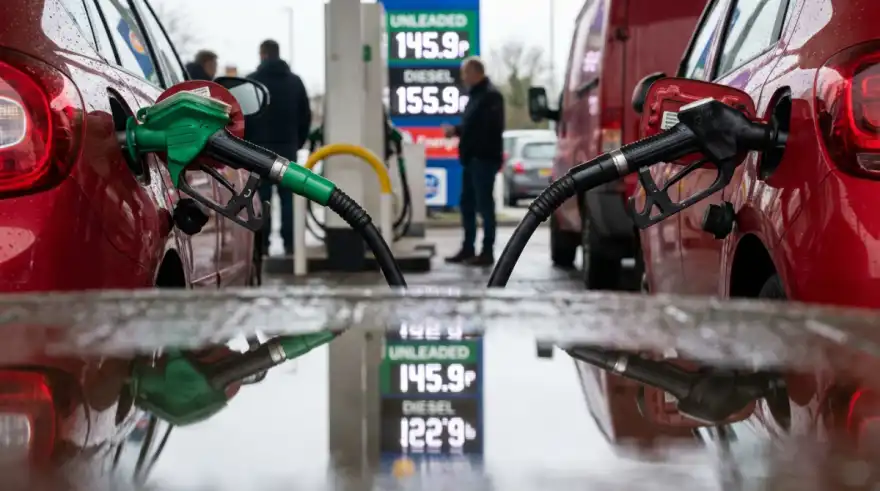
The gap between diesel and petrol prices in the UK has hit a record 29.19p per litre. The UK’s reliance on imported diesel is driving this difference, leaving drivers paying over £21 more to fill a typical family car compared to just a month ago.
Key Facts
- 29.19p: Current record-high price gap between diesel and petrol in the UK.
- £21.35: Extra cost per full tank for a family diesel car compared to four weeks ago.
- 27%: Diesel prices have surged this much since February – double the rate of petrol.
- 16 million: Diesel car owners across the UK now facing these price hikes (plus 4.6 million commercial van drivers).
Diesel price gap hits record high as drivers feel the squeeze
Drivers across the UK are facing some serious pump-price pain, and for diesel motorists, it’s worse than ever. The price gap between diesel and petrol has now hit an all-time high of 29.19p per litre, marking a new record in UK fuel history.
Right now, petrol costs around 152.01p per litre, while diesel has soared to 181.2p. For the UK’s 16 million diesel car owners, that difference adds up fast. Filling a typical family diesel car now costs £21.35 more than it did just a month ago, taking a hefty bite out of household budgets already stretched by everyday expenses.
If you’re wondering whether your own car is still “worth it” on diesel, Regit’s Is diesel still worth it? A 2026 buyer’s guide looks at fuel costs, emissions rules like ULEZ, and mileage patterns to help you decide.
Why has diesel become so expensive?
The reason behind this widening gap is structural, not seasonal. UK refineries are built to produce more petrol than the country actually uses, leaving a surplus. But when it comes to diesel, the UK simply can’t make enough. To meet demand, we rely heavily on imports from overseas.
That dependency makes diesel prices extremely vulnerable to global supply issues. Recent geopolitical tensions, particularly around critical shipping routes like the Strait of Hormuz, have spooked markets, pushing up trading costs. When global diesel supply tightens, UK pump prices feel the effect almost instantly.
It all came to a head on 30 March, when the record 29.19p gap was recorded. Since February, diesel prices have jumped more than 27%, while petrol has crept up by only about half that amount.
The ripple effect across the economy
It’s not just private motorists feeling the pinch. Around 4.6 million commercial vans, the backbone of British business, also run on diesel. As their running costs soar, those expenses inevitably trickle down to consumers.
That means higher prices for online deliveries, building supplies, groceries, and even service call-outs. In short: when diesel prices climb, so does the cost of living for almost everyone.
Fuel industry experts, including Sir Howard Davies, warn that the UK’s fuel system is fragile. If major trade routes like the Strait of Hormuz were disrupted further, Britain could be one of the hardest-hit countries due to its heavy import dependency, something we’re already seeing reflected in pump prices.
Will UK fuel prices fall anytime soon?
Sadly, there’s little sign of immediate relief. The price of Brent crude oil, which heavily influences UK pump prices, is still hovering between $115 and $119 per barrel. Unless that drops significantly, fuel costs are unlikely to ease soon.
While the government insists the national fuel supply remains secure, many industry voices are warning of a wider economic ripple across Europe if prices stay elevated into the spring.
For some drivers, the volatility is proving enough to reconsider their options. More motorists are now turning towards hybrid and electric cars as a way to escape the rollercoaster of fossil fuel pricing. But for millions of diesel owners still reliant on traditional vehicles, this record-breaking price gap is a reminder of just how unpredictable fuel costs can be.
If you want to see how your current car’s fuel type stacks up, you can also use Regit’s Fuel Saver Calculator to compare running costs and see whether changing fuel type or switching to an EV would make financial sense for your mileage.