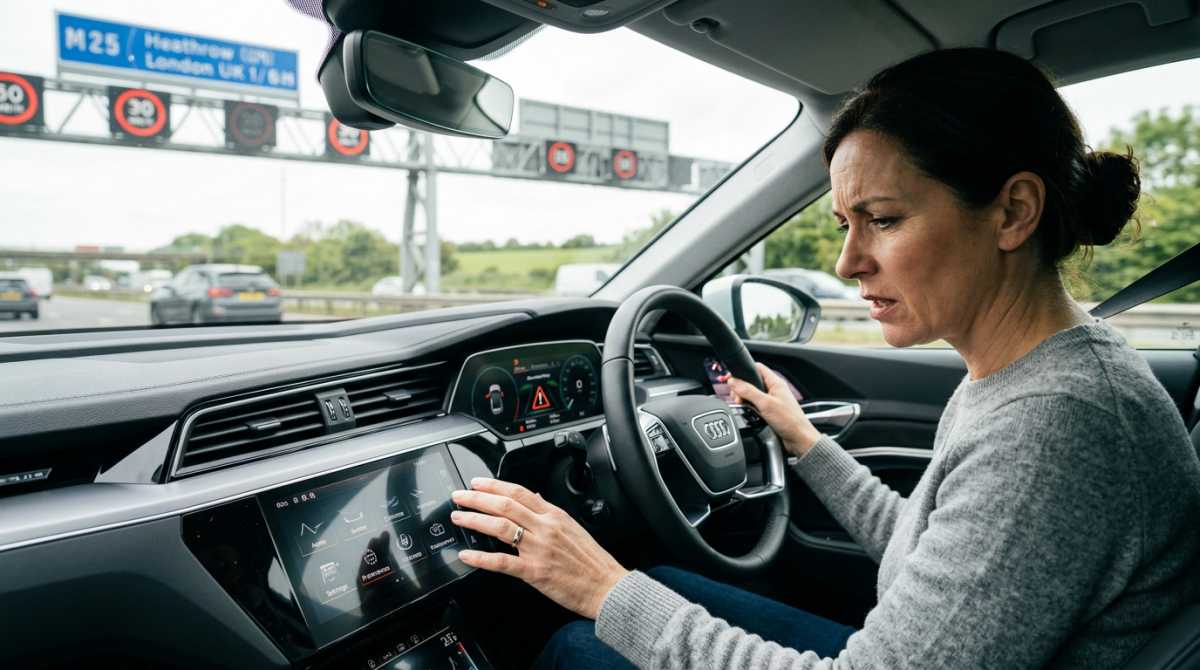
TL;DR UK car owner satisfaction has sharply declined to 84.2% in the Driver Power 2026 survey, down from 89.6% in 2024, largely due to frustrating in-car technology and safety systems.
Key Facts
- The Driver Power 2026 survey reveals car owner satisfaction has fallen to 84.2%.
- This represents a significant 5.4 percentage point drop from 89.6% in 2024.
- An estimated 41% of UK drivers actively switch off active safety systems.
- Safety feature satisfaction scores have plummeted by nearly 8%.
- In-car user-friendliness has decreased from 87.8% to 81.4% as physical buttons disappear.
UK drivers' satisfaction plummets as tech frustration mounts
Recent findings from the Driver Power 2026 survey confirm a significant slide in UK car owner satisfaction, now at 84.2%. This marks a substantial drop from 89.6% recorded in 2024, indicating a growing sentiment among British motorists. The data points strongly towards increasingly complex and often intrusive in-car technology as the primary cause of this widespread dissatisfaction.
Active safety systems: Annoyance over assistance?
Despite the Government's Road Safety Act mandating 18 different active safety systems in new vehicles, a large proportion of drivers are choosing to disable them. Approximately 41% of UK motorists report switching off these features immediately after starting their car.
The Driver Power 2026 survey highlights that satisfaction with safety features has fallen by nearly 8%, primarily because drivers find these systems more annoying than helpful. This suggests a disconnect between regulatory requirements and real-world driver experience.
Infotainment user-friendliness declines amidst touchscreen dominance
The shift towards digital interfaces inside modern cars has significantly impacted user-friendliness. With physical car controls giving way to large touchscreens, satisfaction with cabin usability has dropped from 87.8% to 81.4%. Drivers often struggle to perform basic tasks, such as adjusting climate control, through multiple digital menus, especially while driving at speed. This issue raises concerns about both convenience and potential distractions on UK roads.
Tesla Model 3: An outlier in tech integration
Interestingly, the Tesla Model 3 stands out in the Driver Power 2026 survey, achieving an 89.7% safety score. This suggests that while drivers are broadly frustrated with poorly implemented tech, well-designed and intuitive systems can still be well-received. The Model 3's performance indicates that the issue isn't technology itself, but rather its integration and user experience in many other vehicle brands.
Hope for physical controls: Euro NCAP's new stance
There is good news for petrol car owners and those who prefer tactile feedback. Euro NCAP, the European New Car Assessment Programme, is now beginning to reward manufacturers who reintroduce physical switches for essential functions. This move signals a potential industry shift back towards more driver-friendly interior design, prioritising common sense and ease of use over purely digital solutions. This could mean your options just got better, offering relief for many British drivers.
Looking ahead, it seems the automotive industry is at a crossroads. While advanced technology offers potential benefits, the Driver Power 2026 survey clearly indicates that driver satisfaction hinges on thoughtful implementation and a balance between digital innovation and practical, intuitive controls. The challenge for manufacturers will be to meet regulatory demands without alienating the very drivers they aim to serve.