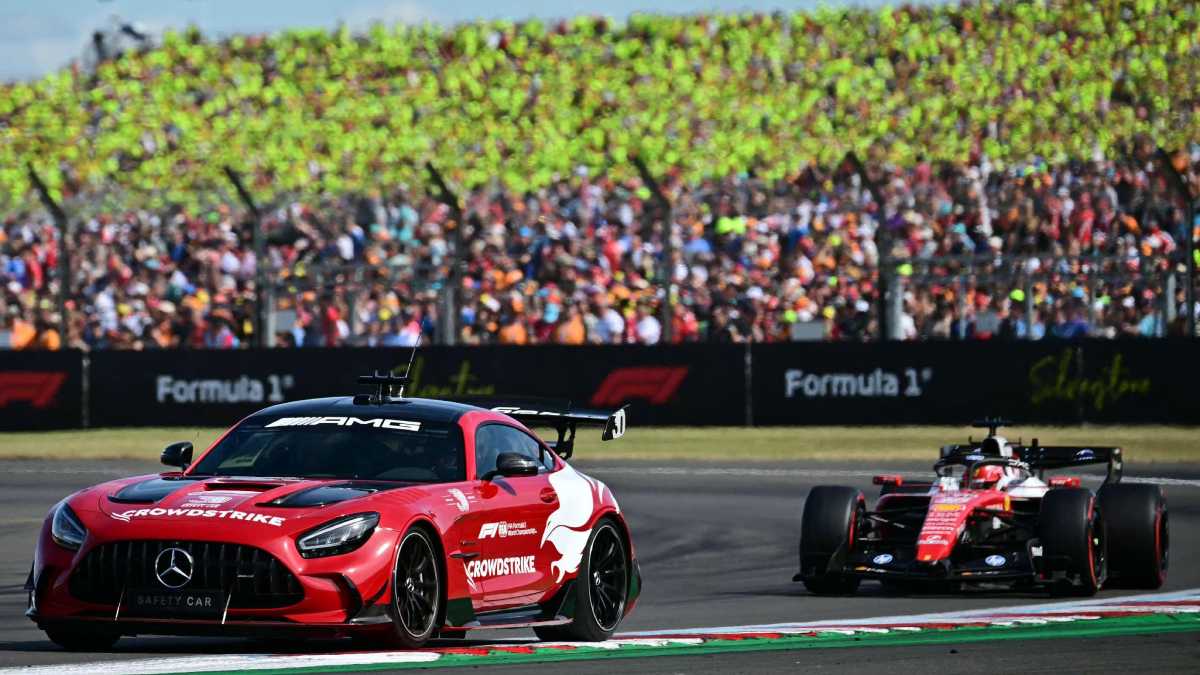
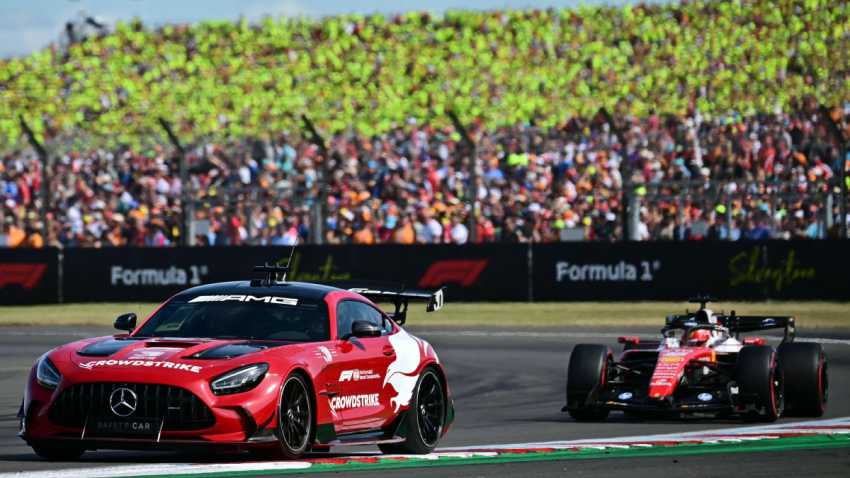
A record crowd of 564,000 turned out at Silverstone over the weekend, and they went home having witnessed two of the biggest talking points of the Formula 1 season so far. The race ended behind the safety car after Max Verstappen's late crash at Stowe, denying fans a final shootout, and before that they watched a weekend of overtaking that even seasoned observers described as far too easy.
Charles Leclerc took the win, but the conversation since has been less about the result and more about the state of the racing itself. So we want to know what you think.
The overtake button
If you have not followed the rule changes closely, here is the short version. This season F1 scrapped DRS, the rear wing flap that had been the main overtaking aid since 2011. In its place came a system built around the new hybrid engines, which split their power roughly evenly between petrol and electric. A chasing driver who gets within a second of the car ahead earns access to Overtake Mode, an extra surge of electrical energy delivered at the push of a button.
In theory, it rewards a driver for hunting down a rival. In practice, at Silverstone it produced pass after pass in which the attacking car simply drove by on the straight, with the defending driver powerless to respond. In the sprint race, Kimi Antonelli breezed past Lewis Hamilton on the run to Stowe to take the win, with Hamilton admitting afterwards that he had been beaten halfway down the straight. Pundits noted that drivers who pulled off genuinely brave moves in the corners were often re-passed moments later by a rival who just pressed the button.
The drivers are not impressed
Fernando Alonso has been the most withering critic. The two-time world champion argues that what we are watching is not overtaking at all, saying passes now come down to which car has more battery. When a rival runs low on energy and slows, he says, the move becomes little more than an avoiding action, and earlier this season he asked what fun there is in overtaking by accident.
Max Verstappen has gone further still. He has described the pattern of boosting past a car only to run out of energy and be re-passed on the next straight, has compared the racing to Mario Kart, and insists his criticism is about the product rather than his own difficult season, saying he would make the same argument if he were winning.
Not everyone agrees. Hamilton called his wheel-to-wheel fight with Leclerc in China some of the best racing he has experienced, and the raw numbers back the entertainment case, with the season opener in Australia producing 75 more overtakes than the previous year's race. The question is whether more overtakes actually means better racing.
Then came the safety car
The finish at Silverstone poured fuel on the debate. When Verstappen went off at Stowe with four laps remaining, the safety car came out and timing screens briefly told teams it would pull in for a grandstand finish. It did not. The FIA later blamed a software error for the incorrect message and confirmed the rules had been applied properly, with the regulations requiring a full lap to be completed after lapped cars are released, which left no racing laps remaining.
Nobody disputes that the rulebook was followed, and after the chaos of Abu Dhabi in 2021 there is a strong argument that following it to the letter matters more than manufacturing a spectacle. Toto Wolff said as much, arguing that sport must come before entertainment, and George Russell backed the decision too.
But other championships handle this differently. In the British Touring Car Championship, laps spent behind the safety car do not simply eat into the race. They are added back on, up to a maximum of three laps, so a late incident does not automatically kill the finish. F1 has never gone down that route, partly because cars are fuelled for a set race distance, but plenty of fans left Silverstone wondering why the biggest motorsport series in the world settled for an anticlimax that a national touring car championship has already engineered out.
Over to you
So, Regit motorists, we want your verdict. Has the boost button made overtaking in F1 too artificial, or is more action always a good thing? And was ending the British Grand Prix behind the safety car the right call, or should F1 follow the BTCC and extend races so they finish at racing speed?
Let us know in the comments.