TL;DR: Modern cars have become significantly more complex, leading to higher repair costs and driver distraction from 'car tech overload'. While new data shows 40.1% of drivers find tech excessive, overall vehicle reliability remains stable, shifting the problem from mechanical failure to expensive electronic and software issues.
As of late 2026, the automotive industry has reached a critical turning point. A visit to any UK car showroom reveals vehicles that are more akin to high-performance computers on wheels than the cars of a decade ago. This technological leap has sparked a growing debate among drivers, experts, and mechanics, leading to one crucial question: have modern cars become too complicated for their own good?
The surge of car tech overload
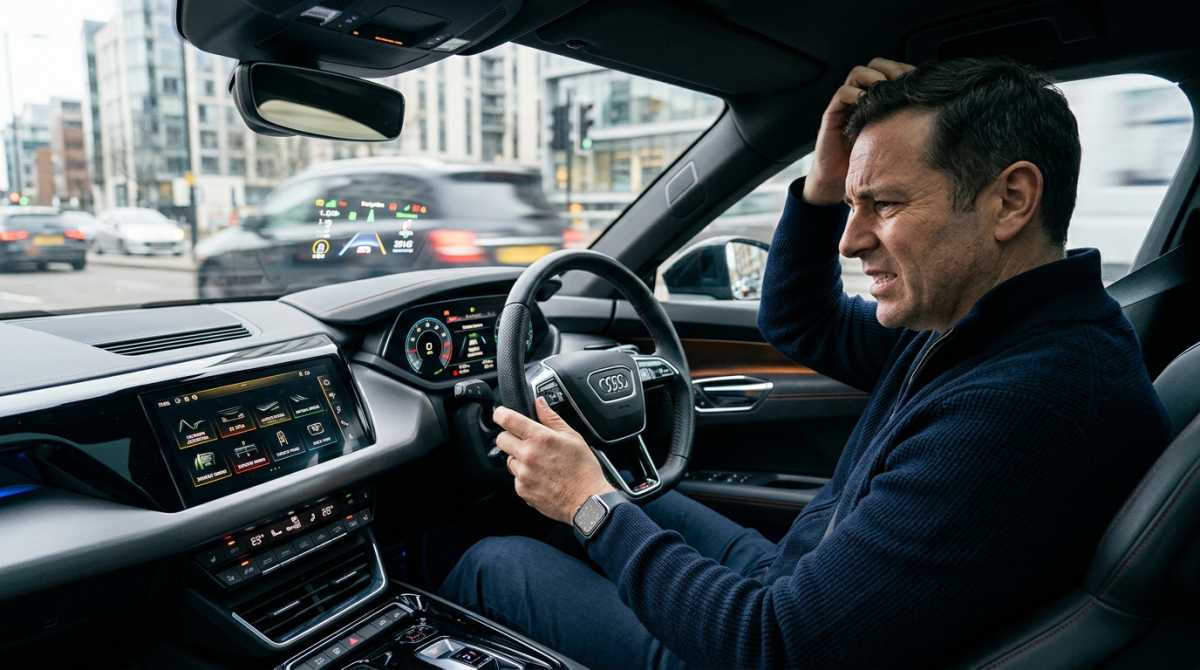
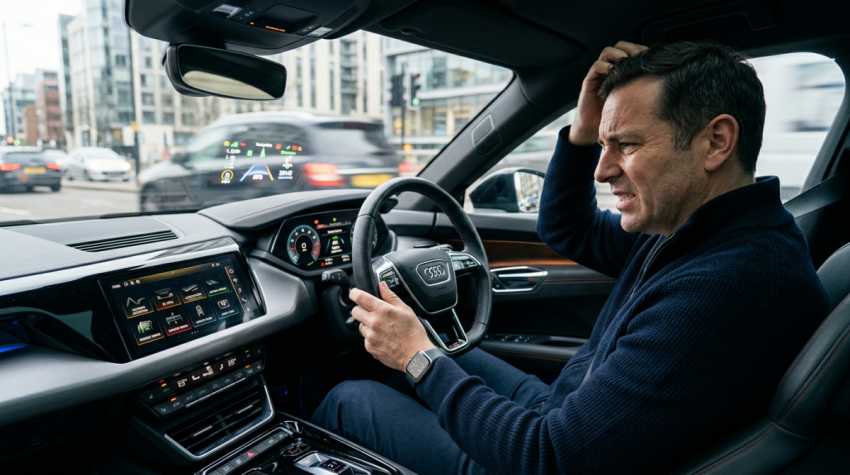
There was a time when luxury in a car was defined by tangible comforts like leather seats or a sunroof. Today, the measure of a premium vehicle is often its technology, such as a 15-inch curved OLED display, gesture controls, and ambient lighting with millions of colour options. However, a significant portion of drivers feel this innovation has crossed a line.
Recent survey data from Carwow reveals a startling statistic: a staggering 40.1% of drivers believe modern in-car technology is now excessive and, more worryingly, a source of distraction. This points to a clear disconnect between what manufacturers are providing and what many drivers actually want.
This phenomenon of 'car tech overload' is changing the very nature of the driving experience. Ergonomics, once a top priority, seems to have taken a backseat to minimalist aesthetics. For instance, physical buttons for climate control or volume, which could be operated by touch without taking your eyes off the road, have been absorbed into complex sub-menus on a central touchscreen. This design choice, while looking clean and futuristic in promotional materials, introduces a genuine touchscreen safety concern. When adjusting the cabin temperature requires navigating a digital interface, the driver's primary task of safely operating the vehicle is compromised.
Vehicle reliability 2026: A new kind of failure
A popular narrative, particularly on social media platforms like YouTube and TikTok, suggests that 'new cars are built to fail.' This argument often cites the sheer volume of sensors, wiring harnesses, and complex software as evidence that modern vehicles are inherently less reliable.
However, the data provides a more nuanced picture. The latest vehicle reliability data from consumer champion Which? shows a surprisingly consistent average failure rate of 7% across cars of all ages, from brand new to several years old. This suggests that despite the explosion in modern car complexity, manufacturers have managed to engineer individual components to a high standard of durability.
So, what does this mean for drivers? Cars are not necessarily breaking down more often, but the nature of the failures has completely changed. Twenty years ago, a breakdown was typically a mechanical issue, e.g., a snapped fan belt, a failed fuel pump, or a worn-out clutch. These were often problems that could be diagnosed audibly or visually.
In 2026, a fault is far more likely to be electronic. A driver might be faced with a dashboard lit up with warning lights, not because of a catastrophic engine failure, but because a single ultrasonic parking sensor has been damaged by road salt or a routine over-the-air software update has encountered a glitch. The car might still be drivable, but the persistent warnings and loss of features create significant anxiety and an urgent need for diagnostics.
The diagnostic dilemma for modern cars
Speak to any independent mechanic today, and they will tell you that the era of easy DIY repairs is definitively over. The skillset required to fix a modern car has shifted from mechanical intuition to digital expertise. In the past, a seasoned mechanic could diagnose a misfire by listening to the engine's rhythm.
Today, the car operates as a closed ecosystem of interconnected Electronic Control Units (ECUs), with some high-end vehicles containing over 100 of them. As experts at Bruce Cox Imports note, these vehicles are significantly harder to diagnose because they require proprietary manufacturer software. A generic Diagnostic Trouble Code (DTC) from a standard OBD-II reader might point to a faulty oxygen sensor, but the root cause could be a software conflict in a completely different module.
For the home enthusiast who once enjoyed working on their car on a Sunday morning, the barrier to entry has become immense. It's no longer about having the right set of spanners; it's about owning a four-figure diagnostic tool and paying for a subscription to access the manufacturer's technical servers. This effectively locks out many owners and even some independent garages from performing anything beyond the most basic maintenance, pushing drivers back to more expensive main dealers.
Used car technology and long-term ownership fears
The landscape of the second-hand car market has been reshaped by this technological shift. In previous years, buying a high-mileage, well-maintained premium car from a brand like BMW or Mercedes was seen as a smart purchase. Now, it's viewed with increasing caution.
As noted by specialists at Chrome Motors, the used car market is becoming wary of older models equipped with 'first-generation' technology. The concern is that this tech, particularly complex infotainment systems and early driver-assist features, may no longer be supported by the manufacturer. A software bug in a 10-year-old car might never be fixed, and sourcing replacement electronic modules can be difficult and expensive.
This 'centralisation of failure' is a major issue. If the infotainment screen on a 10-year-old car from 2016 failed, the driver might lose access to the radio and satellite navigation. If the central screen fails in a 2026 model, the consequences are far more severe. The driver could lose control of the heating and air conditioning, access to parking cameras, and the ability to change the car's driving modes. This makes owning a modern car outside of its warranty period a daunting financial prospect for many UK households.
The shocking rise in car repair costs
The abstract nature of software and sensors becomes very real when it comes to repair bills. The integration of technology into every part of the car has caused car repair costs to soar. What were once simple, affordable fixes have become complex and costly procedures.
A clear example is headlight replacement. For a car from 2006, replacing a blown halogen bulb was a simple task costing around £45 for the part and labour. Today, a damaged Matrix LED headlight unit, which contains its own computer, cooling fans, and dozens of individual LEDs, can cost over £1,200 to replace.
Even minor bodywork damage can lead to huge bills. Clipping a wing mirror on a 2006 car might have resulted in an £80 bill for a new heated glass and casing. On a 2026 model, that same wing mirror houses a camera for the 360-degree view, a blind-spot monitoring sensor, and auto-dimming glass. Replacing the entire unit can easily cost upwards of £600.
The most common type of incident, a minor bumper knock, has seen the most dramatic cost increase. A simple plastic bumper repair and respray used to cost around £250. Now, that same bumper contains radar sensors for adaptive cruise control and parking sensors. After the physical repair, the entire system must be professionally recalibrated, a process that can push the total bill to over £1,000.
The EV complexity paradox
Electric Vehicles (EVs) are frequently promoted as being simpler than their petrol or diesel counterparts due to having fewer moving parts. Mechanically, this is true. There is no multi-speed gearbox, no complex exhaust system, and no ignition system with spark plugs.
However, EVs introduce their own unique layer of complexity, particularly in their thermal management systems. As often discussed in owner forums on Reddit, like the popular r/electricvehicles community, new EV owners are now on a steep learning curve about indirect liquid cooling systems. These are intricate networks of pipes, pumps, and specialised coolants designed to maintain the massive battery pack within its optimal temperature range for both performance and longevity.
So while the 'engine' part of the car is simpler, the overall 'system' that supports it is anything but. The complexity hasn't been eliminated; it has simply been relocated from the engine bay to the battery and charging systems. This is a crucial point for potential buyers to understand.
Safety vs. complexity: The great trade-off
It's impossible to discuss modern car complexity without acknowledging the monumental strides made in vehicle safety. Modern cars are, without question, the safest they have ever been. Systems like Autonomous Emergency Braking (AEB), which can prevent or mitigate frontal collisions, Lane Keep Assist, and Blind Spot Monitoring save countless lives and prevent serious injuries on UK roads every year.
As safety experts at Ultimate Image Auto point out, newer vehicles, especially popular Crossover Utility Vehicles (CUVs) and SUVs, are packed with this modern safety tech. The complexity is a trade-off that many drivers are willing to make for the safety of their families. The problem, however, arises when these systems become over-sensitive or intrusive.
Many drivers report experiencing 'alarm fatigue,' where the constant beeping and chiming from lane departure warnings or proximity alerts becomes an annoyance. When safety systems cry wolf too often, there's a risk that drivers begin to ignore them, defeating their purpose.
What should drivers do? Your options just got better
If you're a driver who feels overwhelmed by the current wave of in-car technology, the good news is that you are not alone, and some manufacturers are starting to listen. We are now seeing the beginnings of a 'back to basics' movement from brands that have realised physical controls can be a powerful selling point.
1. Seek out 'human-centric' interiors:
When test-driving new cars, pay attention to the ergonomics. Brands like Mazda and certain Honda models are actively promoting their use of physical dials and buttons for essential functions like climate and volume control. They are designing cars for the driver, not just for the showroom.
2. Consider leasing for peace of mind:
If you desire the latest safety tech and connectivity but are worried about the long-term car repair costs, leasing is an excellent strategy. This allows you to enjoy all the benefits of a new car during its most reliable years, while the leasing company assumes the financial risk of any major out-of-warranty failures.
3. An extended warranty is now essential:
If you are buying a used car that is three to five years old, a comprehensive aftermarket warranty should be considered a necessity, not an optional extra. It provides a crucial financial safety net against the failure of a major electronic component, which could otherwise cost thousands to fix.
A new era of driving demands a new approach
So, have modern cars become too complicated? The evidence suggests a qualified 'yes.' They are undeniably more complex to diagnose and repair, their interfaces can be more distracting, and they are significantly more expensive to maintain over the long term. And yet, they are also more efficient, far safer, and more technologically capable than anything that has come before.
At Regit, our view is that the future lies in finding the right balance. The best cars emerging in 2026 and beyond won't necessarily be the ones with the biggest screens or the most features. They will be the ones that use technology as a tool to enhance the driving experience, not to replace the driver's focus and control.
As you begin your search for your next vehicle, it's more important than ever to ask a simple question: Does this piece of technology genuinely make my life as a driver easier and safer, or is it just another complicated and expensive thing that could go wrong?