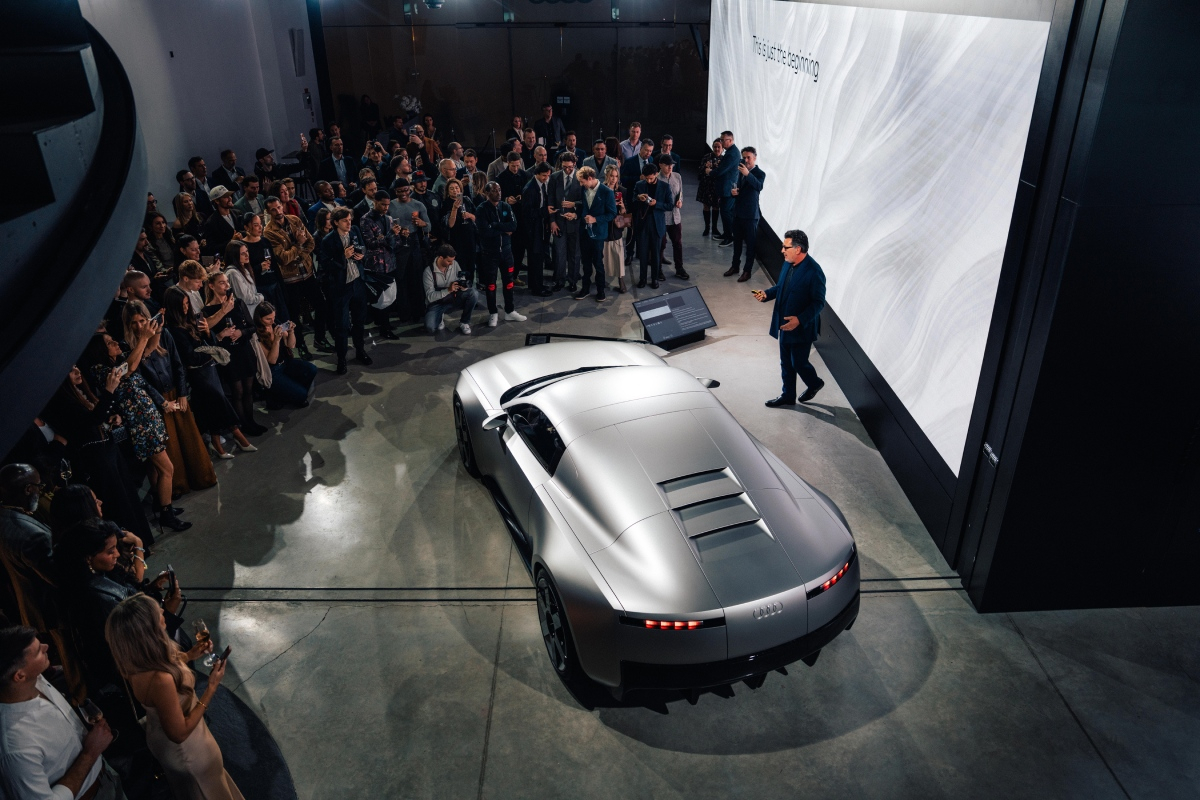
Did you notice Audi gave up on two-door cars? The TT wasn’t replaced, the R8 is gone, and the A5 name now sits on the new A4. Even the Germans admit the logic is murky.
Into this sporty void comes Audi’s new design team with the Concept C, a striking coupe-cabrio. Ignore the name, they didn’t have time to pick one. And despite our protests, it won’t be called TT. According to Audi CEO Gernot Döllner, it’s too big and expensive for the badge. Boo, hiss.
Audi insists the Concept C is 95 percent production-ready, launching in 2027 on the platform once earmarked for an electric Porsche Boxster. It’s also a preview of how future Audis will look: clean, restrained bodies with tactile switchgear, leaving behind gaping grilles, fake exhausts, and “death by touchscreen” interiors. The goal is to restore Audi’s reputation for elegant cabins with crisp, satisfying buttons.
Don’t get too excited yet. Audi has teased us before. Ten years ago, it showed four TT concept cars: a track-focused lightweight, a four-door saloon, a shooting brake, and a crossover. Plus a 700bhp Quattro revival. None made it to showrooms. Audi has rolled our dreams into SUVs before. But the Concept C could succeed where even Porsche has struggled.
Porsche announced in 2023 that the Boxster and Cayman replacements would be electric. To preserve mid-engine balance, batteries would sit behind the seats rather than underneath. But there were problems. Porsche invested in Swedish battery startup Northvolt, which went bankrupt, burning $5.8 billion. EU cybersecurity rules mean no replacements until at least 2027. Even when batteries arrive, Taycan depreciation, shrinking margins, and uncertain government support make Porsche cautious. Engineers reportedly aren’t happy with handling and range either.
This could be Audi’s chance. Unlike Porsche, Audi needs a sporty flagship. Something to park in the F1 paddock next year. Unlike Porsche, no one expects an Audi to offer a sparkling drive. Audi focuses on design and solid, techy German build. Quattro AWD is standard. Thirty years ago, the MkI TT was almost badged as a sub-Boxster Porsche, irony indeed.
The Concept C has the TT’s balanced simplicity, the 3D ‘Avus’ wheels appeal to Audi enthusiasts, and the tapering lines echo the original R8. The slatted rear deck nods to R8 LMS racers and Will Smith’s RSQ from I, Robot. A new R8 is possible on Lamborghini’s hybrid V8 platform, but Döllner urges patience.
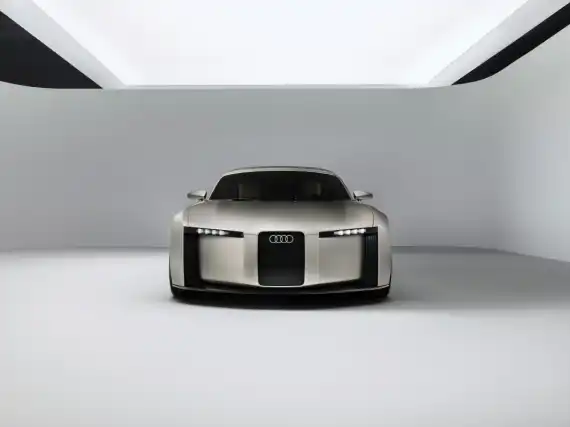
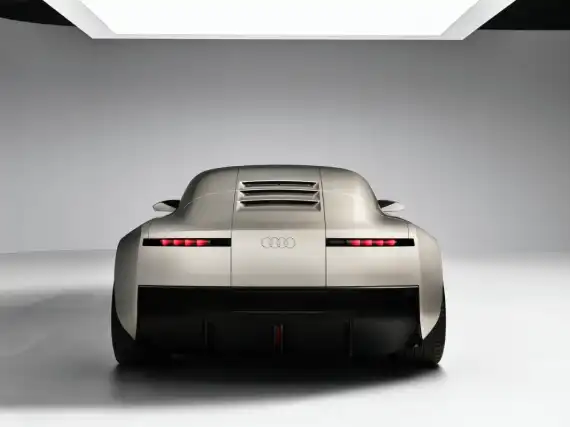
Audi isn’t revealing range, performance, weight, or price yet, but the styling teasers are exciting. The vertical grille draws from the 1936 Auto Union Type C and the 2006 A6 Singleframe mesh, hiding radar sensors. Quad-element headlights hint at Bugatti Chiron, though Audi says it’s just about four rings, 4WD, and symmetry. The rear is minimalist. No fake exhausts or mesh. Quad red LEDs mirror the front, and the missing back window saves weight. Only one rearview camera remains, so hopefully virtual mirrors are gone for good.
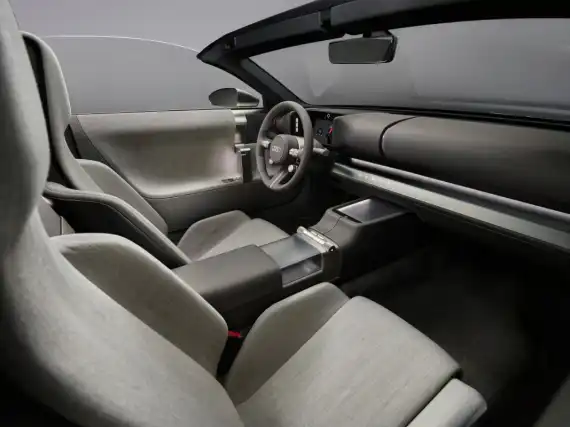
Inside, the Concept C rejects oversized touchscreens. Audi returns to tactile controls: knurled metal switches, a simple circular steering wheel with the Audi logo, and a small central screen that folds out only when needed. Driving mode, roof, and storage are all adjusted via physical barrels. Ambient lighting is subtle. It’s relaxing yet purposeful, a proper sports car cockpit.
The Concept C may not get the TT badge, but it represents a TT moment for the 21st century. Drivers sit low and focused, with Boost and Race buttons promising R8-inspired punch. Paddles may come later. A virtual gearbox is in development. Audi hopes to ditch touch-sensitive climate panels, called “shy tech,” and the woollen door inserts may not reach production. Still, a car without grilles or speaker covers is audacious.
The Concept C delivers the right design, pitch, and promise. Audi now has a Chinese sub-brand producing bland EVs, so European sports cars can thrive without market risk. If Ur-Audi follows through, the Concept C could be the TT moment the brand needs, clean, purposeful, and unmistakably Audi.