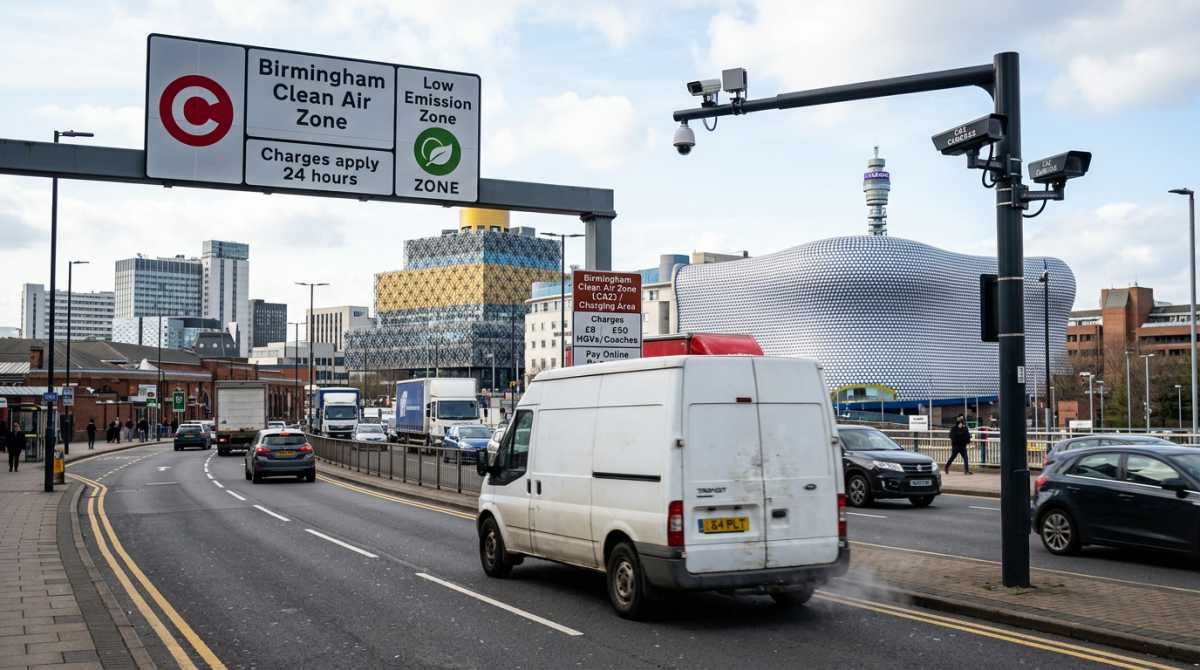
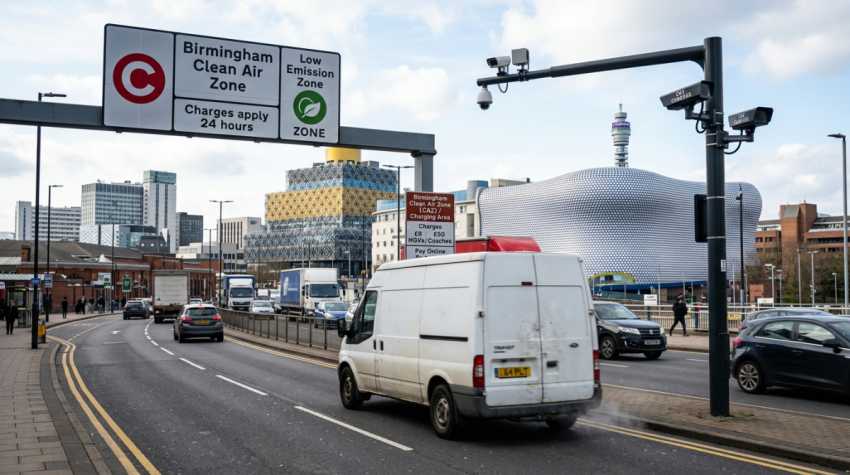
TL;DR: Birmingham City Council, which recently declared effective bankruptcy, has paid itself £472,000 in Clean Air Zone fines for its own non-compliant vehicles. While residents face a 500% surge in bailiff enforcement for CAZ debts, 12% of the council's own vehicle fleet still fails to meet emission standards.
Key Facts
- £472,000 has been paid by Birmingham City Council for its own Clean Air Zone (CAZ) fines and charges since June 2021.
- 500% increase in bailiff use for CAZ enforcement has been reported since the council's Section 114 'bankruptcy' notice in September 2023.
- 142 council-owned vehicles, or 12% of the fleet, remain non-compliant with the city's Euro 6 diesel or Euro 4 petrol standards.
- £120 is the penalty charge notice (PCN) issued to drivers who fail to pay the £8 daily CAZ charge within six days.
- £79 million in revenue has been generated by the Birmingham CAZ since it launched, which is legally ringfenced for transport projects.
Bankrupt Birmingham council fines itself £472k for CAZ
In a shocking revelation, recent data shows Birmingham City Council has accumulated nearly half a million pounds in its own Clean Air Zone fines and charges since the scheme began. The authority, which is facing a severe financial crisis, has been paying itself for driving its own non-compliant vehicles through the city centre.
Since the CAZ launched in June 2021, the council's fleet has incurred 3,262 daily charges and penalties, totalling a staggering £472,000. This comes as the city grapples with a financial meltdown, having issued a Section 114 notice in September 2023, effectively declaring bankruptcy.
Bailiff enforcement surges by 500 percent
What this means for drivers is a sharp and aggressive increase in enforcement. The timing is particularly frustrating for local residents and businesses. Since the Section 114 notice was issued, the use of bailiffs for CAZ enforcement in Birmingham has surged by a massive 500 per cent.
While the council is tightening its belt elsewhere, it appears to be tightening the noose on drivers who fall foul of the rules. This has led to accusations of a major double standard, where the rule-maker fails to follow its own regulations while pursuing residents for payment.
Council's own dirty fleet is a key cause
So, where did these council fines originate? The data shows that the majority of the Birmingham City Council Clean Air Zone fines were linked to its own waste department.
It’s a bitter pill to swallow for residents who endured a year of bin strikes that saw rubbish piling up on street corners. The very trucks meant to be clearing the waste were simultaneously racking up penalties for being too polluting.
Even now, the problem isn't fully resolved. Around 12 per cent of the council’s vehicle fleet still fails to meet the required Euro 6 diesel or Euro 4 petrol emission standards. As of 2026, there are still 142 Birmingham CAZ non-compliant vehicles on the council's books.
What are the Birmingham Clean Air Zone Charges?
For the average driver, the Clean Air Zone daily charges in the UK can be a significant financial burden. In Birmingham, driving a non-compliant car, van, or taxi inside the A4540 Middleway Ring Road costs £8 per day.
Forgetting to pay that charge within the six-day window results in a £120 Penalty Charge Notice (PCN) landing on your doormat. Reports have emerged of volunteers for food banks being forced to abandon their routes because they cannot afford the daily cost of driving into the zone to help vulnerable people.
This is made worse by revelations the council spent £2 million on hiring non-compliant vehicles, while simultaneously chasing charities and individuals for every penny.
Council promises an electric makeover
The council has stated it is in the middle of a huge vehicle replacement programme to address the issue. Officials claim the waste management and street cleansing fleet is finally getting an electric makeover to ensure compliance.
However, for many drivers facing fines and enforcement action, the damage to trust has already been done. The CAZ has generated approximately £79 million in revenue so far. While this money is legally required to be reinvested into local transport projects, the aggressive enforcement is seen by many as a desperate cash grab to patch up the council's dire finances.
The critical question for Birmingham's drivers remains: if the council can’t get its own house in order, why should they be the ones to pay the price?
You can check your vehicle's compliance with the low-emission zone using Regit's free ULEZ checker tool.