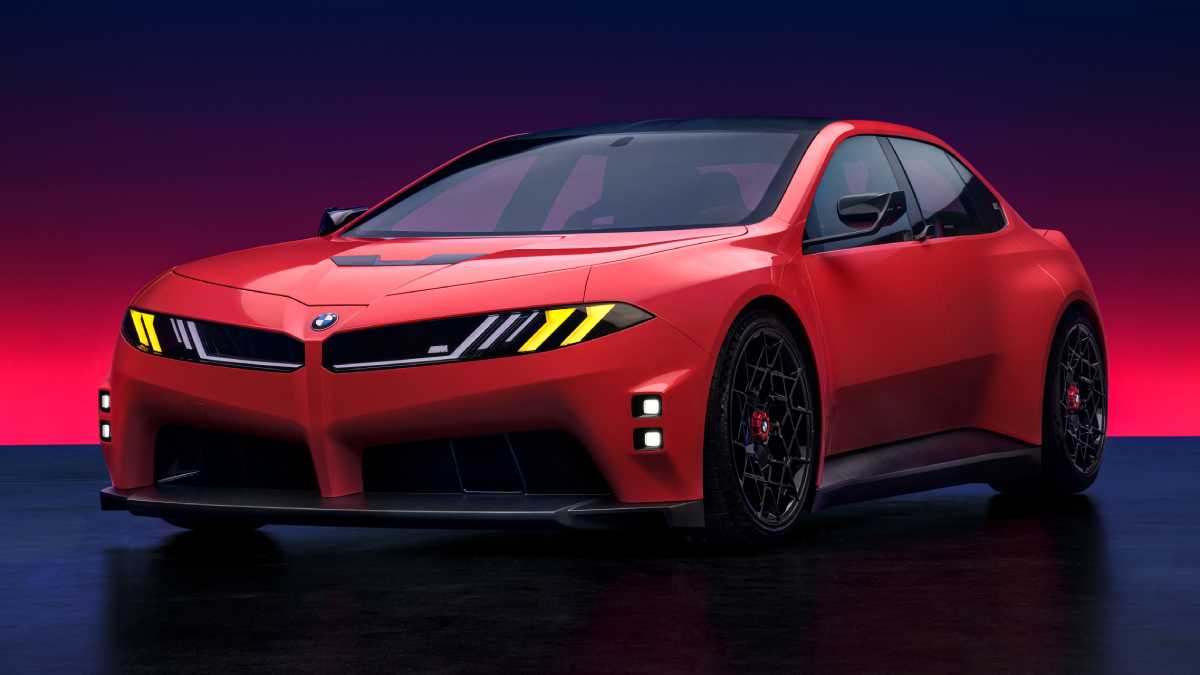
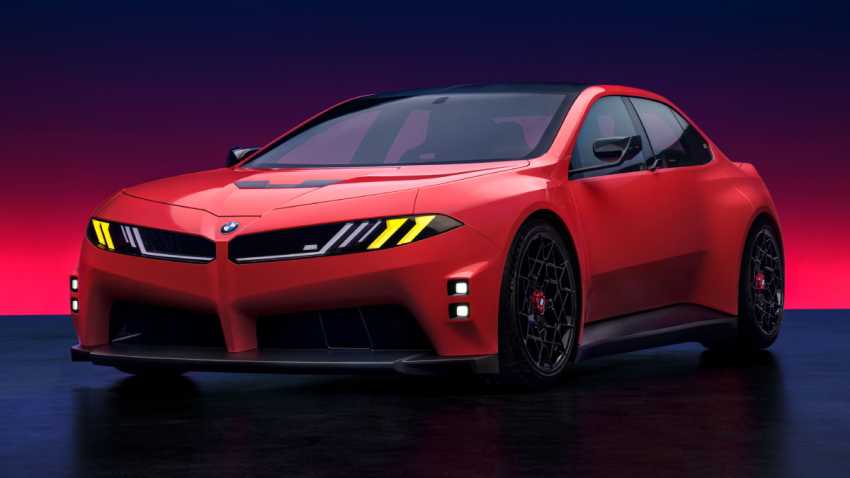
BMW has taken an unusual step in the performance car world by confirming two versions of its next M3: a fully electric model previewed by the new M Concept Neue Klasse, and a separate petrol-powered successor still in development. For UK drivers, this signals that the transition to electric performance will not be a straight replacement, but a parallel path where both technologies continue for now.
The decision reflects a broader uncertainty across the industry. Rather than committing fully to electric performance or extending combustion engines alone, BMW is effectively testing both directions at once. For buyers, this means the M3 badge will no longer represent a single type of car, but two very different engineering approaches.
What the electric M3 concept tells us
The electric concept points to a significant shift in how BMW M cars will perform. Output is expected to be around 1,000bhp from a quad-motor system, supported by a 100kWh battery designed for sustained high-performance driving.
Instead of relying on traditional engine response and gear changes, the driving experience will be shaped by software. BMW’s “Heart of Joy” system manages torque delivery, handling balance and stability in real time. The brand is also developing simulated gearshift behaviour to recreate some of the engagement associated with combustion engines, although how convincing this feels in practice remains to be seen.
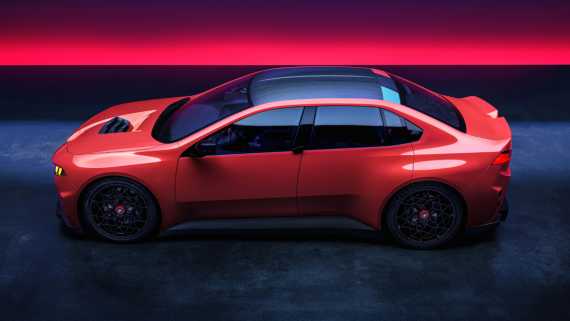
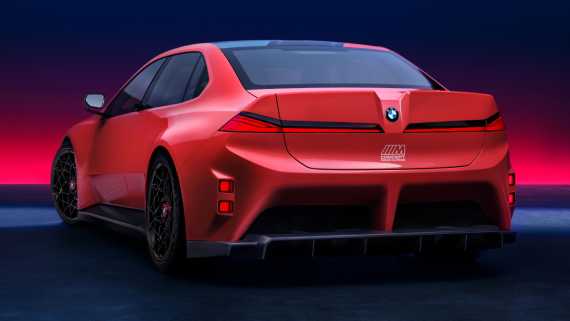
Design-wise, the concept is more extreme than anything likely to reach UK roads unchanged. Large aerodynamic features are primarily functional at concept stage and would be toned down for production. However, the overall design direction is clear, with quad-light signatures referencing earlier M cars and a more sculpted, efficiency-led body shape.
Inside, packaging changes are unavoidable. With the battery mounted in the floor, the seating position is higher than in today’s M3, which will subtly change the traditional low-slung driving feel associated with BMW M cars.
What it means for UK drivers and buyers
For UK motorists, the key differences between the two future M3s will come down to cost, usage and regulation rather than outright performance.
An electric M3 is likely to sit well above the £100,000 mark, but would benefit from significantly lower company car tax under current Benefit-in-Kind rules. That makes it especially attractive for business drivers, particularly those using salary sacrifice schemes or company car fleets.
However, ownership practicality will depend heavily on charging access. Home charging will remain the most cost-effective option, while public rapid charging continues to vary in price and availability. Long-distance travel is still more straightforward in a petrol car, particularly for drivers covering large motorway mileage.
Insurance and depreciation are also key unknowns. High-performance EVs remain a relatively new segment in the UK market, meaning long-term values are less predictable than established petrol performance cars, which continue to benefit from strong enthusiast demand.
A transition, not a replacement
BMW’s approach effectively confirms that the performance car transition is not happening in a single step. By developing both electric and petrol M3 models, the brand is allowing customers to choose between two very different interpretations of performance.
For UK drivers, this means the M3 will remain available in familiar petrol form for longer than many expected, while an electric alternative introduces a completely new driving experience shaped by software and electrification.
It also reflects a wider reality in the UK market. Regulation is tightening, particularly in urban areas, but infrastructure and consumer behaviour are not evolving at the same pace. As a result, manufacturers are being forced to operate in both worlds simultaneously.
The result is a more complex but more flexible future for performance cars, where choice remains central even as technology rapidly changes what driving feels like.