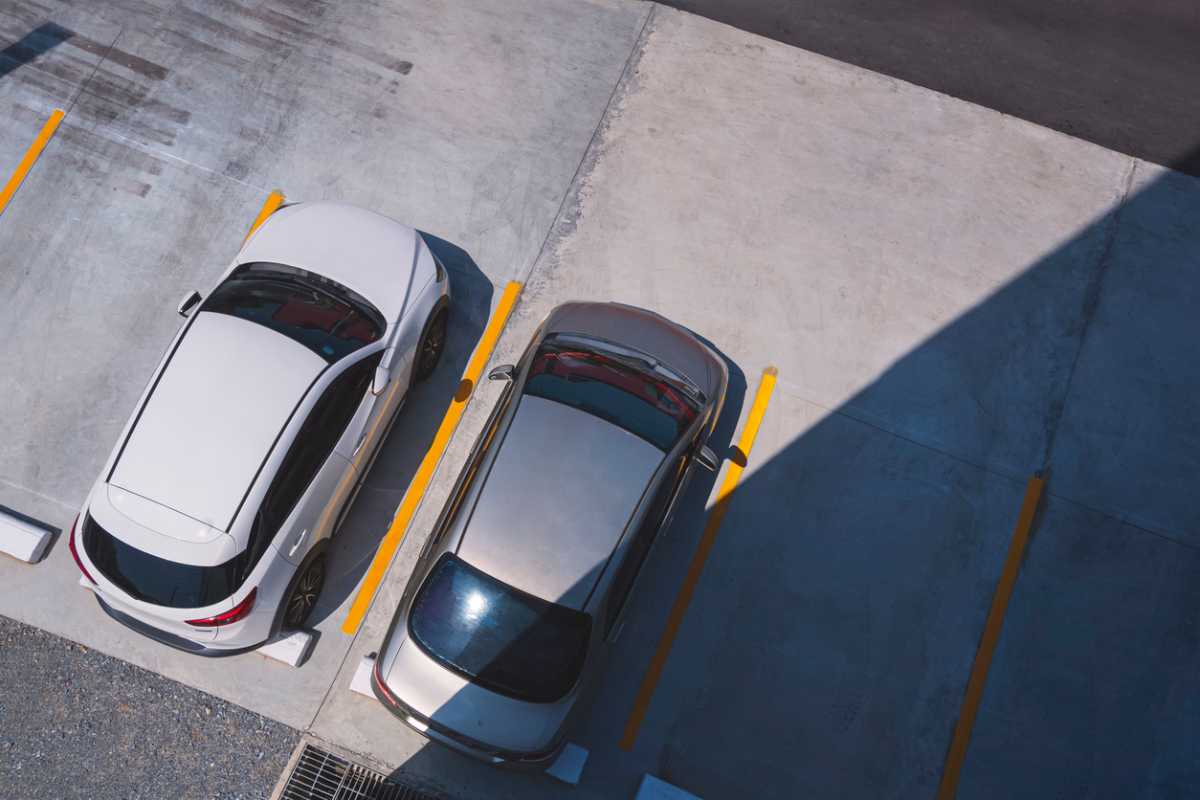
Every year, the average new car gets 1.2cm longer and half a centimetre taller. It doesn't sound like much. But stretch that over 25 years and you get a fleet that has quietly outgrown the roads, parking spaces and cities it was designed for.
That's the picture painted by a new report from Transport & Environment and the Clean Cities Campaign, which tracks the growth of new cars sold across the UK, EU and Norway since 2000. Add in earlier findings that width is growing by 0.5cm a year and bonnet height by the same, and you have a trend the report calls carspreading. The average new car in 2000 was 4.09 metres long and 1.69 metres wide. Left unchecked, by 2040 it will be 4.56 metres long and 1.90 metres wide.
The interesting part of the report isn't the trend itself, which every driver has noticed at some point in a multi-storey. It's what happens if nothing changes.
Two futures
The report models two scenarios out to 2040. In the first, cars carry on growing as they have done. In the second, described as right-sizing, average dimensions gradually return to roughly 2015 levels, helped along by policy.
The gap between the two is bigger than you might expect. Under the current trend, cities lose between 8.5% and 14% of their end-to-end on-street parking spaces by 2040, simply because fewer longer cars fit into the same kerb space. Around 2,600 more pedestrians, cyclists and motorcyclists die over the period, 79 of them children. By 2040, the number of children killed while walking would be 40% higher each year than under the right-sizing scenario.
The safety numbers rest on solid ground. Research has linked a 10cm increase in bonnet height to a 27% rise in the risk of a fatal outcome when a car hits a pedestrian or cyclist. For children, who sit lower in a driver's field of vision and take impacts higher on the body, the same 10cm increase raises fatality risk by 81%.
There's a cost angle too. Bigger cars need more energy to move, whether that's petrol or electrons. The report estimates the current trend would demand an extra 22.5 TWh of electricity a year by 2040, roughly the output of 1,500 onshore wind turbines, and add around €7 billion a year to household charging bills across the UK and EU.
What the report wants
The recommendations are specific. Cap bonnet height on new cars at 85cm and width at 192cm. Print vehicle dimensions on registration certificates so buyers can actually see what they're getting. Have Euro NCAP rate how well a driver can see a child from behind the wheel. And vary car taxes and parking charges by size, so a Fiat 500 doesn't pay the same to park as a Range Rover.
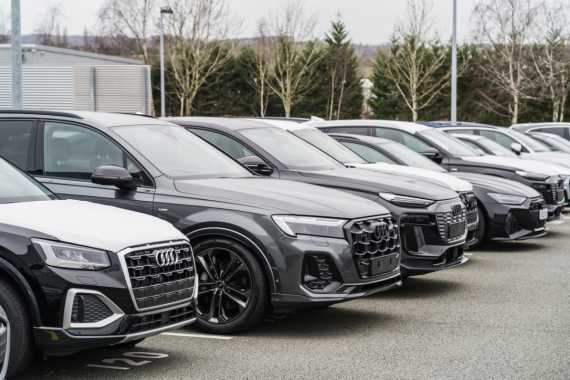
None of this is a ban on big cars. Families who need seven seats would still be able to buy them. It's an attempt to stop the default car, the one bought by people who just want a normal hatchback or crossover, from swelling year after year because that's where manufacturers make their margins.
The awkward bit
Here's where it gets politically tricky. Twenty-five years ago, a tax on oversized cars would have hit a small minority of drivers. Today, SUVs and SUV-shaped crossovers are the mainstream. Penalising big cars now means penalising millions of ordinary motorists who bought what the market offered them, often because smaller alternatives were quietly discontinued.
That's not a reason to do nothing. It's a reason to be honest about who created this situation. Drivers didn't demand ever-taller bonnets. Nobody wrote to Land Rover asking for worse visibility of children. Manufacturers grew their cars because bigger meant more profitable, and regulators let the tape measure creep year after year.
The realistic path is probably to start at the top. Target the genuinely enormous vehicles first, the American-style pick-ups and the largest SUVs, where the safety case is strongest and the number of affected drivers smallest, then tighten gradually. Dimension caps that only apply to new type approvals from the early 2030s, as the report suggests, give manufacturers years to adapt and don't touch anything already on your driveway.
Where do our motorists stand?
This is one where drivers themselves are likely to be split. Plenty of motorists chose a bigger car for perfectly sound reasons, whether that's a growing family, towing, or simply feeling safer sitting higher up. Others are tired of losing wing mirrors in car parks built for a different era, and of school streets dominated by bonnets taller than the children walking past them.
Cars have been regulated on emissions, crash safety and noise for decades. Size has been the one dimension left entirely to the market, and the market has answered clearly. The question the report leaves hanging is whether motorists would accept size joining that list, and on what terms.
So we're putting it to you. Would you back a cap on bonnet height and width for new cars, or size-based parking charges in your town? Or is this another case of drivers being asked to pay for choices the industry made on their behalf? Let us know in the comments.