Citroen 2CV price and release date
The Citroen 2CV is making a comeback, nearly 40 years after the original rolled off the production line. This time, the famous French runabout is going electric, with Citroen aiming to make it one of the most affordable new electric cars on sale.
The production model is expected to arrive in 2028, with a starting price below €15,000. That could translate to less than £13,000 in the UK, although British pricing has yet to be confirmed.
If Citroen hits that target, the new 2CV could give budget-conscious buyers a compelling alternative to more expensive electric hatchbacks. Keeping the price down will be crucial, especially as motorists weigh up the cost of switching to an electric car against the familiarity of petrol-powered alternatives.
The timing also marks a neat piece of automotive history. The new model is due to arrive 80 years after the original 2CV made its debut at the 1948 Paris Motor Show.
Citroen 2CV design pays tribute to the original
The original 2CV earned its affectionate nickname, the 'tin snail', thanks to its rounded shape and famously modest performance. Launched in 1948, it was designed to make motoring affordable and practical for ordinary people, including rural families who needed a simple car for everyday journeys.
Its origins stretch back to 1936, when Citroen and Michelin worked on the TPV, short for Toute Petite Voiture, or very small car. The project was designed around a remarkably practical brief, which included carrying a basket of eggs across rough farmland without breaking them. The Second World War delayed its arrival, but the 2CV eventually became one of France's most enduring automotive success stories.
More than 5.1 million examples were sold worldwide, including van versions, before production ended in 1990. Its influence extended to related models such as the Ami, Dyane and Mehari, helping cement the 2CV's place in motoring history.
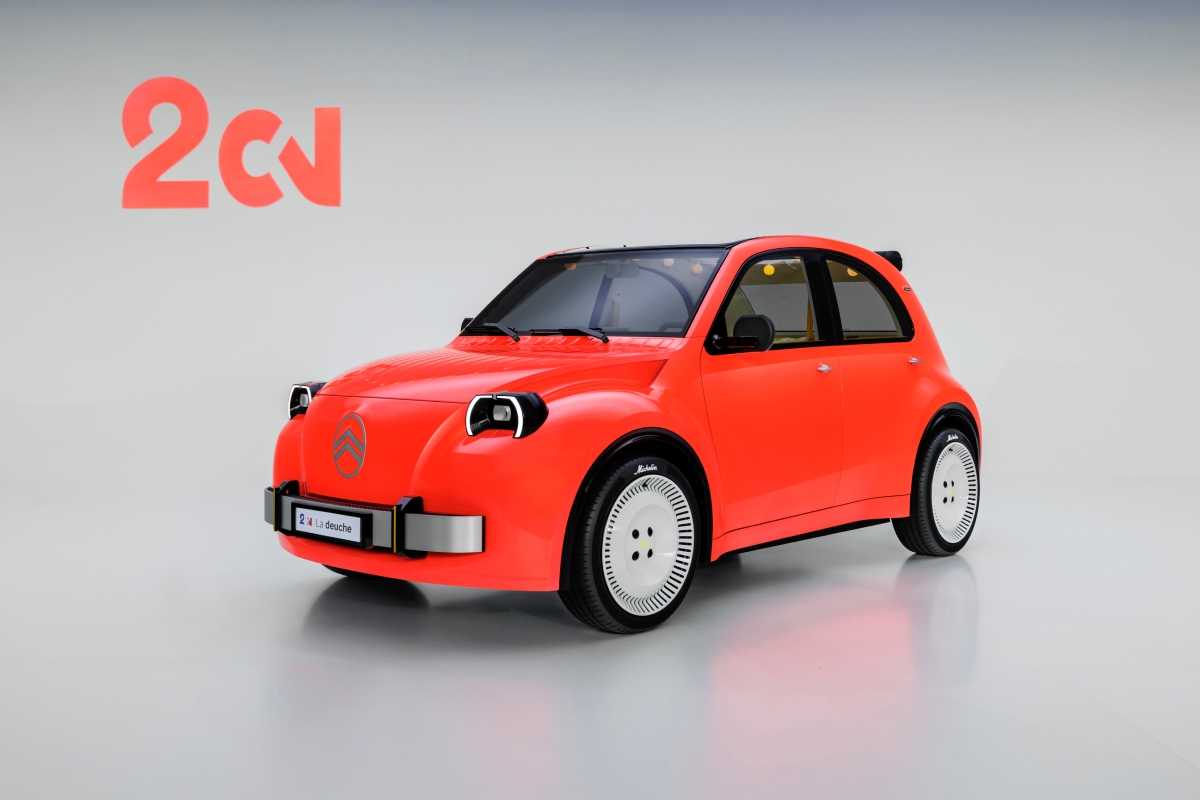
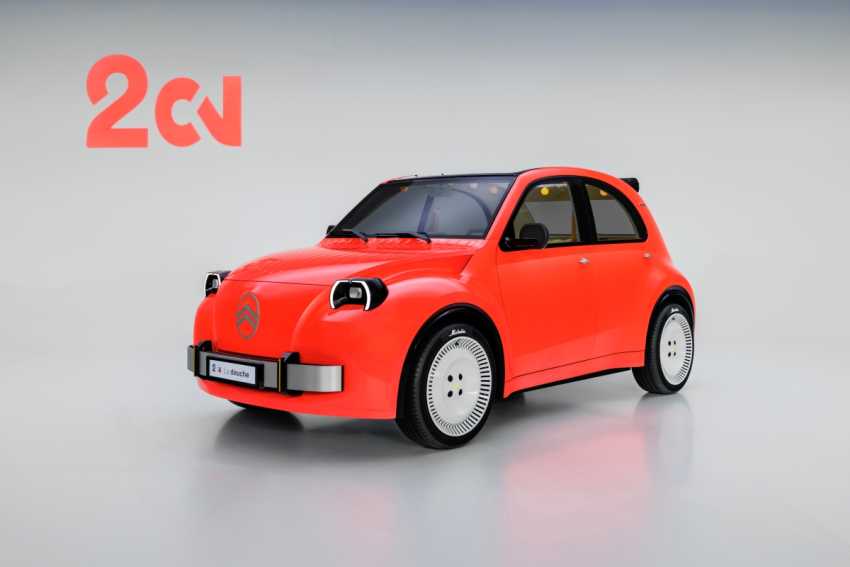
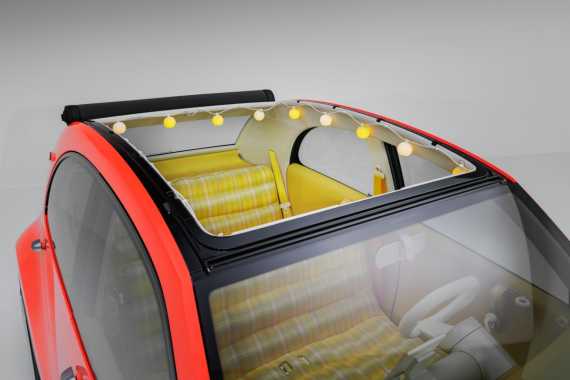
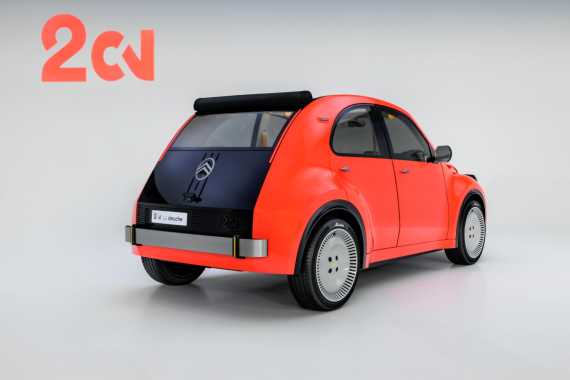
The new concept carries plenty of familiar styling cues. Its rounded bodywork, prominent wheelarches, circular LED headlights and curved roofline all recall the original, while the orange paintwork and contrasting black rear tailgate give it a distinctly modern appearance.
Citroen says the concept measures 3.76 metres long, around 10cm shorter than the original car. That compact footprint should help make parking and urban driving easier, although final production dimensions remain to be confirmed.
Citroen 2CV electric range and performance
Range will be one of the biggest questions facing prospective buyers. The new 2CV is expected to offer around 150 miles on a charge, putting it firmly in budget-EV territory.
That figure remains an expectation, not a confirmed production specification. Citroen boss Xavier Chardon has indicated that the battery range should come close to matching the distance the original car could cover on a full tank, which was around 180 miles.
For drivers who mainly make shorter journeys, a range of roughly 150 miles could be perfectly workable. Commuting, shopping and local trips would be well within its intended remit, while longer motorway journeys would need more careful planning.
Citroen is also targeting a kerb weight below one tonne. A lighter car should require less energy to move, helping efficiency and potentially allowing the manufacturer to fit a smaller, cheaper battery.
The production model is expected to share technology and underpinnings with a related Fiat model, which could help Citroen control development and manufacturing costs. The company has yet to confirm the final battery capacity, charging speeds or motor output, so buyers will need to wait for those details before judging its everyday usability.
Citroen 2CV interior and practicality
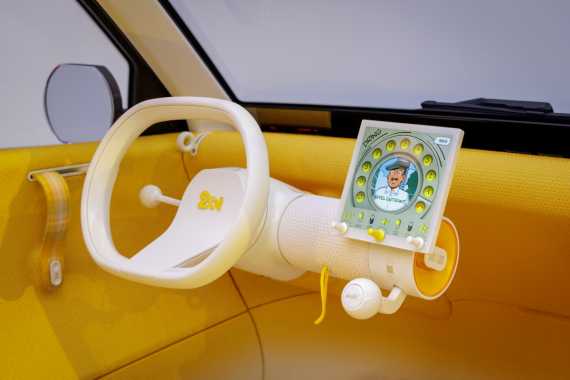
The concept's cabin takes the original's minimalist philosophy and gives it a modern twist. There is no conventional dashboard layout. Instead, a single-spoke steering wheel connects to a cylindrical housing containing an eight-inch infotainment screen, with the drive selector and starter button mounted on a stalk.
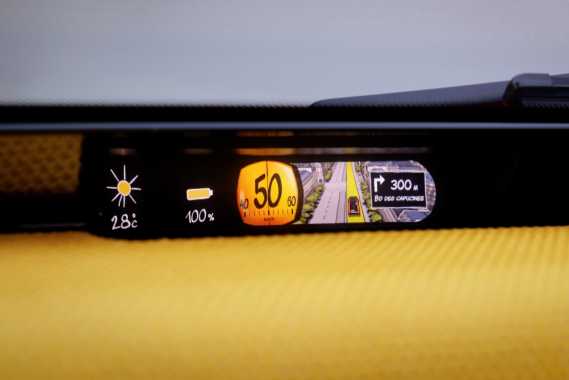
The starter button carries the French words 'en avant!', meaning onwards or forward. Behind the wheel, a small Smart Vision display provides the driver's instruments.
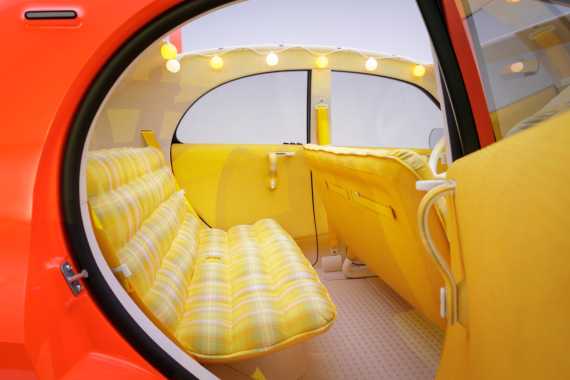
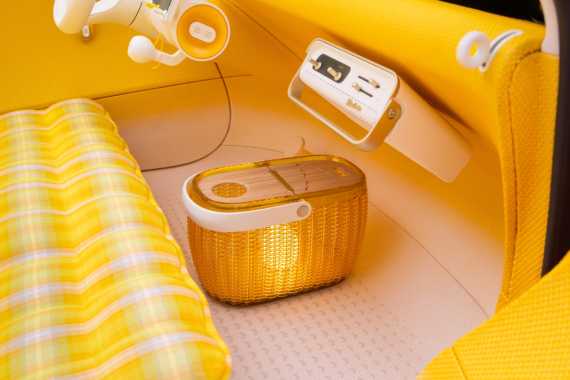
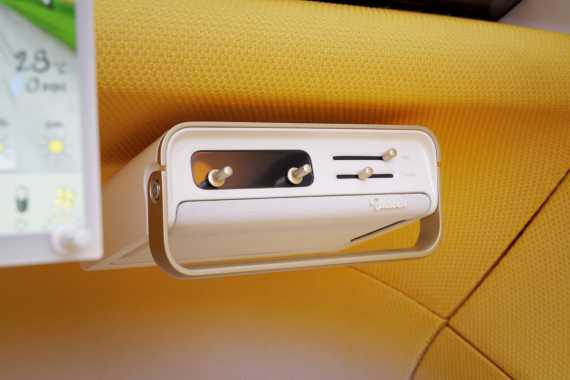
Citroen has also experimented with some unusual storage and control arrangements. A removable basket replaces the traditional centre console, fabric straps stand in for conventional door handles, and a removable radio sits beneath the dashboard instead of integrated door speakers.
Some of these features may change before production, but the underlying idea is clear. Citroen wants the 2CV to feel simple, distinctive and easy to live with, without filling the cabin with unnecessary equipment.
Practical touches extend to the exterior. The concept has removable bumpers and relatively flat body panels, which could make minor repairs more straightforward and affordable. A roll-back fabric roof also pays homage to the original's canvas-topped design, although its final specification is unconfirmed.
One of the more charming details is a tortoise motif on the brake pedal and a rabbit on the accelerator, a playful reference to the car's famously leisurely character.
Why Citroen is bringing back the 2CV
The revival comes as carmakers look to their heritage for inspiration in an increasingly competitive electric-car market. Renault has already found success with retro-inspired electric models, including the Renault 5 E-Tech, and Citroen will hope its own historic name can attract buyers who want something with more personality than an anonymous small hatchback.

The company describes the concept as a contemporary interpretation of the original 2CV, built around affordability, compact dimensions and simplicity. It is also expected to fit within Europe's proposed M1E category for smaller electric cars, although the regulations and any associated incentives remain subject to confirmation.
That matters because the economics of a cheap electric car are challenging. Battery costs, safety requirements and the equipment expected by modern buyers can quickly push prices upwards. Sharing components with another model and keeping the vehicle light could help Citroen get closer to its ambitious target.
There is a risk, however, that the production car loses some of the concept's personality as it moves towards showrooms. The removable radio, unusual controls and decorative lighting may look appealing on a concept, but cost, durability and safety requirements will influence what survives.
Citroen design boss Gilles Vidal has indicated that the concept is close to production, with the finished car expected to retain much of its appearance. That is encouraging, although the final vehicle will have to prove itself on price and practicality as well as nostalgia.
Citroen 2CV verdict
The electric 2CV has the potential to be one of the more interesting affordable EVs of the next few years. Its compact size, distinctive styling and target price below £13,000 give it a clear purpose at a time when many new electric cars remain beyond the reach of budget-conscious buyers.
The main attractions are its expected affordability, clever use of space and a design that stands out from the crowd. The drawbacks are the limited confirmed technical information, an unverified UK price and a projected range that may feel restrictive if you regularly travel long distances.
My view is that Citroen has the right idea. An affordable electric car should be light, straightforward and enjoyable to own, and the 2CV's original philosophy fits that brief rather well. The company now needs to deliver the promised price without compromising the essentials, particularly charging capability, safety and everyday practicality.
If it manages that, the reborn 2CV could be far more than a nostalgic styling exercise. It could become a genuinely useful little electric car for people who want to make the switch without spending a fortune.