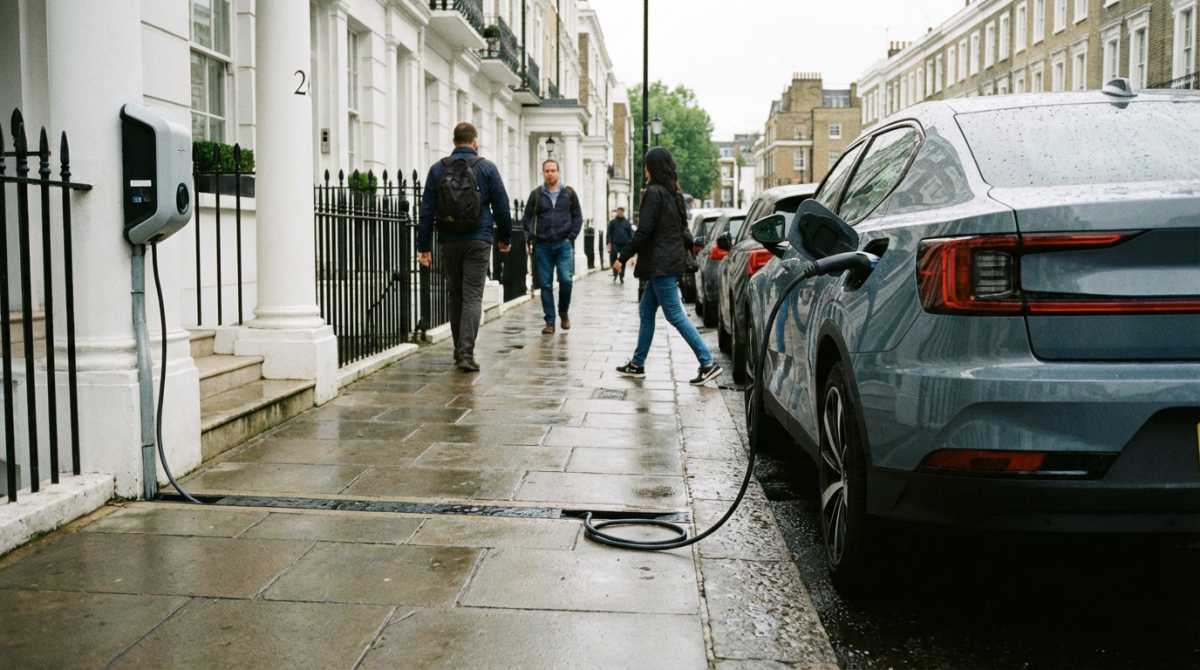
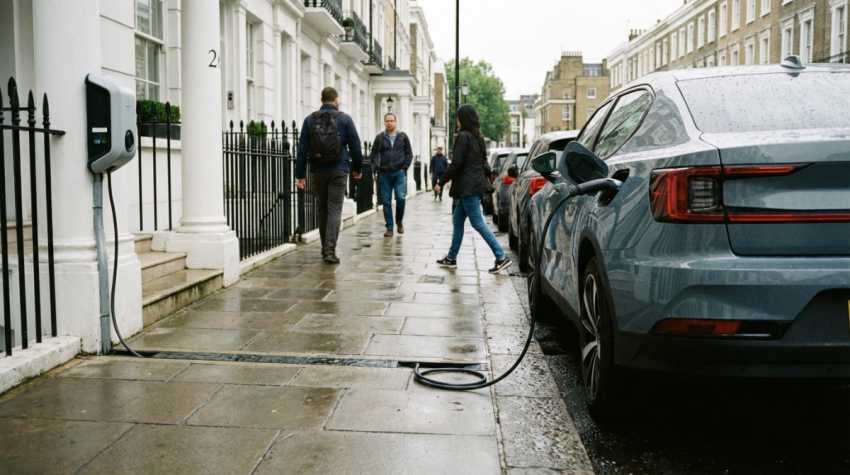
Nearly half of UK councils (42%) plan to allow cross-pavement EV charging by 2026, making it easier for drivers without driveways to charge at home. But costs vary wildly depending on where you live, creating a postcode lottery.
UK drivers get a boost as councils back pavement charging
If you’ve ever looked at EV ownership and thought, “Great… but where do I charge it?”, this could be the turning point.
New research shows that 42% of UK councils are planning to approve cross-pavement charging solutions by 2026. For millions of drivers in terraced homes or flats, this tackles one of the biggest barriers to going electric: no driveway, no charger.
It’s a long-overdue shift that could open the door to EV ownership for a huge number of households.
Key Facts
- 42% of UK councils plan to allow pavement gullies for EV charging by 2026.
- Installation costs range from free to over £1,000 depending on your council.
- Just 7 councils currently have fully live schemes.
- 56 councils aim to launch schemes by the end of 2026.
- Research from Stellantis highlights major confusion around rules and costs.
What is cross-pavement charging?
In simple terms, it’s a safe way to run a charging cable from your home to your car when it’s parked on the street.
Instead of trailing a cable across the pavement (which is unsafe and often not allowed), these systems use specially designed channels or gullies built into the pavement.
There are two main types:
- Surface gullies: shallow tracks with a lid where you place your cable while charging.
- Permanent solutions: cables routed under the pavement to a kerbside charging point or bollard.
Both options keep cables tidy, safe, and compliant with local regulations.
The postcode lottery problem
Here’s the catch: where you live still makes a big difference.
Some councils are fully funding installations, making it easy and affordable for residents. Others are asking drivers to pay upwards of £1,000 just to get set up.
That creates a clear imbalance. Two drivers with identical homes could face completely different costs depending purely on their postcode.
Right now, only seven councils have fully operational schemes, but momentum is building. By the end of this year, 56 councils say they’ll have policies or systems in place.
Still, until there’s national guidance, expect inconsistency.
Why this matters for EV adoption
For drivers without a driveway, this is arguably the biggest EV breakthrough of the year.
It makes electric car ownership in the UK far more realistic, especially in urban areas where off-street parking is rare.
Instead of relying on public chargers (which can be expensive or inconvenient), drivers can charge overnight at home using cheaper electricity tariffs.
That’s a game-changer for running costs and convenience.
Cars like the Vauxhall Corsa Electric or Volkswagen ID.3 suddenly become much more practical choices for everyday drivers.
Calls for clarity (and what you can do)
Despite the progress, one issue remains: confusion.
Stellantis UK has called for “absolute clarity” on pricing, permissions, and processes, and it’s easy to see why. Right now, many drivers simply don’t know where they stand.
If you’re interested in getting a pavement charging solution near you:
- Check your local council website under transport or environment sections.
- Look for EV charging or “cross-pavement charging” policies.
- If nothing exists yet, consider contacting your council or supporting campaigns via groups like EVA England.