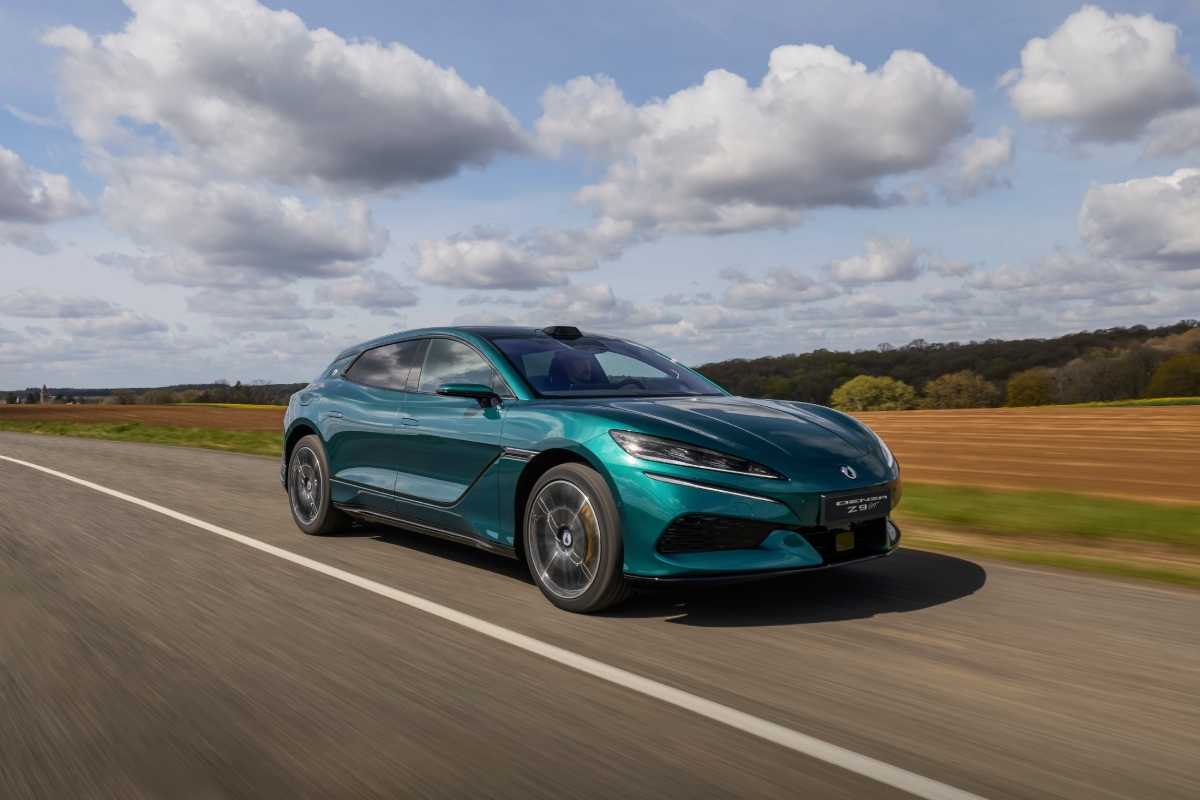
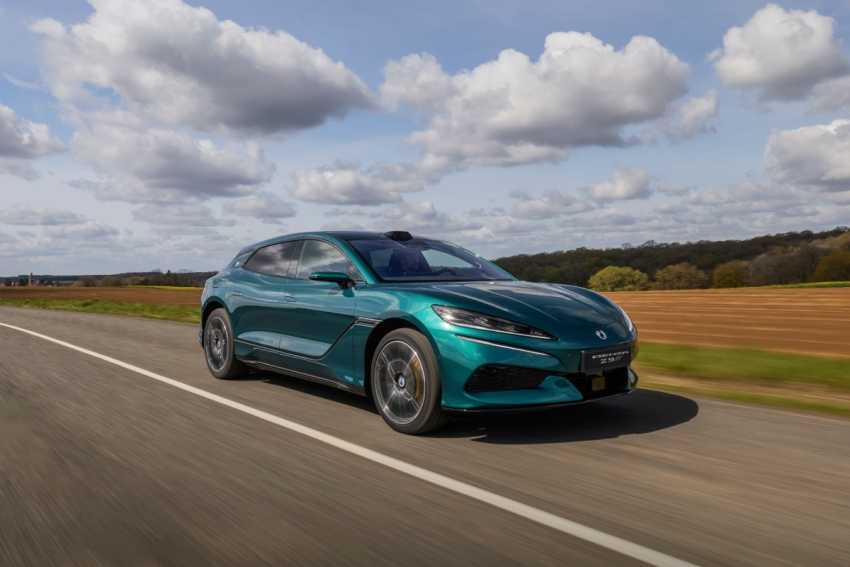
Chinese premium EV brand Denza has confirmed its flagship Z9GT will cost £105,000 when it arrives in the UK later this year, bringing some of the fastest charging technology yet promised for British motorists.
Owned by BYD, the world's largest manufacturer of electrified vehicles, Denza is positioning the Z9GT as a luxury performance estate that combines supercar acceleration with long-distance practicality. However, while its headline-grabbing claim of adding more than 220 miles of range in just five minutes sounds revolutionary, UK buyers will have to wait for the infrastructure capable of delivering those charging speeds.
Here's what UK drivers need to know about the Denza Z9GT, its technology and whether its record-breaking charging claims will be available from day one.
What makes the Denza Z9GT different?
The Denza Z9GT is the first model from BYD's premium Denza brand to launch in both the UK and Europe.
Rather than competing with mainstream electric cars, it targets established luxury models from brands including Porsche, Mercedes-Benz and Audi.
Key specifications include:
- Starting price of £105,000
- 122kWh second-generation BYD Blade battery
- Up to 373 miles of claimed range
- Three electric motors producing 1,140bhp
- 0-62mph in 2.7 seconds
- Top speed of 167mph
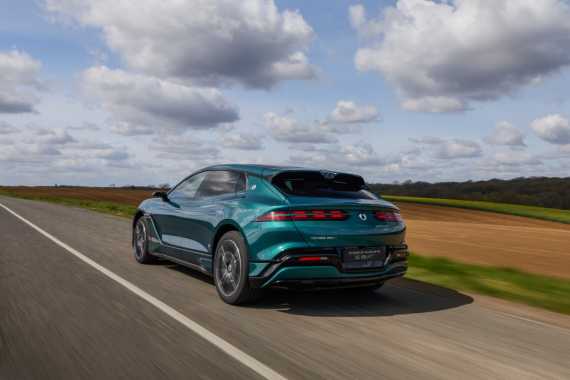
The estate-style "shooting brake" body offers more practicality than many performance EVs while delivering acceleration normally associated with exotic supercars.
Can it really charge in five minutes?
The Z9GT's biggest talking point is its charging capability.
Using BYD's new 1,500kW Flash Charger, the company says the battery can charge from 10% to 70% in just five minutes, adding approximately 224 miles of driving range.
A longer charging session from 10% to 97% is claimed to take only nine minutes.
If these figures are replicated in real-world conditions, they would represent one of the biggest leaps forward in EV charging since rapid chargers first became widely available.
However, there's an important catch for UK motorists.
The Z9GT can only achieve these charging speeds when connected to BYD's new Flash Charging network. Those chargers are not yet available in Britain.
BYD says it plans to install 300 Flash Charging sites over the next year, providing 600 charging points as part of a wider global rollout. Until that network is operational, owners are unlikely to experience the charging performance highlighted in the marketing material.
For most buyers, charging speeds will therefore depend on the public charging infrastructure already available in the UK.
Will UK drivers actually benefit?
This is where buyers should separate future potential from today's reality.
Ultra-fast charging is only valuable if compatible chargers are nearby. At launch, the UK's public charging network simply does not include BYD's 1,500kW chargers.
That doesn't mean the Z9GT will charge slowly, but it does mean drivers should not expect five-minute charging from existing rapid charging networks.
For motorists considering spending more than £100,000 on an EV, it is worth asking:
- Where will compatible chargers be installed?
- Will they cover major motorway routes?
- How quickly will the rollout happen?
- What will charging costs be?
These questions remain unanswered.
For now, the Z9GT's charging capability represents a glimpse of where EV technology is heading rather than an immediate benefit for every UK owner.
Supercar performance with everyday usability
Charging isn't the only headline feature.
With 1,140bhp and 1,210Nm of torque, the electric Z9GT comfortably exceeds the power output of many established performance cars.
Its claimed 373-mile range should also make it suitable for longer journeys, particularly if the promised charging network becomes widely available.
Later, Denza will also introduce a plug-in hybrid (PHEV) version priced from £95,000.
That model combines three electric motors with a 2.0-litre turbocharged petrol engine and offers:
- Up to 126 miles of electric-only driving
- Around 500 miles of combined driving range
- 765bhp
- 0-62mph in 3.6 seconds
For buyers who regularly travel long distances but remain concerned about public charging infrastructure, the plug-in hybrid may prove the more practical option.
Is the Denza Z9GT good value?
At £105,000, the Z9GT enters one of the most competitive parts of the premium EV market.
Its standard specification is generous, although buyers can still spend considerably more through the options list.
Extras include:
- Digital side mirrors (£1,600)
- 21-inch alloy wheels (£2,500)
- Premium metallic paint (£2,500)
- Matte paint finishes (£4,500)
Whether the Z9GT represents good value will depend less on its impressive specification sheet and more on how successfully Denza establishes itself in the UK.
Luxury buyers expect more than headline performance figures. Dealer support, servicing, software updates, residual values and charging infrastructure will all play a significant role in determining whether the newcomer can compete with established premium brands.
Conclusion
The Denza Z9GT showcases just how quickly electric vehicle technology is advancing. Five-minute charging and more than 370 miles of claimed range would have seemed unrealistic only a few years ago, and if BYD delivers on its infrastructure promises, it could help reduce one of the biggest barriers to EV ownership.
However, UK motorists should view today's announcement with some caution. The car's most impressive feature depends on a charging network that has yet to be built. Until BYD's Flash Chargers arrive in meaningful numbers, owners are unlikely to experience the charging speeds making headlines.
The technology is undoubtedly exciting, but for British drivers the real test will be how quickly the supporting infrastructure catches up with the cars themselves. That's ultimately where the success or failure of ultra-fast charging will be decided.