The Driver and Vehicle Licensing Agency (DVLA) is set to oversee the launch of the new '26' series of vehicle registration plates on Sunday, 1 March 2026. The technical transition marks the first biannual update of the year for new vehicles across England, Scotland, and Wales, but it has been accompanied by a formal warning regarding the legality of physical number plates.
Motorists who fail to ensure their vehicle identifies with current British Standards risk on-the-spot fines of up to £1,000. Under the current Road Traffic Act, it is an offence to drive with incorrectly displayed or non-compliant number plates. This warning follows a recent statement from the Department for Transport (DfT) regarding a wider crackdown on illegal and modified registration plates nationwide.
Government strategy on plate compliance
Transport Minister Lord Hendy has confirmed that the government is intensifying efforts to eliminate the manufacture and use of illegal number plates. Speaking in the House of Lords, the Minister outlined that the DVLA is currently collaborating with police forces and other enforcement agencies to address the misuse of registrations. Lord Hendy stated that the Department is tightening the application, inspection, and audit processes for registered number plate suppliers.
According to the government's recently published Road Safety Strategy, there are proposals currently under consideration for reviewing existing standards. These include the potential implementation of artificial intelligence (AI) technology to assist in the identification of illegal plates on the UK road network. The DfT indicates that tougher enforcement and increased penalties are central to the new strategy, aimed at ensuring vehicle identification remains clear for law enforcement and automated systems.
Technical specifications for UK plates
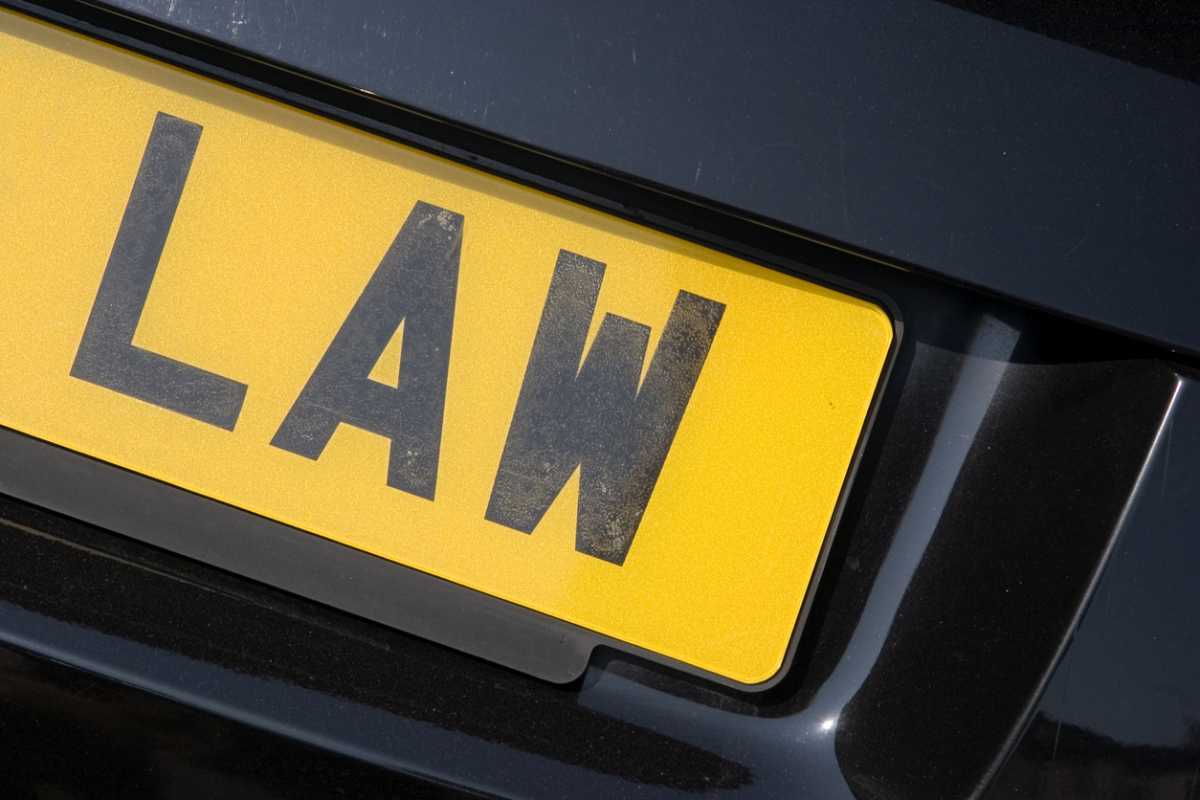
The DVLA has reiterated the technical requirements for all plates fitted to vehicles on UK roads. All registrations must be made from a reflective material. The front plate must display black characters on a white background, while the rear plate must display black characters on a yellow background. The regulations explicitly state that background patterns are prohibited, as they can interfere with Automatic Number Plate Recognition (ANPR) cameras.
Furthermore, all plates must be marked with the details of the supplier and the relevant British Standard number. For any plates fitted after 1 September 2021, the required standard is BS AU 145e. This specific standard ensures that the plate is durable and remains legible under a variety of weather conditions and light levels.
Standardisation of characters and materials
Significant changes introduced in 2021 remain in force, dictating that characters on the plate must not be removable or reflective. For plates fitted since September 2021, characters must be a single, solid shade of black. This prevents the use of certain types of 3D-effect fonts that use multiple shades of grey to create a shadow effect, as these have been shown to reduce the reliability of ANPR software.
However, the DVLA confirms that 3D or 4D raised characters remain legal, provided they meet all other criteria regarding spacing, size, and single-tone colouring. Additionally, zero-emission vehicles are permitted to display a green 'flash' on the left-hand side of the plate to signify their environmental status, which can assist local authorities in identifying vehicles eligible for specific incentives or access to restricted zones.
Identification and flag regulations
Motorists are permitted to display certain flags and national identifiers on their plates, though these are subject to strict formatting rules. Permitted flags include the Union Jack, the Cross of Saint George, the Cross of Saint Andrew, and the Red Dragon of Wales. These must be accompanied by the relevant country identifier, such as UK, GB, England, Scotland, or Wales.
For motorcycles and motor tricycles, the rules vary slightly. Vehicles registered on or after 1 September 2001 must only display a number plate at the rear. Motorcycles registered prior to this date have the option to display a front plate, but there is no legal requirement to do so.
Enforcement and penalties
The DVLA and police maintain that any vehicle found with an incorrectly displayed plate will fail its MOT test. In addition to the fine of up to £1,000, drivers may find their registration number is permanently withdrawn if they persist in using an illegal format. The government remains focused on the standardisation of plates to ensure that vehicles can be accurately tracked for safety, insurance, and law enforcement purposes as the new 26-reg cycle begins.
Considering switching to electric? Use Regit's Fuel Saver Tool to see how much you could save