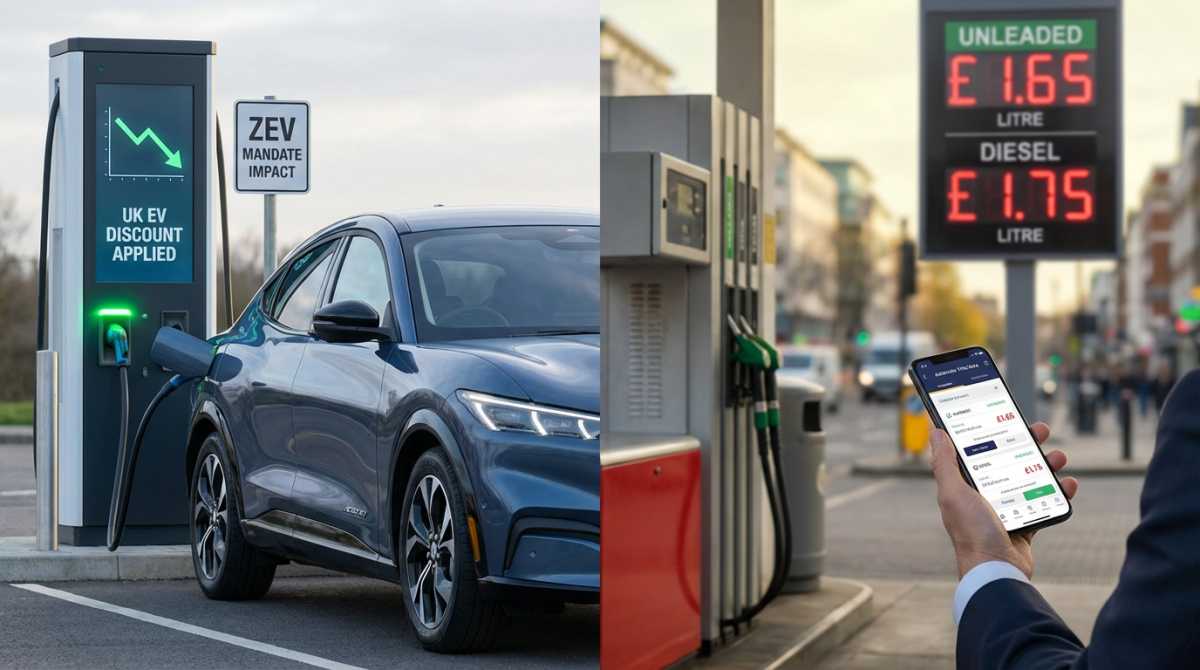
For the first time in the UK, buying a brand-new electric car is now cheaper than going petrol. On average, drivers can save £785 upfront, thanks to heavy discounts driven by government rules and rising competition in the EV market.
Key Facts
- £42,620: Average price of a new electric car in the UK
- £785: Average saving vs a petrol equivalent (£43,405)
- ZEV Mandate: Forces manufacturers to boost EV sales or face fines
- Discounts: Some electric cars now reduced by up to £3,750
- Source: AutoTrader market data confirms the price shift
New electric cars are now cheaper than petrol
For years, one of the biggest sticking points with electric cars has been the price tag. That’s now changed.
In a major shift for UK car buyers, new data shows that electric cars are officially cheaper to buy than petrol models on average. According to AutoTrader, the typical new EV now costs £42,620, compared to £43,405 for a petrol car – a saving of £785 before you’ve even left the dealership.
It might not sound huge at first glance, but psychologically, it’s massive. EVs have long been seen as the pricier, premium option. That perception is starting to crack.
Why are electric car prices falling?
This isn’t a coincidence; it’s policy and competition doing their thing.
The biggest driver is the UK’s Zero Emission Vehicle (ZEV) mandate. In simple terms, manufacturers must sell a growing percentage of electric cars each year or face hefty fines. To stay compliant, they’re slashing prices and offering serious incentives.
We’re now seeing discounts of up to £3,750 on some models.
At the same time, new players, especially Chinese brands, are entering the UK market with aggressively priced EVs. That’s forcing established manufacturers to respond, pushing prices down across the board.
What this means for drivers
This is where things get interesting. Until now, the EV argument has mostly been about lower running costs – cheaper charging, less maintenance, and tax benefits. But the higher upfront cost often cancelled that out for many buyers.
Now, that barrier has gone.
If you can charge at home, the numbers are firmly in your favour. You’re paying less to buy the car and less to run it day-to-day. That’s a rare win-win.
It’s not perfect for everyone (yet)
There are still some real-world challenges.
If you live in a flat or don’t have off-street parking, relying on public charging can be more expensive and less convenient. Infrastructure is improving, but it’s not quite seamless everywhere.
Still, this price shift changes the conversation. As Octopus Electric Vehicles CEO Gurjeet Grewal put it, "[EVs have] long been cheaper to run, and now they’re cheaper to buy, too. Add in growing competition and more choice, and it’s clear the direction of travel: electric is the obvious option for drivers.”
When a car is cheaper to buy and cheaper to run, the case for sticking with petrol starts to weaken.
A turning point for UK car buyers
Whether you’re looking at something like a Volkswagen ID.3 or a budget-friendly MG, electric cars are now firmly in reach for more drivers.
This isn’t just about going green anymore; it’s about making a smart financial decision.
The transition to electric won’t happen overnight, but one thing is clear: the momentum has flipped. EVs are no longer the expensive alternative, they’re quickly becoming the default choice.