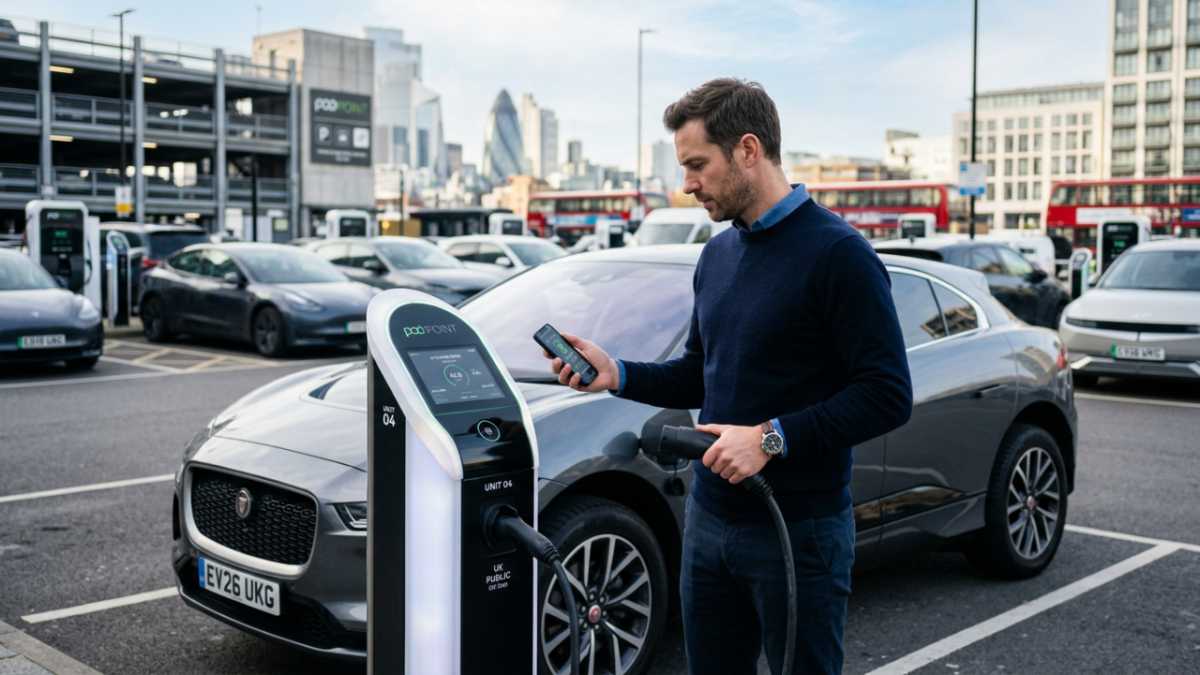
TL;DR: Charging an electric car in the UK in 2026 can still offer significant savings, especially with home tariffs as low as 7p/kWh, bringing running costs down to roughly 3p–5p per mile compared to 17p–23p for petrol cars. Public rapid charging remains more expensive at around 70p–80p/kWh, but a growing network of over 70,000 devices (and 120,000+ connectors) is improving accessibility. With standard electricity prices hovering in the mid-20p/kWh range, off-peak EV tariffs continue to deliver the biggest savings.
EV Charging Costs 2026: Your Wallet's New Best Friend?
If you are weighing up the switch to electric, the real question is no longer range. It is cost.
In 2026, EV running costs in the UK are still heavily shaped by where and how you charge. Get it right, and electric driving remains significantly cheaper than petrol or diesel. Get it wrong, and costs can creep closer than many expect.
At Regit, we track real-world running costs across the UK market. The takeaway is simple: EVs are still cheaper to run overall, but the gap depends on your charging habits.
Key facts about EV charging costs in 2026:
- Around 54p/kWh is the UK weighted average PAYG price for standard public charging (Zapmap Price Index, early–mid 2026).
- Rapid and ultra-rapid charging typically ranges from 65p to 85p/kWh in 2026 (Zapmap, RAC).
- Off-peak home EV tariffs can be as low as 6.7p–10p/kWh, with tariffs like Octopus Intelligent Go and Ovo Charge Anytime leading the way.
- Standard household electricity will rise to around 26.11p/kWh from July 2026, a 13% increase that makes off-peak EV tariffs even more valuable.
- The UK has over 120,000 public charging devices as of early 2026 (DfT statistics).
- Typical EV running costs sit around 3p–8p per mile (home charging) vs 17p–23p for petrol cars (RAC Fuel Watch, 2026).
- Annual savings of £500–£1,000 are realistic for drivers who primarily charge at home (RAC, Energy Saving Trust estimates).
- Home charging a 64kWh EV costs £4.30–£6.40 on off-peak tariffs but £15–£19 on standard electricity, showing the massive difference in cost.
What does it cost to charge an electric car in the UK today?
The latest public charging data shows that standard PAYG charging on the UK network averages 54p/kWh, while rapid and ultra-rapid charging averages 79p/kWh. That means public charging is still convenient, but it is not always cheap.
Home charging remains the real money-saver. Off-peak EV tariffs can still fall to around 6.7p/kWh, which is why home charging can make such a big difference to annual running costs. Energy price cap changes from July 2026 are expected to keep standard rates around the mid-20p/kWh range.
In practical terms, that means charging at home can work out at roughly 3p to 8p per mile, while petrol driving typically sits much higher once fuel prices and efficiency are factored in. Petrol prices in 2026 average around £1.45–£1.60/litre, depending on region and fuel type, keeping petrol motoring significantly more expensive overall.
Why home charging is the cheapest
For most drivers, the best EV ownership experience comes from charging while they sleep.
That is because home charging is predictable, quiet, and much cheaper than relying on public networks day to day. If you have access to an off-peak tariff, a full charge for a typical family EV can cost just £3–£6, while the same battery charged on a standard household rate will cost £10–£18.
With a 64kWh battery, that means £4.30–£6.40 on off-peak tariffs versus £15–£19 on standard electricity — a difference that adds up fast over a year.
This is also why smart charging has become so important. It helps drivers charge during cheaper hours and reduces pressure on the grid. Smart chargers can schedule charging automatically during the cheapest hours, typically between 11pm and 6am, when grid demand is lowest. The key point is that smart charging does not stop you using your car when you need it — it simply encourages cheaper, cleaner charging patterns.
Is public charging improving?
The UK charging network keeps growing, and that is good news for drivers without driveways or for long-distance travel. DfT data shows the public charging network has passed the 120,000 device mark in 2026, which is a major milestone for accessibility.
That growth matters because it makes EV ownership easier to manage, especially for urban drivers and motorway users. Motorway rapid chargers are now more common, with networks like Ionity, BP Pulse, and Shell Recharge expanding ultra-rapid hubs across key routes. Still, public charging prices vary widely. Slow and fast chargers are usually more affordable than motorway rapid chargers, but the latter are often what drivers use when time matters most.
Most major networks now report 95%+ charger uptime in 2026, with improving reliability on ultra-rapid motorway chargers.
So while the network is getting better, convenience still comes at a premium. However, regional inequality remains: some rural areas still have fewer chargers, so planning is key for long trips.
Winter range and real-world use
One of the biggest misconceptions about EVs is that winter makes them impractical. The truth is more balanced.
Cold weather does reduce range, mainly because batteries are less efficient in low temperatures and the cabin heating uses extra energy. Cold temperatures slow down the chemical reactions inside lithium-ion batteries, making them less efficient, and EVs draw power from the battery for heating rather than using waste engine heat like petrol cars.
Regit's winter EV coverage notes that many EVs can lose around 10% to 30% of their range in colder conditions, depending on the model and temperature. In typical UK winter conditions, most EVs lose 15–30% of range, and up to 35–40% in near-freezing temperatures.
Cabin heating is the biggest winter energy drain, not just battery inefficiency. Using seat heaters instead of full cabin heating can save energy, and pre-heating the car while still plugged in reduces the load on the battery once you're on the road.
That does not make EVs unsuitable for winter driving. It simply means drivers should plan a little more carefully in colder months, especially if they rely on public charging. Newer EVs equipped with heat pumps, now common from Tesla, BMW, and Audi, can boost winter range by 8–30% compared to older resistive heaters.
You can still charge your EV in freezing temperatures, but expect it to take longer. A cold battery can't accept a charge as fast as a warm one, so some energy initially goes into heating it first. Keeping your charge above 20% and aiming for 20–80% for daily use helps battery health.
What this means for drivers
The overall picture is still encouraging for EV buyers.
| Fuel Type | Cost Per Mile (Avg) | Annual Fuel Cost (10,000 miles) |
|---|---|---|
| EV (Home Charging) | 4p | £400 |
| EV (Public Mix) | 12p | £1,200 |
| Petrol/Diesel | 19p | £1,900 |
| Hybrid (PHEV) | 14p | £1,400 |
| Hybrid (non-PHEV) | ~13p | ~£1,300 |
Data based on averages from Sandicliffe, Zapmap, and RAC 2026 reports. This table clearly illustrates the significant savings in EV charging cost 2026, especially with a home EV charging tariff.
If you want to slash your monthly outgoings, the strategy is simple:
- Switch to a dedicated EV home tariff. This is your biggest opportunity to reduce your cost to charge electric car UK. Off-peak EV tariffs like Octopus Intelligent Go or Ovo Charge Anytime can be 6.7p–9p/kWh, significantly below the standard price cap.
- Use slow/fast public chargers for routine stops. These offer good value for money when you're out and about.
- Reserve rapid chargers for long-distance motorway hauls. These are for convenience, not daily charging.
The main thing to understand is that the cheapest way to run an EV in 2026 is still to charge smartly and charge off-peak whenever possible.
For most UK drivers, that keeps EV motoring firmly in the "cheaper than petrol" camp over a full year. Over 470,000 electric cars were registered in 2025, a 23.9% jump from the year before, showing that drivers are already making the switch.
How Regit can help you save more
At Regit, we offer tools to help you compare the latest EV deals and find the best home charging solutions. Check out our 'EV Hub' or use our 'Running Cost Calculator' to see exactly how much you could save this year on your EV charging cost 2026.
FAQ: Your questions about EV charging answered
Q: Has the cost of charging an EV doubled in 2026?
A: No. While some public charging rates have risen due to energy price fluctuations, home charging remains highly affordable, with off-peak rates as low as 7p/kWh. Standard household electricity will rise to around 26.11p/kWh from July 2026, but off-peak EV tariffs remain significantly cheaper. This provides significant relief for drivers.
Q: How much does it cost to charge a Kia EV9 in 2026?
A: With a large 99.8kWh battery, a full home charge on an off-peak tariff (9p/kWh) would cost roughly £9. On a public rapid charger (75p/kWh), it would be approximately £75, though you rarely charge from 0–100% on a rapid unit. This showcases the difference in public charging prices 2026 vs home.
Q: Is public charging more expensive than petrol?
A: In some specific cases, ultra-rapid motorway charging can be comparable to petrol costs per mile. However, when averaged over a year with home or destination charging, EVs remain significantly cheaper. This confirms the overall benefit of electric car vs petrol running costs.
Q: Can I still charge my car during a peak power window?
A: Yes. While smart chargers default to off-peak hours to save you money and protect the grid, you can manually override these settings at any time if you need an immediate charge. You have full freedom to charge when you like, and the 'boost' function lets you charge immediately regardless of smart schedules.
Q: Does cold weather affect the cost to charge electric car UK?
A: Indirectly, yes. In winter, an EV's efficiency drops, meaning you need more kWh to cover the same distance. However, the price per kWh you pay doesn't change based on the weather. Most EVs lose 10–30% of range in winter, meaning you'll need to charge more often, but the price per kWh stays the same.
Q: What is the cheapest time of day to charge my EV at home?
A: Typically between 11pm and 6am, when off-peak EV tariffs are active and grid demand is lowest. Smart chargers can schedule automatically during these hours.
Q: Are there any grants for home EV chargers in 2026?
A: The EV Chargepoint Grant for flats and rental properties is still available, offering up to £350 toward installation, but the home owner grant ended in 2022.
Q: How reliable are public chargers in 2026?
A: Most major networks report 95%+ uptime, with improving uptime on ultra-rapid motorway chargers. This makes public charging more dependable than in previous years.